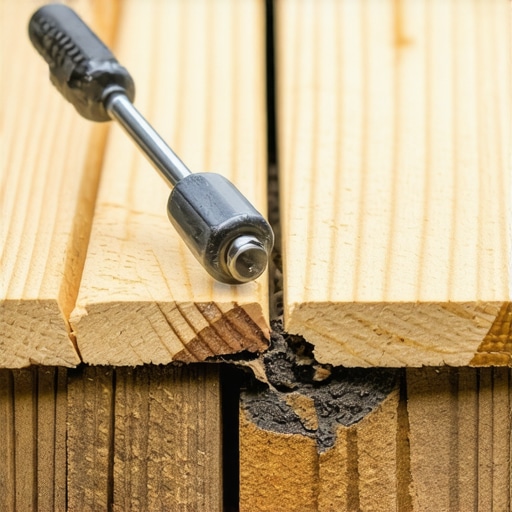
The ‘Screwdriver Test’ for Spotting Hidden Rot in Your Decking Footers
The ‘Screwdriver Test’ for Spotting Hidden Rot in Your Decking Footers
Hello there! I’m Cory Price. As a Certified Home Inspector and a long-time veteran of the construction world, I’ve seen my fair share of “oops” moments. I’ve crawled under more crawlspaces than I care to admit and inspected decks that looked like they were held together by nothing more than a prayer and a few rusty nails. Usually, homeowners spend all their time worrying about the color of their stain or which grill to buy, but they often ignore the most critical part of the structure: the foundation. You see, while a deck might look Pinterest-perfect from above, the decking footers and post bases are where the real story of structural integrity – or structural failure – lives or dies.
Now, I’m a big fan of high-tech gadgets, but sometimes the best tool for the job is already sitting in your kitchen junk drawer, right next to the expired coupons and the mystery keys. I’m talking about a simple flathead screwdriver. This humble tool can save you thousands of dollars in repairs and, more importantly, keep your family safe. It’s a technique we pros use all the time, similar to The ‘Screwdriver’ Test for Identifying Subfloor Rot, but applied to the great outdoors. So, grab your favorite screwdriver (and maybe a cold drink), and let’s dive into how you can play detective with your own deck.
Why Deck Foundations Fail: The Science of Rot
To understand why we need to go around poking our decks with screwdrivers, we first have to understand the enemy: rot. Rot isn’t just “old wood”; it’s a biological process. Wood is an organic material, and nature is constantly trying to reclaim it. When wood is exposed to moisture, oxygen, and the right temperatures, it becomes a five-star resort for fungal infections like mold and mildew. These fungi literally eat the cellulose and lignin that give wood its strength.
The most vulnerable point of any deck is the interface where the wooden post meets the deck foundations. Why? Because water is a master of gravity. It runs down the post and pools at the base. If your posts are buried in the dirt (a big “no-no” in modern building codes) or sitting on a concrete pier without a proper metal standoff base, they are constantly “wicking” moisture from the ground. This is called capillary action, and it’s essentially like your deck posts are drinking through a straw made of soil moisture.
Untreated wood, or even pressure-treated wood that has lost its chemical potency over time, is particularly vulnerable to UV and moisture cycles. In a climate like ours, the sun bakes the wood during the day, creating tiny “check” cracks. Then, rain or snow-melt fills those cracks. When the temperature drops, that water freezes and expands, making the cracks bigger. This provides the perfect doorway for fungi to move in and start their destructive feast. If your wood looks “fuzzy” or has a dark, water-stained appearance near the ground, the science of rot is already at work, and your foundation might be compromised.
Step-by-Step: How to Perform the Screwdriver Test
Performing a professional-grade inspection doesn’t require a degree in engineering – just a keen eye and a bit of elbow grease. Here is how I conduct the screwdriver test when I’m out on an inspection. We’re going to look specifically at the decking footers and the base of the support posts.
1. The Visual Check: Before you start poking, just look. Are you seeing peeling paint? Is the wood looking “hairy” or “fuzzier” than the rest of the deck? Look for discoloration – dark brown or black patches are usually a sign of advanced moisture penetration. If you see actual mushrooms growing out of your deck posts, you don’t even need the screwdriver; you’ve got a “fungus among us,” and it’s time for a replacement. Also, check for “frass,” which is a fancy word for bug poop that looks like sawdust, indicating that carpenter ants or termites have moved into the rotted areas.
2. The Poke Test: This is the core of the test. Take a sturdy flathead screwdriver or a carpenter’s awl. Go to the base of the post, right where it meets the concrete or the soil. Press the tip firmly into the wood. In healthy, solid wood, the screwdriver should barely leave a mark, and it certainly shouldn’t penetrate. However, if the screwdriver sinks in more than 1/4 inch with little resistance – as if you’re pushing it into a piece of room-temperature butter – you have rot. Move around the entire circumference of the post. Sometimes rot is localized to one side where water pools more frequently.
3. The Sounding Method: This is a trick I learned early in my career, and it’s an official InterNACHI (International Association of Certified Home Inspectors) technique. Flip the screwdriver around and hit the wood with the heavy plastic handle. Listen closely. A healthy, solid post will produce a sharp, high-pitched “crack” or “thud.” If the wood is decaying internally, it will produce a dull, hollow, or “mushy” sound. It’s a lot like checking a watermelon for ripeness, except the stakes are much higher! If you’ve ever used The ‘Paper Test’ for Checking Laminate Expansion Space, you know that sometimes the simplest physical indicators are the most reliable.
Make sure to check the decking footers thoroughly. If the concrete itself is cracking or sinking, the screwdriver test on the wood is only half the battle. A stable deck requires both solid wood and a stable footing.
Interpreting Your Results: Is Your Deck Safe?
So, you’ve done the poking and the prodding. Now what? Interpreting the results is about distinguishing between cosmetic issues and structural catastrophes. If your screwdriver only went in an eighth of an inch and the wood feels firm underneath, you likely have “surface rot.” This can often be managed by cleaning the wood, allowing it to dry completely, and applying a high-quality wood preservative and sealer. It’s a “yellow light” – a warning to pay more attention to your maintenance schedule.
However, if the screwdriver disappeared halfway into the post base, or if the wood crumbled away when you pulled the tool out, you are looking at “structural rot.” This is a “red light” situation. When the base of a post rots, the vertical load-carrying capacity of that post is severely diminished. In a heavy wind or under the weight of a dozen people during a summer BBQ, that post could buckle or “kick out,” leading to a total deck collapse. This is especially dangerous for elevated decks where a fall could be life-threatening.
If you find that your foundation has failed, don’t panic, but do take action. You might need to temporarily support the deck and replace the individual posts and footers. If you’re dealing with a sagging situation as a result of this rot, you might find my guide on How to Level a Sagging Floor with a Bottle Jack helpful, as the principles of structural lifting are very similar whether you’re under a house or under a deck. But remember: if the structural integrity is gone, the deck is officially a safety hazard until repaired by a professional.
Beyond Wood: Upgrading to a Low Maintenance Deck
After finding rot, many homeowners ask me, “Cory, is there a way to never do this screwdriver test again?” The answer is yes, and it involves moving away from traditional lumber. While I love the smell of cedar as much as the next guy, the reality is that wood is high-maintenance. If you want a “set it and forget it” solution, you should be looking into a low maintenance deck.
The industry has come a long way in the last twenty years. Modern composite decking is designed specifically to solve the rot problem. There are two main players you’ll hear about: Trex and Deckorators. When we look at the deckorators vs trex debate, it often comes down to the core technology of the boards. Traditional composites use a mix of plastic and wood fibers. While much more durable than pure wood, they can still technically absorb moisture if the ends aren’t sealed.
On the other hand, Deckorators has pioneered the use of Mineral-Based Composite (MBC) technology. Their Voyage and Vault lines contain zero wood fiber. Because there is no organic material for fungi to eat, these boards literally cannot rot. They are so moisture-resistant that they are approved for ground-contact and even underwater installation. If you’re tired of the “poke and pray” method of deck maintenance, upgrading to a mineral-based composite is the ultimate insurance policy against the science of decay.
Choosing the Right Materials: Trex vs. Deckorators
If you’ve decided to move on from rotted wood, choosing the right brand is your next step. Both Trex and Deckorators offer fantastic warranties and beautiful aesthetics, but they cater to slightly different needs. For many, trex deck boards are the gold standard for reliability and color variety. For instance, trex decking pebble gray is a hugely popular choice for modern homes, offering a sleek, neutral look that hides dirt well and stands up to the punishing sun.
If you want the absolute peak of technology, however, Deckorators is hard to beat. Their boards are lightweight but incredibly strong, with a high strength-to-weight ratio. A color like deckorators venture sandbar provides a warm, natural wood look without any of the splinters or rot risk. It’s perfect for creating that “beach boardwalk” vibe right in your backyard.
For those of us living in the Beehive State, finding a reliable utah deck supply is vital. Our climate is unique. We deal with intense high-altitude UV rays in the summer and heavy snow-melt in the winter. This “freeze-thaw” cycle is brutal on wood footings. Ogden decks, in particular, face the brunt of mountain weather. Choosing a material that doesn’t expand and contract wildly with temperature changes – like mineral-based composites – means your deck boards won’t warp and your fasteners won’t pop out over time. It’s all about building for the local environment.
Finishing Touches: Railing and Accessories
Once your foundation is solid and your decking boards are chosen, don’t forget about the “jewelry” of the deck: the railing. A rotted foundation often goes hand-in-hand with wobbly railings, which is another major safety concern I flag in my inspections. Upgrading your deck railing can completely transform the look of your outdoor space.
For a sleek, unobstructed view of the Utah mountains, cable deck railing systems are the way to go. They provide a modern, industrial feel while remaining incredibly durable. If you prefer a more traditional but still low-maintenance look, the timbertech fulton rail offers a classic profile with a high-end finish that won’t require the annual sanding and painting that wooden balusters demand. Remember, a deck is only as safe as its weakest point – don’t pair a brand-new composite surface with old, shaky railings.
Conclusion & Call to Action
Your deck is an extension of your home, a place for memories, and a significant financial investment. Don’t let hidden rot at the base of your decking footers turn your sanctuary into a hazard. The screwdriver test takes five minutes, costs nothing, and provides peace of mind that no fancy app can match. If your screwdriver sinks in, or if you’re just tired of the endless cycle of staining and sealing, it’s time to look at better options.
Don’t wait for a structural failure to happen. If your test failed, or if you’re ready to upgrade to a lifetime of low-maintenance outdoor living, visit a local deck depot today. If you’re ready to start your project, searching for deck materials near me is the first step toward a safer, more beautiful home. Stay safe out there, and remember: a poke in time saves nine… hundred dollars in repairs! (Okay, that was a bad one, even for me.)