How to Fix a Squeaky Laminate Floor Without Tearing It All Up
Most guys skip the leveling compound. They think the underlayment will hide the dip. It won’t. I spent three days grinding concrete on a job last month just so the floor wouldn’t click like a castanet. The homeowners thought I was being obsessive until they felt the rock-solid result. Most of the time, that annoying chirp under your feet isn’t a ghost. It is the sound of friction between two pieces of high-density fiberboard fighting for space because the installer was too lazy to pull out a straightedge. Flooring is not a craft of aesthetics. It is a craft of tolerances. When you ignore a 1/8 inch deviation in the subfloor, you are signing a contract for a noisy future. Laminate is a floating system, a massive interlocking jigsaw puzzle that needs to move as a single unit. If one piece is caught on a high spot or squeezed against a baseboard, the physics of the joint will fail. You do not need to rip the whole thing out to get some peace and quiet, but you do need to understand the structural chemistry of what is happening under your socks.
The ghost in the expansion gap
Fixing a squeaky laminate floor requires identifying friction points within the tongue and groove system or subfloor irregularities. Usually, squeaks stem from restricted movement or uneven surfaces. You can resolve most issues by lubricating joints with dry graphite or talc, increasing perimeter expansion gaps, or stabilizing subfloor dips with localized injections of specialized floor repair resins. Most people assume the sound is coming from the middle of the plank, but it is almost always the joint. When the humidity in the room changes, the wood fibers in the laminate core expand. If the installer did not leave a proper 3/8 inch gap at the walls, the floor has nowhere to go. It binds. It builds up internal tension. Then, when you step on it, that tension releases as a sharp, wooden squeak. I have seen floors installed so tight against the drywall that the planks started to peak like a mountain range. The fix here is simple but tedious. You have to pull the baseboards and check the perimeter. If the floor is touching the wall, it is a ticking time bomb of noise.
“A floor is only as good as the subfloor beneath it; deflection is the enemy of every joint.” – Master Flooring Axiom
Why your subfloor is lying to you
A subfloor that looks flat to the naked eye often hides micro deviations that cause laminate planks to deflect. This deflection forces the locking mechanisms to rub against each other, creating a high-pitched chirp. Professional standards require subfloors to be flat within 3/16 of an inch over a 10 foot radius to prevent structural noise. If you have a dip in the plywood or concrete, the laminate spans over it like a bridge. Every time you walk over that bridge, the tongue and groove joint flexes. That friction between the HDF cores creates the sound. Over time, this constant movement will actually wear down the locking mechanism until it snaps. You can test this by having someone walk on the squeak while you look at the floor at eye level. If you see the floor dipping even a tiny amount, you have a subfloor problem. To fix this without a total teardown, you can use a floor repair kit that involves drilling a tiny hole and injecting a low viscosity adhesive. This adhesive fills the void and creates a solid pillar of support, stopping the movement and the noise simultaneously.
| Material | Density kg/m3 | Squeak Potential | Fix Difficulty |
|---|---|---|---|
| Standard HDF | 800 | High | Moderate |
| Premium HDF | 950 | Medium | High |
| MDF Core | 600 | Very High | Low |
The 1/8 inch that ruins everything
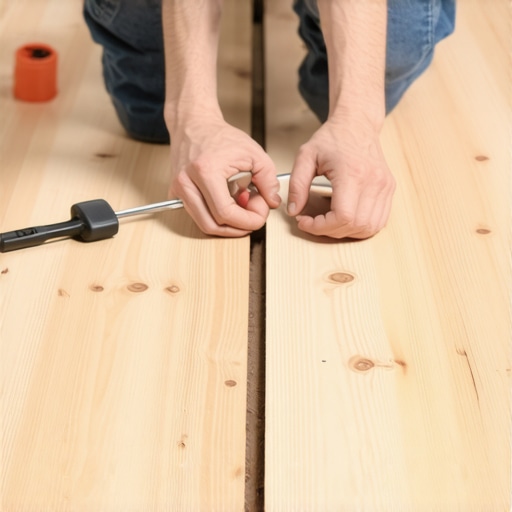
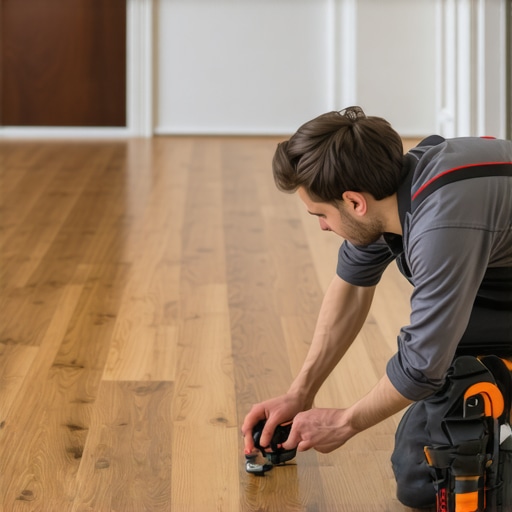
Expansion gaps are the lungs of a laminate floor and without them the system will suffocate and scream. Laminate is wood based and expands with humidity. If the planks hit a wall or a heavy kitchen island, the internal pressure manifests as a squeak or a buckle. You must verify that the floor is truly floating. I have seen guys nail baseboards through the laminate. That is a crime in the flooring world. It pins the floor in place. When the floor tries to move, it tugs against that nail, and you get a localized squeak that will drive you crazy. You should also check your T moldings at doorways. If the track is screwed down too tight against the laminate, it creates a pinch point. A floor needs to breathe. If you live in a high humidity area like Houston, your floor is going to expand significantly more than a floor in the dry air of Phoenix. You have to plan for that. If you find a pinch point, use a multi tool to trim the edge of the plank back. It only takes a few millimeters of space to silence a floor forever.
Strategic lubricant injections for joint friction
If the subfloor is flat and the expansion gaps are clear, the noise is likely coming from the wax or factory coating on the locking system. This is a common issue with cheaper laminate brands. The friction between the tongue and the groove is too high. You can solve this by applying a dry lubricant. Do not use oil or WD 40. Those will attract dust and eventually rot the HDF core. Instead, use a dry graphite powder or a specialized floor lubricant. You puff the powder into the seam and walk on it to work it down into the joint. The microscopic flakes of graphite act like ball bearings, allowing the tongue to slide smoothly inside the groove without the high frequency vibration that causes the squeak. It is a clean, effective, and permanent solution for surface level noise. For more stubborn squeaks, some pros use a syringe to inject a tiny bit of silicone based lubricant. It penetrates deep and provides a long lasting barrier against friction.
- Check perimeter expansion gaps under all baseboards.
- Identify high and low spots using a 6 foot level.
- Inject floor repair adhesive into known subfloor voids.
- Apply dry graphite powder to noisy interlocking joints.
- Ensure no nails or screws are pinning the floating floor.
The chemistry of silence and adhesive bonds
When you decide to inject a floor, you are engaging in chemical engineering. The resins used for this are specifically designed to have high compressive strength but low viscosity. They need to flow like water to find the deepest part of the dip but then harden into a rock. If you use a standard wood glue, it will not work. Wood glue shrinks as it dries. You need a non shrinking epoxy or a specialized urethane. When you drill your hole, usually 1/16 of an inch, you are creating a port for this resin. Once the void is filled, you must weight the area down for 24 hours. Use heavy buckets of water or toolboxes. This ensures the floor is bonded in the flat position. Once cured, the squeak is gone because the movement is gone. It is a surgical approach to flooring repair. You can even hide the tiny hole with a bit of color matched floor wax. Nobody will ever know you were there, but they will certainly notice the silence. Stop thinking of your floor as a pretty surface. It is a machine made of wood fibers, resin, and friction. Treat it like a machine, maintain the tolerances, and it will serve you without a sound.