The ‘Marble Test’ for Finding Hidden Slopes in Your Bathroom
The Marble Test for Finding Hidden Slopes in Your Bathroom
Most guys skip the leveling compound. They think the underlayment will hide the dip. It won’t. I spent three days grinding concrete on a job last month just so the floor wouldn’t click like a castanet. That job was supposed to be a simple laminate install, but the subfloor was a disaster of high spots and valley floors that would have snapped every locking joint in the house within six months. When you are standing in a bathroom, the floor looks flat to the naked eye. It is an optical illusion created by baseboards and vertical lines. The reality is often a series of waves and dips caused by settling joists or poor concrete finishing. I always carry a simple glass marble in my pocket. It is the most honest tool I own. If I drop it and it races toward the vanity, I know I am in for a long week of floor leveling. This is not about being picky. It is about the structural integrity of the bond between your tile and the substrate. If that subfloor is not dead flat, your shower install is going to fail.
The physics of the rolling glass sphere
The marble test works because gravity and the coefficient of friction reveal slopes that laser levels might miss over short distances. A standard glass marble requires only a tiny fraction of a degree in pitch to overcome its static friction and begin a kinetic roll. This movement identifies the low point of the bathroom floor where water will eventually pool. When we talk about showers and floor leveling, we are talking about managing liquid dynamics. If a marble rolls away from the drain, your water will follow it. This is the first step in diagnosing a failing subfloor before you even think about laying a single tile or piece of laminate. You have to understand that a bathroom is a wet environment. Any slope that leads away from a drainage point is a structural defect that will eventually lead to mold, rot, and the catastrophic failure of the adhesive bond. I have seen thousand-dollar tile jobs ruined because the installer did not spend twenty minutes with a level and a bag of self-leveler.
“A floor is only as good as the subfloor beneath it; deflection is the enemy of every joint.” – Master Flooring Axiom
When you perform this test, you are looking for the rate of acceleration. A slow roll suggests a minor dip that might be manageable with a bit of extra thin-set. A fast roll means you have a structural slope that requires a full pour of high-flow self-leveling underlayment. These compounds are often made of calcium aluminate cement which cures much faster and with less shrinkage than standard Portland cement. The chemistry is specific. You need a bond that can withstand the shear forces of a walking human without cracking. If you ignore the slope, you are basically building a house on a sinking ship. The marble does not lie because it is a perfect sphere. It is the ultimate arbiter of gravity. I have seen homeowners get angry when I tell them their bathroom floor is a half-inch out of level, but once they see that marble race across the room, they cannot argue with the science of it.
Why your subfloor is lying to you
Subfloors often appear flat due to the tension of the plywood or the smooth appearance of old concrete, but they hide microscopic dips that cause floor failure. Joists can crown upward or sag downward over decades of load-bearing stress, creating a topographical map of hidden structural issues. You cannot trust your eyes. You need to trust the tools. When we get into a carpet install, people think levelness does not matter because the pad is thick. That is a rookie mistake. A dip in the subfloor under a carpet will create a pocket of air. Every time someone walks over that spot, the carpet stretches and compresses. Eventually, the latex backing on the carpet breaks down, and you get those ugly ripples that no power stretcher can fix. The same goes for laminate. Laminate is a floating floor system. It relies on the subfloor being flat to within one-eighth of an inch over a ten-foot radius. If you have a slope, that laminate is going to bounce. That bounce is the sound of the tongue and groove joints slowly being ground into sawdust.
The 1/8 inch that ruins everything
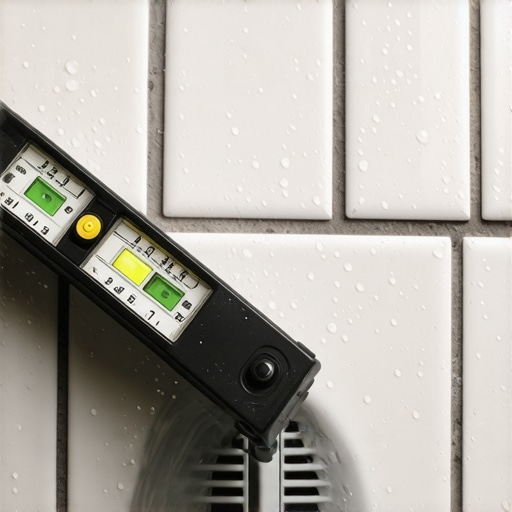
Precision in flooring is measured in sixteenths of an inch because even a minor gap creates a void where moisture and air can compromise the installation. A dip of one-eighth of an inch is enough to cause vertical deflection in rigid core flooring, leading to broken locking mechanisms. This is where the structural zooming comes in. Look at the chemistry of the adhesive. When you use a modified thin-set for a tile shower, the polymers are designed to create a bridge between the tile and the substrate. If there is a dip, that bridge has to be thicker. Thin-set is not a leveling agent. If it is too thick, it will shrink as the water evaporates from the mix. As it shrinks, it pulls on the tile. This is called lippage. You end up with one tile edge sitting higher than the neighbor. In a bathroom, that is a tripping hazard and a place where grout will inevitably crack and let water seep into the subfloor. Once water gets under the tile, the game is over. You are looking at a complete tear-out. This is why floor leveling is the most important part of the job. I use a straightedge and a feeler gauge to check every square foot. If I can slide a nickel under my level, the floor is not ready for tile.
Technical comparisons of flooring underlayments
Choosing the right underlayment requires balancing the Janka hardness of the surface material with the compression strength of the padding to ensure the floor does not move. Different materials offer varying levels of sound dampening and moisture resistance based on their molecular density and cell structure. I always tell clients that the underlayment is the unsung hero of the room. You can spend thirty dollars a square foot on the best hardwood in the world, but if you put it over a cheap, squishy foam, it will feel like you are walking on a trampoline. For laminate and LVP, you want a high-density underlayment. Some people think thicker is better. They are wrong. A thick, soft underlayment allows too much movement. That movement puts stress on the click-lock joints. You want something with a high Delta IIC rating for sound, but with enough structural rigidity to support the floor. Below is a breakdown of how these materials actually stack up in the field.
| Material Type | Compression Strength | Moisture Resistance | Typical Use Case |
|---|---|---|---|
| High-Density Foam | Medium | High | Laminate and LVP |
| Cork Underlayment | High | Medium | Hardwood and Tile |
| Fiber Padding | Low | Low | Residential Carpet |
| Rubber Crumb | Very High | High | Commercial Installations |
As you can see, the material choice is dictated by the physics of the top layer. Cork is fantastic because it is naturally resistant to mold and has a cellular structure that acts like a billion tiny air springs. It does not compress over time like foam does. If you are doing a high-end tile job in a bathroom, a 1/4 inch cork underlayment can provide a thermal break that keeps the floor from feeling like ice in the winter. It also helps with floor leveling by providing a stable, flat surface to bond to. However, if you are in a basement with high hydrostatic pressure, you need a vapor barrier. You need something that will stop the moisture from the concrete from reaching your laminate. I have seen laminate floors swell up like sponges because the installer forgot a six-mil poly film. It is a rookie move that costs thousands.
The chemical bond of modified thin-set
Modified thin-set contains liquid latex or dry polymer additives that increase bond strength and provide a degree of flexibility to the cured mortar. This allows the tile assembly to handle minor vibrations and thermal expansion without the grout lines cracking or tiles de-bonding. When we talk about showers, the chemistry is everything. You are dealing with constant cycles of wet and dry, hot and cold. The substrate is going to expand and contract. If your mortar is too rigid, it will snap. This is why we use ANSI A118.11 or A118.15 compliant mortars for demanding areas. The polymers in the mix create a molecular web that hangs onto the back of the tile and the subfloor simultaneously. But here is the catch. These mortars need a clean surface. If you have dust, old adhesive, or paint on that floor, the chemical bond will fail. I have seen guys try to tile over old linoleum. It never works. The thin-set cannot bite into the plastic. You have to strip it down to the bare wood or concrete. You have to be a chemist as much as a carpenter on these jobs.
Why your shower floor is failing
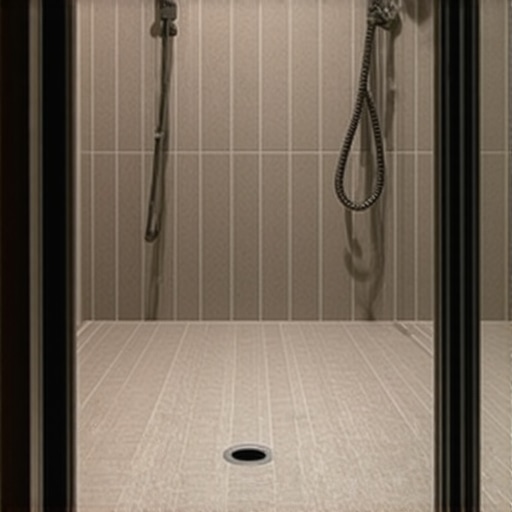
Shower floors fail primarily due to poor drainage slopes and the lack of a proper pre-slope beneath the waterproofing membrane. If the water cannot reach the weep holes in the drain assembly, it will saturate the mortar bed and create a permanent swamp under your tile. This is the most common disaster I see. A guy builds a shower pan and puts the liner flat on the subfloor. Then he puts two inches of mud on top and slopes the mud. He thinks he is a genius. But water goes through grout. It goes through thin-set. It hits that flat liner and just sits there. Eventually, it starts to smell like a locker room. That is the smell of bacteria growing in the standing water under your feet. You must slope the subfloor itself or the pre-pitch mortar before the liner goes down. The marble test is vital here. If you drop a marble on your shower subfloor and it does not roll toward the drain, you have to fix it before the first layer of cement goes down. The TCNA guidelines are very clear about this, yet I see it done wrong every single week.
“The mortar bed must be sloped at a rate of 1/4 inch per foot toward the drain to ensure proper evacuation of moisture from the assembly.” – TCNA Handbook Standards
Laminate and carpet install pitfalls
Installing carpet or laminate over an un-leveled surface leads to premature wear patterns and structural failure of the flooring material. In carpet, this manifests as delamination of the primary and secondary backings, while in laminate, it results in the snapping of the tongue and groove joints. When people hire me for a carpet install, they think I am just going to kick it in and leave. But I spend half my time checking the tack strips and the subfloor. If the floor has a slope or a dip, the carpet will never stay tight. It will pull off the pins. For laminate, the danger is even higher. Laminate is basically high-density fiberboard. It is sawdust and glue. It has no structural strength on its own. It relies entirely on the subfloor being a flat plane. If the floor is wavy, every step you take flexes those joints. Eventually, the plastic wear layer on top will start to peel at the seams because the boards are rubbing together. I have seen floors that were only two years old look like they were twenty because of poor floor leveling. You cannot skip the prep work. Prep is 80 percent of a good flooring job. The actual laying of the planks is just the victory lap.
The moisture meter does not lie
Moisture content in a subfloor must be verified with a calibrated meter to ensure it falls within the manufacturer’s specified range, typically below 12 percent for wood and 3 pounds per 1,000 square feet for concrete. Excessive moisture will cause wood to cup and adhesives to emulsify, leading to a total failure of the floor system. I never start a job without my moisture meter. I don’t care how dry the house feels. I have walked into million-dollar homes where the humidity was 70 percent because the HVAC was not balanced. If I put down a hardwood floor in that environment, it will be cupped by Tuesday. Wood is a living material. It breathes. It expands and contracts based on the moisture in the air and the subfloor. If you are installing over concrete, you have to check for calcium chloride emissions. Concrete looks dry on the surface, but it can be holding gallons of water deep in the slab. That water is looking for a way out. If you seal it under a floor without a barrier, it will create bubbles in your adhesive or rot out your carpet padding. It is a silent killer of floors.
Checklist for a perfect floor
A successful installation requires a systematic approach to surface preparation, material acclimation, and environmental control. Following a rigorous checklist ensures that no mechanical or chemical requirements are overlooked during the process. Before you even open a box of flooring, you need to verify these steps. If you skip one, you are gambling with your investment. Most homeowners want to rush the process, but I tell them that the floor needs to sit in the room for at least 72 hours to acclimate to the temperature and humidity. If you skip acclimation, the floor will shrink or grow after it is installed, and that is how you get gaps or buckling. Use this list every time.
- Perform the marble test to identify all slopes and low spots.
- Check moisture levels in the subfloor and the new flooring material.
- Grind down any high spots in the concrete or plane down high joists.
- Apply a primer before using self-leveling compound to ensure a bond.
- Allow all leveling agents to cure fully before applying adhesive.
- Verify that the expansion gap at the perimeter is at least 1/4 inch.
- Clean the surface of all dust and debris using a vacuum, not just a broom.
If you follow these steps, your floor will last for decades. If you don’t, you will be calling me in three years to tear it out and start over. Flooring is not just about what looks good in a showroom. It is about the physics of the house. It is about the chemistry of the glue. It is about the 1/8 inch that makes the difference between a masterpiece and a disaster. I have been on my knees for 25 years, and I can tell you that the guys who cut corners always get caught. The floor always tells the truth in the end. Whether it is the way it sounds when you walk on it or the way the marble rolls, the truth is right there under your feet. Don’t ignore it. Respect the subfloor, and the rest of the job will take care of itself.