How to Keep Your Laminate Floor from Bouncing
The physics of the hollow click
Laminate floors bounce because of subfloor deflection, insufficient floor leveling, and improper underlayment selection. When a floating floor sits over a low spot in the concrete slab or plywood subfloor, a void is created. Stepping on the plank forces the locking mechanism to bend.
I spent three days grinding concrete on a job last month just so the floor would not click like a castanet. Most guys skip the leveling compound. They think the underlayment will hide the dip. It will not. I have spent twenty five years on my knees with a moisture meter and a straight edge. I have seen fifteen thousand dollar wide plank walnut floors turn into potato chips because of poor prep. Your laminate is no different. It is an engineering challenge, not a decorative choice. If you ignore the substrate, the floor will fail. It is that simple. The bounce you feel is the sound of your investment slowly breaking apart at the seams. Every time that floor deflects, the tongue and groove are grinding against each other. Eventually, they will snap. Then you are looking at a full tear out instead of a simple fix.
The 1/8 inch that ruins everything
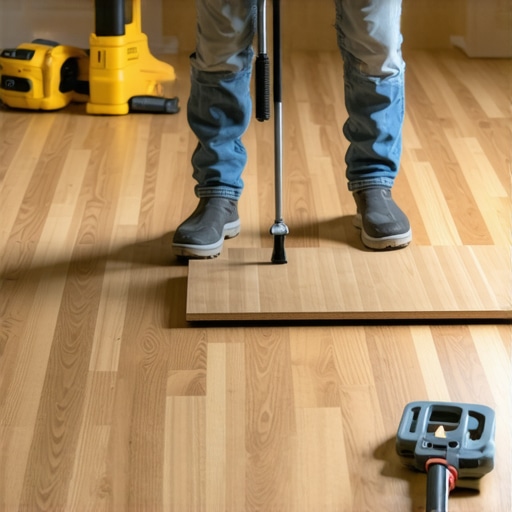
Proper floor leveling requires the substrate to be flat within 1/8 inch over a 10 foot radius or 3/16 inch over 10 feet depending on the manufacturer. This industry standard ensures that the laminate planks remain in constant contact with the underlayment and subfloor, preventing vertical movement and joint fatigue.
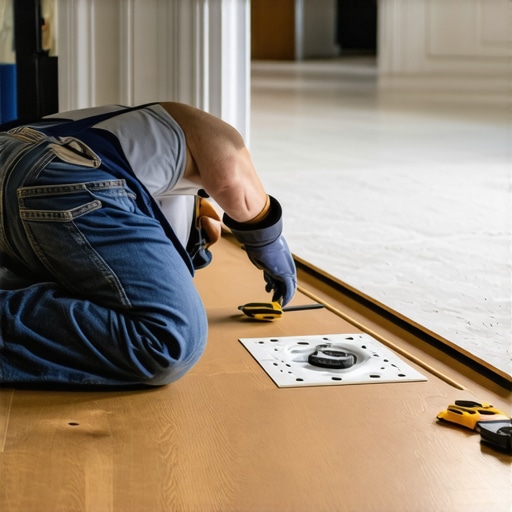
Most homeowners and DIYers look at a floor and think it looks flat enough. Their eyes are lying to them. You need a ten foot straight edge or a laser level. When you find a dip that exceeds the tolerance, you cannot just fill it with extra padding. That is a rookie mistake. You need a high quality self leveling underlayment. These compounds are made with calcium aluminate cements that flow like water and dry harder than the concrete itself. If you are working on a wood subfloor, you might need to sand down high spots or sister joists from below. A bouncy floor is often a structural cry for help. If your joists are spaced too far apart, the plywood between them will flex. No amount of expensive laminate will fix a weak skeleton. You have to stiffen the bones before you skin the body. [IMAGE_PLACEHOLDER_1]
“A floor is only as good as the subfloor beneath it, deflection is the enemy of every joint.” – Master Flooring Axiom
Why your subfloor is lying to you
A concrete slab may look solid but it is a porous sponge that releases moisture vapor, which can warp laminate cores. Even if the slab is level, it might not be flat. Subfloor preparation is the most skipped step in a carpet install or a hard surface conversion, leading to hollow sounds.
Concrete is a living, breathing material. It moves. It sweats. If you are converting a room from a carpet install to laminate, you are moving from a forgiving surface to an unforgiving one. Carpet hides a multitude of sins. It masks the dips and ridges in the slab. Once you pull that old pad up, you will see the truth. The surface will be covered in old adhesive, overspray from painters, and craters where the tack strips were pulled. You must scrape it all. Every bit of drywall mud and old glue must go. If the floor is not clean, your leveling compound will not bond. It will de-laminate and create a crunching sound under your feet that is even worse than a bounce. I have seen guys try to pour leveler over dust. It is like trying to glue two pieces of wood together with sand in between. It will fail. Every single time.
The dangerous myth of thick underlayment
Using thick underlayment to fix a bouncy floor is a failure because excessive compression allows the locking systems to move too much. High quality laminate underlayment should be dense and usually no more than 3mm thick to provide stable support for the HDF core of the planks.
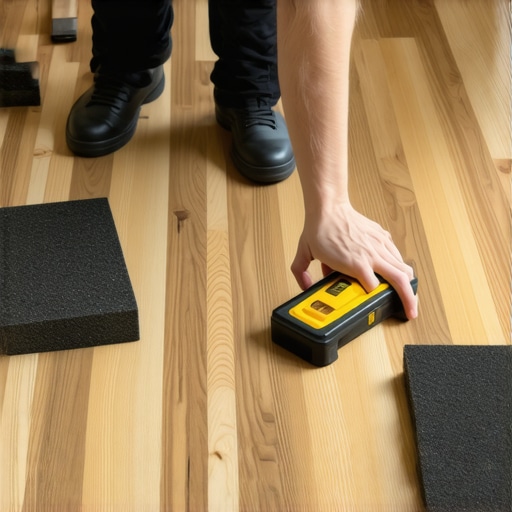
People think more cushion is better. They want that soft walk. But laminate is a floating system. It relies on the strength of its click-lock joints. If you put a thick, soft foam underneath it, the floor becomes a trampoline. When you step on a seam, the plank sinks into the foam. The adjacent plank stays up. This puts immense shear pressure on the thin plastic or wood tongue. Over time, that tongue will shear off. Now you have a gap. That gap will collect dirt and moisture. Soon, the edges of the laminate will begin to peak or swell. You need a high density underlayment with a high compression strength. Look for an IIC rating that suits your needs, but never sacrifice density for thickness. A 2mm high density rubber underlayment is worth ten times its weight in cheap 6mm foam.
| Underlayment Type | Density Rating | Stability Level | Best Use Case |
|---|---|---|---|
| Standard PE Foam | Low | Low | Budget rentals only |
| High Density Foam | Medium | Medium | Residential bedrooms |
| Felt Underlayment | High | High | Sound dampening and warmth |
| Rubber Underlayment | Very High | Extreme | Commercial or high traffic |
The ghost in the expansion gap
Laminate floors require an expansion gap of 1/4 inch to 1/2 inch around the entire perimeter to account for thermal expansion. If the floor is tight against a wall or a heavy kitchen island, it will bind and lift, creating a bouncy or spongy feel in the center.
I have walked into jobs where the floor was tight against the door casings. The homeowner said the floor felt like it was floating. It was. It was literally arched like a bow because it had nowhere to go. Wood and fiberboard expand when the humidity rises. If you do not leave that gap, the floor will find the path of least resistance, which is up. This is why you never install a heavy kitchen island on top of a floating floor. You are pinning it down. It is like putting a heavy weight on one end of a rug and then trying to stretch it. Something is going to wrinkle. If you have a bounce that only appears during the summer, check your baseboards. The floor might be screaming for room to breathe. Use a specialized pull bar and a multi-tool to trim back the planks if you find they are touching the studs.
Humidity and the hidden physics of fiberboard
Acclimation of laminate flooring for at least 48 to 72 hours is mandatory to prevent dimensional instability. The moisture content of the subfloor must be within 3 percent of the laminate planks to prevent the HDF core from absorbing excess water and warping or cupping.
If you live near the coast or in a high humidity area, this is even more critical. Think about the moisture coming from your showers. That steam travels. It settles into the floor. If your subfloor is damp concrete, that moisture is being driven up into the bottom of your laminate. This is why a 6 mil poly vapor barrier is not a suggestion, it is a requirement on concrete. I have seen floors that were perfectly flat in the morning and cupped by the evening because the sun hit them through a sliding glass door, drawing moisture up from the slab. The chemistry of the adhesives used in the HDF core can only take so much stress before the layers begin to separate. Protect your investment by controlling the climate in your home before, during, and after installation.
“Deflection in a floating floor system leads to mechanical failure of the locking profile, regardless of product cost.” – TCNA Flooring Handbook
The master installer checklist for success
- Verify subfloor flatness with a 10 foot straight edge before starting.
- Ensure the concrete slab moisture vapor emission rate is below 3 lbs per 1000 square feet.
- Remove all debris, paint, and old adhesive from the substrate.
- Install a 6 mil poly vapor barrier on all concrete surfaces.
- Maintain a 1/2 inch expansion gap around all vertical obstructions.
- Acclimate the boxes in the room of installation for at least 3 days.
- Never install over existing carpet or soft vinyl.
Final walkthrough
A bouncy floor is a symptom, not the disease. The disease is poor preparation. If you want a floor that feels solid underfoot, you have to do the dirty work. Grind the high spots. Fill the low spots. Use the right underlayment. Leave the expansion gaps. If you follow these rules, your floor will last for decades. If you ignore them, you will be calling someone like me to come tear it all out in two years. Do it right the first time. Your knees and your wallet will thank you. Stop looking at the color of the wood and start looking at the flatness of the floor. That is where the real quality lies.