The Simple Cardboard Hack for Protecting New Carpet During a Move
I have spent twenty five years with sawdust under my nails and the smell of WD-40 on my clothes. I have seen the most expensive residences in the country ruined by a single afternoon of moving furniture. Most guys skip the leveling compound. They think the underlayment will hide the dip. It won’t. I spent three days grinding concrete on a job last month just so the floor wouldn’t click like a castanet. That same level of obsession must apply to protecting the finished product. When you drop fifteen thousand dollars on a premium carpet install, the last thing you want is a refrigerator dolly tearing through the primary backing. People think carpet is soft. It is not. It is a complex weave of synthetic or natural polymers that can be permanently deformed by shear force. This is why the simple cardboard hack is the only way I let my crews work. We do not use those sticky plastic films that leave a residue. We use structural logic.
The hard truth about moving across new carpet
Carpet protection during a move requires more than just a thin layer of fabric. You need a rigid pressure distribution barrier like corrugated cardboard to prevent pile crushing, fiber delamination, and backing failure. Traditional drop cloths or plastic adhesive films often fail to protect against point-load mechanical stress from heavy furniture legs or appliance dollies. The physics of load distribution dictate that a concentrated weight will sink into the cushion and subfloor without a hard surface to spread the PSI load. I have walked into jobs where a brand new walnut floor was cupping because the humidity wasn’t checked, and I have seen carpets with permanent ‘trails’ from moving day. Carpet is a structural engineering challenge. If you treat it like a cheap rug, it will fail like one.
The subfloor secret that installers hide
Floor leveling is the hidden foundation of every successful carpet install. If the subfloor has a dip greater than 3/16 of an inch over a 10-foot span, the carpet backing will eventually stretch and fatigue over that void. This causes wrinkling and delamination that no amount of power stretching can fix. When you move heavy furniture, those dips become traps. A heavy sofa leg hitting a low spot in the plywood or concrete slab will exert massive pressure on the carpet fibers. The cardboard hack creates a temporary bridge over these imperfections. It mimics a solid surface, allowing weight to glide rather than sink. I always tell my clients that if they skip the self-leveling underlayment, they are just counting the days until their floor starts to fail. I have spent too many hours grinding high spots off slabs to believe otherwise. A flat floor is a quiet floor and a durable floor.
“A floor is only as good as the subfloor beneath it; deflection is the enemy of every joint.” – Master Flooring Axiom
The physics of fiber compression and point loads
Nylon 6,6 and triexta fibers are engineered for resilience, but they have a plastic deformation point. When a 500-pound refrigerator is rolled across a carpet, the contact patch of the wheels is tiny. This creates a point load that exceeds the compressive strength of the polyurethane foam padding. Once that padding is crushed, it often stays crushed. The cardboard shield works by mechanical load spreading. The arched fluting inside the corrugated sheets acts like a series of structural beams. It takes that high-intensity point load and distributes it across a 12-inch or 24-inch surface area. This keeps the PSI below the threshold of permanent fiber damage. If you don’t use this, you are effectively using your new floor as a sacrificial lubricant for your furniture move. It is a recipe for a claims nightmare.
How to execute the corrugated shield strategy
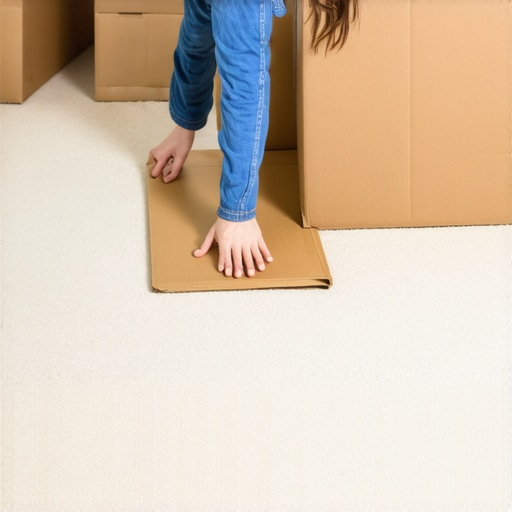
Professional movers and flooring contractors use ram board or heavy-duty cardboard to create temporary walkways. To do this correctly, you must source double-wall corrugated sheets. Lay them with the flutes perpendicular to the traffic path. This provides the highest lateral stability. You must tape the seams using blue painter’s tape, but only tape cardboard to cardboard. Never tape the cardboard to the carpet itself, as the adhesive can bond to the fibers and cause pulls or leave chemical residue. This creates a monolithic surface. It is essentially a temporary laminate floor sitting on top of your carpet. It allows dollies to roll with zero rolling resistance. It also prevents the carpet from bunching in front of the wheels, which is the primary cause of seam failure during a move.
Comparison of Floor Protection Materials
| Material Type | PSI Resistance | Moisture Breathability | Best Use Case |
|---|---|---|---|
| Corrugated Cardboard | High | Excellent | Heavy furniture and dollies |
| Adhesive Plastic Film | Low | None (Traps moisture) | Light foot traffic only |
| Masonite Sheets | Extreme | Moderate | Heavy construction and safes |
| Canvas Drop Cloths | None | High | Paint splatter only |
Why plastic films are a moisture trap for fresh fibers
Vapor emissions from a concrete slab or wood subfloor are a constant reality. Even a ‘dry’ floor is constantly breathing moisture. When you apply non-breathable plastic film over a new carpet install, you are creating a micro-greenhouse. This trapped moisture can react with the latex adhesive in the carpet backing, a process known as hydrolysis. This weakens the bond between the primary and secondary backings. It can also lead to mold growth within the padding. Cardboard is cellulose-based and vapor-permeable. It allows the floor to acclimate and vent moisture while still providing mechanical protection. I have seen LVP and laminate floors buckle because someone left plastic over them for a week. Carpet is no different. It needs to breathe. If you seal it up, you are asking for odors and structural failure.
The 1/8 inch that ruins everything
Precision is the difference between a craftsman and a laborer. In the world of floor leveling, 1/8 of an inch is a canyon. If your subfloor has an 1/8 inch protrusion, every person walking across that carpet will eventually wear a bald spot into the fibers at that exact stress point. When moving, that 1/8 inch height variance can catch the edge of a dolly or a sliding heavy cabinet, causing a tear that cannot be invisible-mended. Cardboard bridges these gaps. It provides a buffer zone. If you are installing laminate nearby, you know that expansion gaps are non-negotiable. Carpet also needs its perimeter to be free of obstructions. Do not jam your protective cardboard under the baseboards. Leave a small gap so the carpet can settle into the tack strips without being distorted by the weight of the protection layer.
“Deflection is the silent killer of all flooring installations, whether textile or timber.” – TCNA Engineering Handbook
The moisture nightmare near showers and wet areas
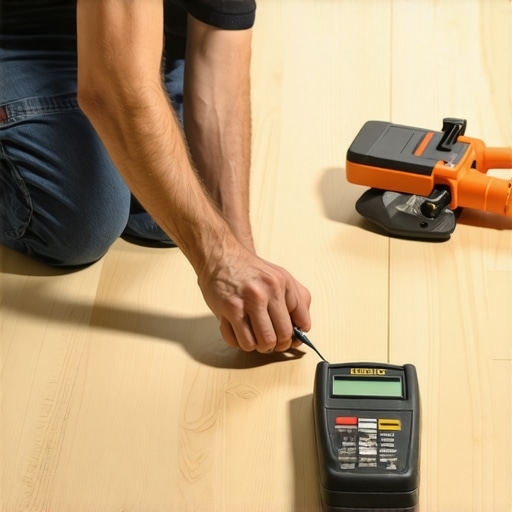
High-moisture environments like bathrooms and showers pose a unique threat to adjacent carpet installs. If you are moving items through a hallway that borders a wet room, your carpet is likely at a higher equilibrium moisture content. This makes the fibers more pliable and easier to damage. Cardboard is particularly useful here because it can absorb small amounts of tracked water from the movers’ shoes without letting it soak into the carpet pile. However, you must be vigilant. If the cardboard becomes saturated, it must be replaced immediately. Damp cardboard can leach dyes or tannins into light-colored carpet. I always keep a moisture meter in my pocket. I don’t trust my eyes. I trust the percentage readings. If the subfloor near the shower is off the charts, we don’t lay the protection until it’s remediated.
Pre-Move Floor Protection Checklist
- Vacuum the new carpet thoroughly to remove any grit that could act as an abrasive under the cardboard.
- Inspect the perimeter and ensure all tack strips are fully covered and not protruding.
- Source heavy-duty corrugated cardboard, preferably B-flute or C-flute for maximum crush resistance.
- Lay the cardboard in high-traffic corridors, overlapping seams by at least two inches.
- Secure seams with high-quality tape, ensuring no adhesive touches the carpet fibers.
- Create ‘turning pads’ at corners by doubling the cardboard layers to handle the shear of pivoting dollies.
- Remove the cardboard immediately after the heavy furniture is placed to allow the carpet to breathe.
Laminate versus carpet protection protocols
Laminate flooring and carpet require different protective mindsets. While laminate is scratch-resistant, its locking mechanisms are brittle. If you put too much soft cushion under a rigid protection layer on laminate, the joints will flex and snap. Carpet is the opposite. The padding is the cushion, and the cardboard is the structure. When people try to use carpet protection methods on laminate, they often fail because they don’t account for static electricity. Walking on corrugated board over synthetic laminate can build a massive charge. With carpet, the natural or synthetic fibers are generally more forgiving of static buildup, but the mechanical protection remains the priority. Never assume one protocol fits all surfaces. Every material has its own chemical and physical limits.
Structural integrity and the final walk through
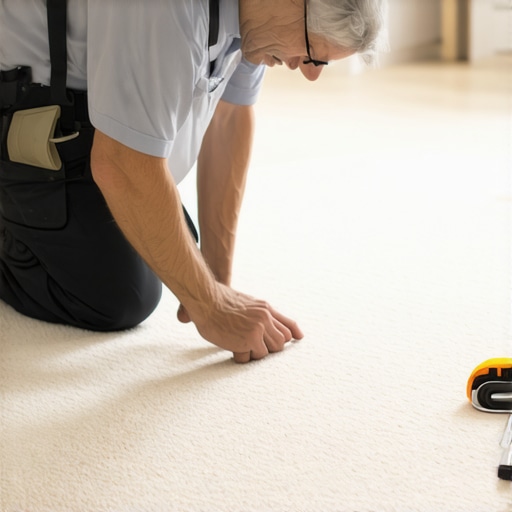
The final word on floor preservation is vigilance. Once the movers have finished, and the cardboard is pulled up, you must perform a tactile inspection. Feel for dents in the padding or shifts in the seams. If you used the cardboard hack, you should find the pile is undamaged and the subfloor is intact. Most installers just want to get paid and leave. I want the floor to look the same in ten years as it does on day one. This requires respect for the materials. Don’t let cheap cardboard or lazy habits ruin a professional install. The chemistry of the glues and the physics of the fibers demand protection. If you treat your floor like an engineered surface, it will perform like one. If you treat it like decoration, you will be replacing it within five years. That is the hard truth from a man who has spent a lifetime on his knees in the sawdust.