Why your carpet is rippling in the middle of the room
Why your carpet is rippling in the middle of the room
I once walked into a luxury penthouse where the owner had just spent twenty thousand dollars on a custom wool blend. Within six months, the hallway looked like a series of ocean waves. The installer told her it was just the house settling. That was a lie. I spent three hours pulling back the edges to show her that the guy had only used a knee kicker and skipped the power stretcher entirely because he didn’t want to haul the heavy case up the elevator. A ripple is not a cosmetic quirk. It is a mechanical failure of the tension system that holds your flooring in place. If your carpet is buckled, it is because the internal forces of the textile have overcome the friction of the installation. This is a structural engineering problem disguised as a home decor issue.
The mechanical failure of the knee kicker
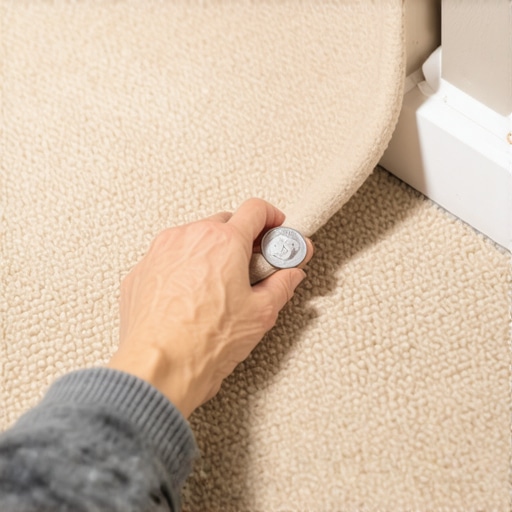
A knee kicker is designed for positioning carpet in tight corners or on stairs, not for stretching an entire room. When an installer relies solely on a knee kicker, they are only applying localized tension. This tension does not reach the center of the room. Over time, the synthetic fibers in the primary and secondary backing relax. This relaxation allows the built up stress to migrate toward the middle, creating the unsightly ridges you see today. To properly secure a floor, an installer must use a power stretcher. This tool uses a long pole system to brace against one wall and physically elongate the carpet toward the opposite wall. Without this physical elongation, the carpet remains in a relaxed state. As soon as you add the friction of foot traffic or the weight of heavy furniture, the material shifts. It has nowhere to go but up. Professional standards from the Carpet and Rug Institute dictate that carpet must be stretched to a specific percentage of its length and width. Skipping this step is the primary reason for failure in modern homes.
Humidity and the expansion of synthetic fibers
Moisture in the air acts as a lubricant for the molecular bonds within your carpet backing. Most residential carpets utilize a secondary backing made of polypropylene or jute, held together by a layer of Styrene Butadiene Rubber latex. This latex is sensitive to high humidity levels. In a humid environment, the latex softens and the fibers absorb microscopic amounts of water. This causes the material to expand. If the floor was not stretched tight enough during the initial carpet install, this expansion creates the ripple. This is why you often see buckling during the summer months or in coastal regions where the HVAC system struggles to pull moisture from the air. In extreme cases, the moisture can even lead to delamination, where the primary and secondary backings actually separate from each other. Once the backings separate, the structural integrity of the carpet is gone. No amount of stretching will fix a delaminated floor. You are essentially looking at a chemical breakdown of the adhesive that holds your floor together.
“A floor is only as good as the subfloor beneath it; deflection is the enemy of every joint.” – Master Flooring Axiom
The physics of the expansion gap
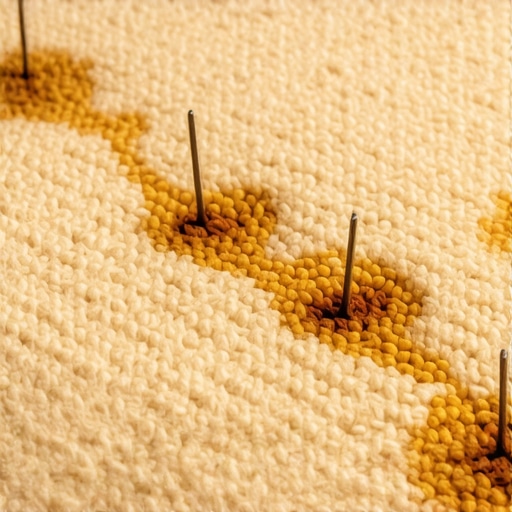
Every floor needs room to breathe, even if it is tucked under a baseboard. While people focus on floor leveling when they install laminate or tile in showers, they often ignore it for carpet. If a subfloor has a significant dip, the carpet will bridge that gap. When you walk over that bridge, you force the carpet down into the void. This constant vertical movement pulls the carpet away from the tack strips at the perimeter. Eventually, the carpet loses its grip on the pins. Once it is loose, it begins to move laterally. This lateral movement results in a ripple. You might think the padding will hide the dip, but the padding is just a cushion. It does not provide structural support. I have seen guys try to double up on padding to hide a bad subfloor, but that actually makes the problem worse. A pad that is too thick or too soft allows for too much vertical travel. This travel puts extreme stress on the seams and the locking mechanisms of the tack strip.
| Fiber Type | Moisture Sensitivity | Expansion Risk | Required Stretch |
|---|---|---|---|
| Nylon | Medium | High | 1.5 Percent |
| Polyester | Low | Medium | 1.0 Percent |
| Wool | High | Extreme | 2.0 Percent |
| Olefin | Low | Low | 1.0 Percent |
The danger of heavy furniture and the drag effect
Dragging a heavy sofa across a room is the fastest way to ruin a professional stretch. When you slide a heavy object, you are creating a concentrated point of friction that pulls the carpet along with the object. If the carpet is already slightly loose, this force will pull it right off the tack strip pins. I always tell my clients to use furniture sliders or to lift items completely. The sheer force of a three hundred pound dresser being pushed across a room can stretch the latex backing beyond its elastic limit. Once the backing is stretched, it does not always snap back. This is known as permanent deformation. You see this often in rental properties where tenants move furniture frequently. The ripples usually start near the path where the furniture was moved and then migrate toward the center of the room as the rest of the carpet relaxes to match the new shape.
Why your subfloor is lying to you
A subfloor that looks flat to the naked eye is often a landscape of peaks and valleys. If you do not take a straight edge to the floor before the pad goes down, you are asking for trouble. Most installers are in such a rush to get the carpet down that they ignore the prep work. They think carpet is forgiving. It isn’t. If the subfloor has high spots, those spots will wear out the carpet fibers faster. If there are low spots, the carpet will ripple. Proper floor leveling is just as important for a soft surface as it is for a hard one. I have spent days grinding down high spots in concrete slabs just to ensure the carpet would lay flat for ten years. It is the difference between a floor that lasts and a floor that needs to be replaced in twenty four months. If your installer doesn’t have a level in his hand when he walks into the room, he isn’t an architect, he is a laborer.
- Check the subfloor for moisture using a pin meter before installation.
- Ensure the tack strips are not rotted or rusted from old spills.
- Verify that the padding density matches the manufacturer specification.
- Insist on the use of a power stretcher for every room over ten feet.
- Maintain a consistent indoor climate to prevent fiber expansion.
The truth about the re-stretch process
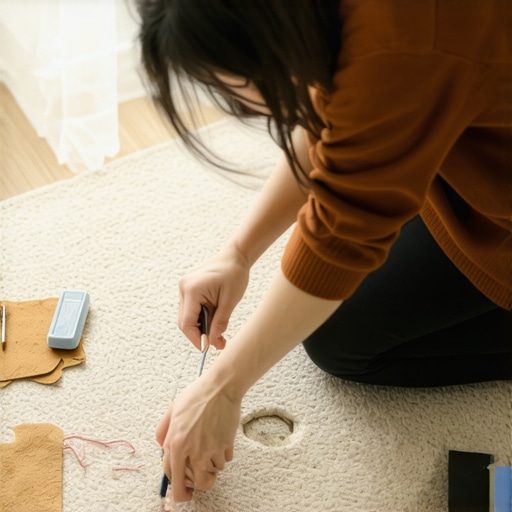
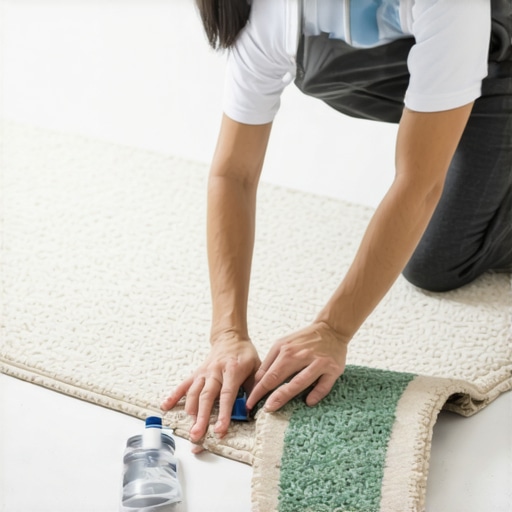
Fixing a ripple is not as simple as just pulling it tight again. To do a re-stretch correctly, the installer must empty the room of all furniture. You cannot stretch a carpet that is being pinned down by a bed or a desk. The installer has to pull up the edges, reset the tension across the entire plane of the floor, and trim the excess material. If you see an installer just trying to kick the ripple to the wall with a knee kicker, fire them. They are just moving the problem three feet to the left. A true re-stretch involves a mechanical pull that realigns the entire grid of the carpet backing. It is a labor intensive process that requires a deep understanding of textile physics. If the carpet has been rippled for a long time, the backing may have developed a permanent crease. At that point, the floor is structurally compromised. No amount of tension will remove a hard crease in the latex. That is why you need to address ripples as soon as they appear.