The Real Reason Your Carpet Seams Are Turning Black
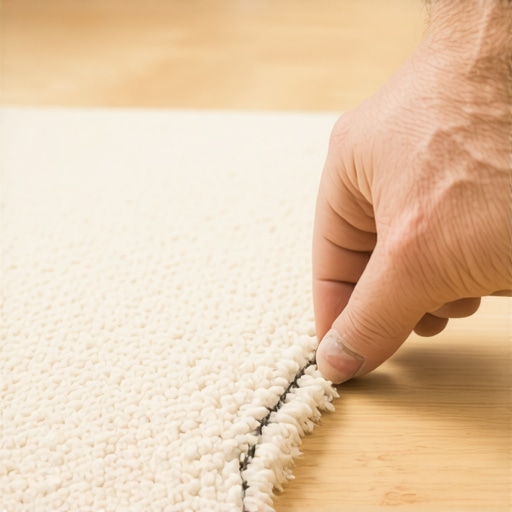
The dark lines appearing along your baseboards and under your doorways are not just simple dirt or poor vacuuming habits. This phenomenon is known as filtration soiling, a complex interaction between indoor air pressure, microscopic soot particles, and the physics of carpet fiber density. Most installers ignore the subfloor prep required to prevent this, but the structural integrity of your floor determines how much air moves through those gaps. I smell like WD-40 and oak dust because I spent thirty years fixing these mistakes. Most guys skip the leveling compound. They think the underlayment will hide the dip. It will not. I spent three days grinding concrete on a job last month just so the floor would not click like a castanet, and that same level of detail is what prevents your carpet from acting like a giant air filter. When a floor is not level, air gaps emerge between the subfloor and the wall plate. This creates a vacuum effect. As your HVAC system runs, it pulls air through these gaps. The carpet fibers act as a sieve, trapping carbon, oils, and microscopic pollutants. Over time, these particles chemically bond to the synthetic polymers in your carpet. It is a structural failure disguised as a cleaning problem.
The filtration soiling nightmare
Filtration soiling occurs when air passes through narrow gaps between the floor and the wall or under doors, leaving behind concentrated deposits of microscopic pollutants. These particles are often smaller than one micron. They consist of carbon from candles, cooking oils, and outdoor smog. Because synthetic fibers like nylon and polyester carry a slight electrostatic charge, they attract these pollutants like a magnet. This is why the black lines are so difficult to remove. Traditional steam cleaning often fails because the particles are buried deep within the pile and are bonded to the fiber at a molecular level. If your installer did not use a high-quality sealant at the perimeter of the room, you are essentially breathing through your floor. This is not just an aesthetic issue. It is a sign that your home envelope is leaking air. In regions like the Pacific Northwest, high humidity can make these particles stick even faster, creating a permanent stain that defies even the strongest surfactants.
The physics of subfloor air movement
Air moves through the path of least resistance. When a subfloor is uneven, it creates voids. These voids act as pressurized chambers. If you have a crawlspace or a basement, the temperature differential between the living space and the area below creates a stack effect. Warm air rises, and cool air is sucked in through the subfloor seams. This is why carpet install quality matters more than the carpet itself. A cheap carpet installed over a perfectly sealed and level floor will stay clean longer than an expensive wool rug over a leaky subfloor. Most homeowners do not realize that floor leveling is a prerequisite for air quality. If you have a concrete slab with a 1/4 inch dip, the tack strip will not sit flush. This gap is an open highway for air. I have seen $20,000 renovations ruined because the contractor did not want to spend $400 on self-leveling underlayment. They just rolled out the pad and hoped for the best. It never works.
“A floor is only as good as the subfloor beneath it; deflection is the enemy of every joint.” – Master Flooring Axiom
The 1/8 inch that ruins everything
Precision in subfloor leveling is the only way to prevent the air gaps that lead to filtration soiling and structural carpet fatigue. A variation of more than 1/8 inch over a ten foot radius is the industry standard for failure. When the subfloor is wavy, the carpet pad compresses unevenly. This creates a bellows effect every time you walk across the room. You are literally pumping air out of the subfloor and through the carpet fibers with every step. I always tell my clients that if they can see the gap between the baseboard and the floor, the damage is already happening. We use moisture meters to check the slab before we even think about the carpet. If the moisture content is too high, it reacts with the adhesive in the tack strip and creates a musty odor that the filtration soiling then traps. It is a feedback loop of filth. You need a flat, dry, and sealed surface. Anything less is just a temporary cover up.
| Material Type | Micron Filtration Rate | Static Charge Propensity | Cleaning Difficulty |
|---|---|---|---|
| Nylon 6,6 | High | High | Moderate |
| Polyester | Moderate | Extreme | High |
| Wool | Low | Low | Low |
| Triextra | Moderate | Low | Moderate |
Why your subfloor is lying to you
The plywood or concrete under your feet looks solid, but it is porous. On a microscopic level, concrete is like a sponge. If it was not poured with a proper vapor barrier, it is constantly off-gassing. This gas carries fine particulates that contribute to the blackening of your carpet seams. Laminate flooring suffers from a similar issue. While laminate does not show filtration soiling in the same way, the moisture moving through the subfloor causes the mdf core to swell. This is why you see peaked seams in laminate. People blame the product, but the fault lies with the installer who did not check the calcium chloride levels in the slab. I have seen laminate floors buckle in three months because the installer ignored the humidity in the room. You have to acclimate the material. You have to seal the subfloor. There are no shortcuts in this business. If someone tells you they can install a floor in one day without checking these levels, they are lying to you. They want your money, not your long-term satisfaction.
The moisture trap near showers and baths
Carpet installed adjacent to bathrooms and showers is at an extreme risk for localized filtration soiling and mold growth due to high humidity. The steam from a shower increases the localized air pressure. This moisture-laden air seeks out the cool gaps at the floor level. When the moisture hits the cold subfloor, it condenses. This makes the dust and soot stick like glue. I never recommend carpet in a master bedroom that transitions directly into a wet area without a solid surface buffer of at least three feet. You need tile or luxury vinyl plank there. Otherwise, you are just creating a breeding ground for bacteria. The chemistry of the adhesives used in carpet backing can also break down when exposed to frequent humidity. This releases a sticky residue that accelerates the blackening of the seams. It is a structural engineering challenge that requires a transition strip and a proper moisture seal at the threshold.
“Subfloor preparation is 90 percent of the job; the remaining 10 percent is just showing off.” – Master Flooring Axiom
The regional climate factor
In high humidity environments, the air is heavier and carries more pollutants. If you live in a coastal area, the salt air can actually corrode the metal pins in your tack strips if the filtration soiling is left unchecked. In drier climates, the static electricity in the carpet is much higher, which pulls more dust out of the air. You cannot use the same installation techniques in Phoenix that you use in Miami. You have to adapt the vapor barriers and the adhesive types. A moisture barrier that works for laminate might not be sufficient for a high-end carpet installation. You need to understand the dew point of the subfloor. If the subfloor temperature is below the dew point of the room air, you will have a condensation problem. This is why insulating your crawlspace is actually a flooring decision. Everything in the house is connected. The floor is the foundation of your indoor air quality.
Checklist for a professional installation
- Verify subfloor flatness within 1/8 inch over 10 feet.
- Seal all perimeter gaps with a high-grade silicone or acoustic sealant.
- Test concrete moisture using a relative humidity probe.
- Acclimate all materials to the room temperature for 72 hours.
- Ensure the HVAC system is balanced to prevent pressure differentials.
- Apply a high-quality primer to the subfloor to reduce dust.
The ghost in the expansion gap
Every floor needs room to breathe, but that expansion gap should not be a gateway for filth. For laminate and hardwood, we leave a 1/4 inch gap at the wall. This is covered by baseboards and quarter round. However, if that gap is not managed correctly, it becomes a tunnel for air movement. We use specialized foam backer rods in these gaps for certain installations. It allows the floor to move while blocking the airflow. It is a small detail that costs about five cents a foot, but it prevents the black lines from ever forming. Most guys do not even carry backer rod in their trucks. They are just trying to get to the next job. But if you want a floor that looks as good in ten years as it does on day one, you have to sweat the small stuff. You have to care about the molecules, not just the square footage. That is the difference between a floor mechanic and a floor artist. I will take the mechanic every time because he knows why things break. And once you know why they break, you can build them to last forever.