Why Your Shower Niche Is The Weakest Link in Your Waterproofing
The ghost in the expansion gap
A shower niche fails because it interrupts the continuous plane of the wall and introduces twelve internal corners that are prone to structural movement. Most installers treat a niche like a simple box cut into a wall, but it is actually a complex hydraulic intersection. If the internal corners are not reinforced with a membrane that can handle three dimensional stress, the waterproofing will crack at the microscopic level. This allow water to bypass the tile and saturate the wall cavity over time.
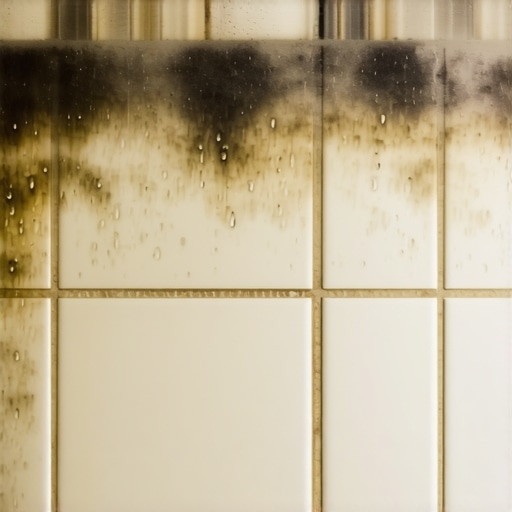
I spent three days grinding concrete on a job last month just so the floor wouldn’t click like a castanet. That job taught me that people focus so much on the pretty tile that they forget the chemistry happening behind it. I walked into that bathroom and smelled the rot before I even saw the mold. The homeowner thought their waterproof laminate in the hallway was the problem, but the real culprit was the shower niche. It was leaking through the studs and under the subfloor, ruining the floor leveling job I had done the year before. Water is a patient enemy. It doesn’t need a hole, it just needs a pore. When you cut a hole in a wall to put in a soap dish, you are creating a massive liability that requires precision engineering to solve.
“A floor is only as good as the subfloor beneath it; deflection is the enemy of every joint.” – Master Flooring Axiom
The chemical reality of modified thin set
Modified thin set uses liquid latex or powdered polymers to increase the bond strength and flexibility of the mortar. This chemical enhancement is vital for shower niches because it allow the tile to adhere to non porous waterproofing membranes. Without these polymers, the mortar would simply skin over and fail to grab the back of the tile, leading to debonding in high moisture environments. I have seen guys use cheap, unmodified mud in a niche and the tiles literally fell off the wall after six months. You need a C2TE S1 rated adhesive to ensure that the vertical surface holds the weight while dealing with the thermal expansion of hot water. When the temperature changes from 60 degrees to 105 degrees in a matter of seconds, the tile and the substrate expand at different rates. If your adhesive isn’t flexible, it snaps the bond.
Why your subfloor is lying to you
The subfloor appears stable but it constantly reacts to the hydrostatic pressure and humidity levels within the crawlspace or slab. Even if you are working on a shower niche, the stability of the floor leveling underneath the shower pan dictates whether the wall studs will shift. If the floor settles by even a sixteenth of an inch, it puts diagonal tension on the niche corners. This tension is the primary cause of grout cracking inside the niche. I always tell my apprentices that a shower is a vibrating, moving box. It is not a static object. If you are doing a carpet install or laying laminate in the adjacent room, you better hope the installer used a proper moisture barrier, or that humidity will migrate into your shower framing and cause the wood to swell.
| Waterproofing Method | Perm Rating | Cure Time | Movement Capability |
|---|---|---|---|
| Liquid Applied Membrane | 0.5 to 1.2 | 24 Hours | Low to Moderate |
| Bonded Sheet Membrane | Less than 0.1 | Immediate | High |
| Integrated Foam Niche | Less than 0.1 | Immediate | Extremely High |
The 1/8 inch that ruins everything
Every horizontal surface in a shower must have a minimum slope of one quarter inch per foot to ensure positive drainage. Most niches are installed with a flat bottom sill because the installer was too lazy to shim the framing. When water sits on a flat shelf, it pools. Through capillary action, that water is pulled into the grout lines and sits against the waterproofing 24 hours a day. This leads to a phenomenon called osmotic blistering where the waterproofing membrane actually detaches from the substrate because it is constantly saturated. You must pitch the niche sill. If you don’t, you are building a stagnant pond inside your wall. I have pulled apart niches where the wood underneath was like wet cake because the installer forgot this simple rule of physics.
- Check sill slope with a digital level to ensure at least 2 percent grade.
- Verify that all internal corners have been pre treated with corner seals.
- Ensure the waterproofing membrane extends at least 2 inches past the niche onto the main wall.
- Perform a localized flood test if the niche is large or custom built.
- Inspect the thin set coverage to ensure no air pockets are behind the tile.
Structural movement and the rigid niche trap
Rigid niche inserts are often better than site built niches because they are manufactured as a single piece of high density foam. This eliminates the twelve internal corners where leaks usually start. However, if the niche is fastened too tightly to the studs without allowing for movement, the studs can pull the niche apart as they dry out. I prefer to use a floating method where the niche is bonded to the backer board rather than hard screwed into the lumber. This allows the house to breathe without snapping the waterproofing seal. People think that a shower should be as rigid as a rock, but it actually needs to be as flexible as a bridge. The chemistry of the membranes must allow for at least 1/8 inch of movement over a ten foot span according to TCNA standards.
“Deflection of the substrate shall not exceed L/360 for ceramic tile and L/720 for natural stone installations.” – TCNA Handbook Standards
The myth of the waterproof tile
Tile and grout are not waterproof; they are merely water resistant surfaces that slow the transit of moisture. Many homeowners believe that because they picked a high end porcelain, they are safe from leaks. This is a dangerous lie. Porcelain has an absorption rate of less than 0.5 percent, but the grout between those tiles is a porous sponge. In a niche, where water is constantly splashing, the grout becomes a highway for moisture. This is why the floor leveling and the waterproofing membrane behind the tile are the only things keeping your house from rotting. If you skip the prep work, you are just waiting for a disaster. I have seen $20,000 tile jobs demolished because the installer saved $50 on a cheap liquid membrane. It is a tragedy of priorities. You have to respect the physics of the wet room or it will humiliate you.