How to Remove Red Wine Stains from Light Carpet
Most floor installers will tell you that a carpet is just a textile, but after twenty five years on my knees with a power stretcher and a moisture meter, I know better. A carpet is a multi layered architectural system. I spent three days grinding concrete on a job last month just so the floor wouldn’t click like a castanet because the subfloor was out of level. That same precision applies to red wine spills. If you treat a wine stain like a surface problem, you have already lost the war. You are dealing with a liquid that is seeking the lowest point of gravity, which means it is traveling through the primary backing, into the latex bond, and settling into the padding. I once saw a homeowner lose a five thousand dollar installation because they tried to scrub a stain and ended up delaminating the secondary backing. My mission is to ensure you do not make the same mistake. We are going to look at the chemistry of the tannin and the physics of the wicking effect.
The molecular chemistry of red wine tannins and pH balance
Red wine stains are primarily composed of anthocyanins and tannins that create a permanent chemical bond with the protein structures in wool or the polymer chains in synthetic fibers. To remove these, you must use a pH balanced surfactant that breaks the surface tension and prevents the oxidation of the pigment. When red wine hits your light carpet, the liquid acts as a solvent that seeks to penetrate the porous structure of the yarn. If the carpet is a Type 6 or Type 6,6 nylon, those fibers have open dye sites. The wine is literally a dye. It is searching for those open sites to park its molecules. If you use a high pH cleaner, like many grocery store brands, you actually lock the stain into the fiber by opening up those dye sites even further. You need to understand the alkalinity of your cleaning solution. Most installers prefer an acidic rinse to neutralize the wine. This prevents the browning effect that occurs when the sugars in the wine begin to oxidize and rot the organic components of the fiber. It is a race against time and chemistry. This is why I always keep a bottle of neutral detergent and a white cotton towel in my truck, right next to my floor leveling tools and my knee pads.
“A floor is only as good as the subfloor beneath it, deflection is the enemy of every joint.” – Master Flooring Axiom
The physics of capillary wicking and the subfloor trap
Capillary wicking occurs when moisture trapped in the carpet padding or the subfloor rises to the surface as the carpet fibers dry. This explains why a stain often reappears days after a successful cleaning session because the liquid was never fully extracted from the lower architectural layers. Think of your carpet like a straw. When you clean the top, the moisture at the bottom is pulled upward as the top evaporates. If you have a concrete subfloor that was not properly sealed during the carpet install, the wine can actually seep into the pores of the slab. This is the same reason we worry about moisture in showers and under laminate flooring. If the slab is damp, it will push that wine back up into the carpet. In high humidity regions like the Gulf Coast, this wicking happens faster and more aggressively. In dry climates like Phoenix, the wine might dry too quickly, crystallizing the tannins inside the fiber core before you can extract them. You must treat the pad, not just the pile. This is why professional extraction involves a weighted tool that compresses the padding to pull liquid from the very bottom of the assembly. Without that compression, you are just moving the stain around in circles.
| Fiber Type | Absorbency Rate | Chemical Sensitivity | Recommended Approach |
|---|---|---|---|
| Nylon 6,6 | Medium | High | Acidic neutralizing rinse |
| Polyester | Low | Low | Surfactant and blotting |
| Wool | High | Extreme | Cold water extraction only |
| Triexta | Very Low | Low | Clear water and vacuuming |
The thermal extraction method for light textiles
Thermal extraction involves using lukewarm water and localized pressure to lift the wine molecules out of the fiber without melting the latex backing or shrinking the natural materials. Excess heat will set the stain permanently by fusing the tannins to the plasticizers in synthetic carpets. I have seen people take a steam cleaner to a red wine stain and essentially cook the pigment into the yarn. It becomes a part of the floor at that point, as permanent as the nails in the tack strip. You want to use water that is no hotter than 120 degrees Fahrenheit. This temperature is sufficient to loosen the molecular bond of the wine but not high enough to damage the structural integrity of the carpet. You also need to avoid the common mistake of over saturation. If you flood the area, the wine will spread laterally. This is a common issue during floor leveling where people use too much water in their mix. The liquid finds the path of least resistance. On a carpet, that path is usually horizontal along the primary backing. You end up with a pink ring that is three times the size of the original spill. Use a wet vacuum with a clear head so you can see when the liquid is no longer coming up pink. This is the only way to verify that you have reached the bottom of the pile.
The architectural checklist for emergency stain response
Successful stain removal requires a systematic approach that mimics the installation of a technical flooring system, focusing on pressure, chemistry, and extraction sequences. Use the following checklist to ensure you do not destroy the fiber or the backing during the process.
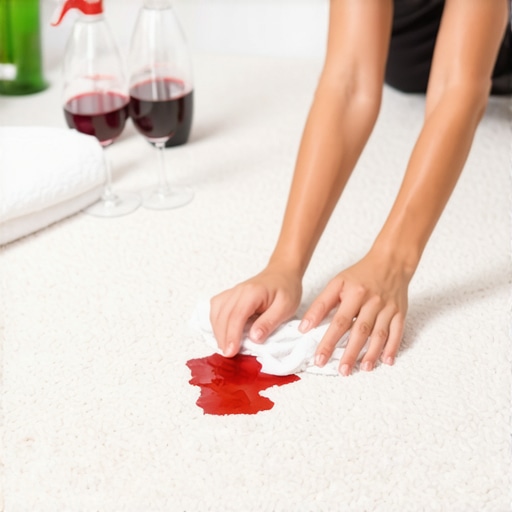
- Blot the area immediately with a white cotton towel using downward pressure only.
- Never scrub the fibers as this causes friction heat and permanent tip bloom.
- Apply a mixture of one part white vinegar and three parts water to neutralize the pH.
- Use a weighted object on top of a dry towel to pull moisture from the padding.
- Ensure the room has high airflow to prevent the wicking effect during the drying cycle.
- Inspect the subfloor perimeter to ensure no liquid reached the baseboards or drywall.
“Moisture movement is the primary cause of failure in textile floor coverings.” – Carpet Engineering Standard
The ghost in the expansion gap
Liquid spills often migrate toward the perimeter of the room where the carpet meets the baseboards, potentially causing rot in the tack strips or mold growth in the wall cavity. You must check the edges of your installation to ensure the wine has not bypassed the carpet entirely. In my years of doing floor leveling and installing high end laminate, I have seen moisture travel in ways that defy common sense. If your wine spill happened near a wall, there is a high probability that the liquid is now sitting in the gap between the subfloor and the plate. This is a dark, unventilated space. If you do not dry this out, the wine will ferment and attract pests. You might need to gently pull the carpet off the tack strip in the corner to verify the subfloor is dry. This is a standard procedure for a master installer. If the wood is damp, use a fan to dry it before re hooking the carpet. This attention to detail is what separates a professional from a DIY amateur who just wants to cover the spot with a rug. Every component of the floor must be accounted for, from the top of the pile to the bottom of the slab. If you treat your carpet with the same respect I treat a site finished white oak floor, it will last you thirty years. If you ignore the subfloor, you are just waiting for a disaster to happen. The wine is just a catalyst for a larger failure if you do not handle the physics of the spill correctly.
{“@context”:”https://schema.org”,”@type”:”HowTo”,”name”:”How to Remove Red Wine Stains from Light Carpet”,”step”:[{“@type”:”HowToStep”,”text”:”Blot the spill with a white cotton towel to absorb liquid without spreading it.”},{“@type”:”HowToStep”,”text”:”Apply a pH-neutralizing solution of vinegar and water to the affected area.”},{“@type”:”HowToStep”,”text”:”Use a weighted towel to extract moisture from the carpet padding and subfloor.”},{“@type”:”HowToStep”,”text”:”Increase ventilation to ensure the carpet dries rapidly, preventing wicking.”}],”totalTime”:”PT1H”}