Why Your New Carpet Smells Like a Chemical Factory
The subfloor secret that ruins your air quality
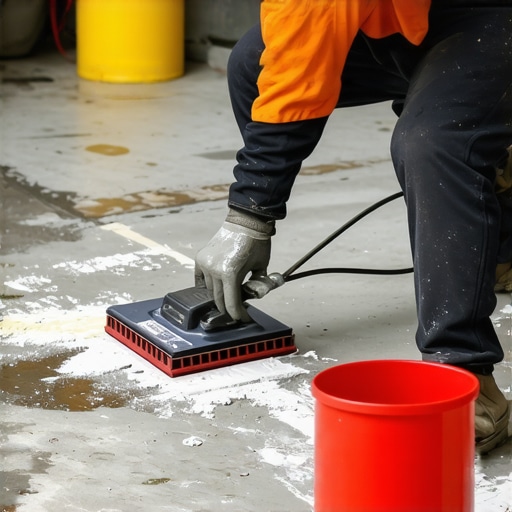
Carpet VOCs and 4-phenylcyclohexene are the primary culprits behind that stinging chemical odor that permeates a home after a new carpet install. This scent originates from the styrene-butadiene rubber latex used to bond the secondary backing to the carpet fibers. Most guys skip the leveling compound. They think the underlayment will hide the dip. It won’t. I spent three days grinding concrete on a job last month just so the floor wouldn’t click like a castanet, and that same level of attention must be paid to how a floor breathes. When you unroll a new product, you are releasing a cocktail of volatile organic compounds that have been trapped in plastic wrapping since the factory. It is a structural reality of modern manufacturing. If your installer didn’t check the moisture levels in the slab, that smell is only the beginning of your problems. Moisture trapped under a fresh install creates a greenhouse effect for microbial growth.
“A floor is only as good as the subfloor beneath it; deflection is the enemy of every joint.” – Master Flooring Axiom
The chemistry of the new carpet scent
Volatile Organic Compounds such as 4-PC and formaldehyde are frequently detected in the SBR latex backing of synthetic carpets during the first 72 hours. This is not just a smell, it is a chemical off-gassing process where solids transition into gases at room temperature. The CRI Green Label Plus program was designed to mitigate this, but even the highest-rated carpets have a baseline emission rate. I have seen homes where the homeowner had to move into a hotel for a week because the concentration of 4-phenylcyclohexene was so high it triggered chronic migraines. The backing is a complex polymer matrix. When it is manufactured, the heat-setting process locks in these chemicals. Once it hits your living room, the ambient humidity and temperature start the release. This is why acclimation is not just for hardwood. You need to let that roll breathe in a controlled environment before it ever hits the tack strips.
The ghost in the expansion gap
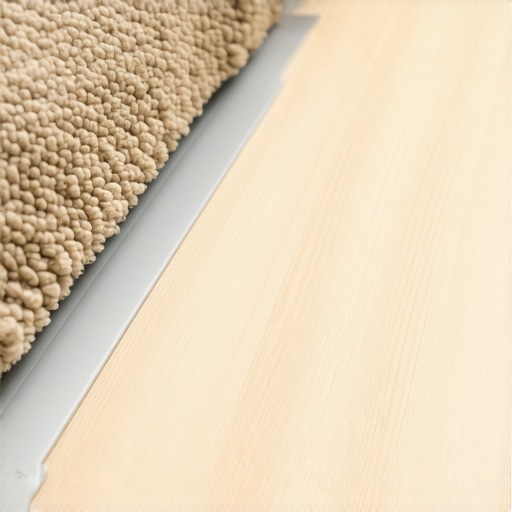
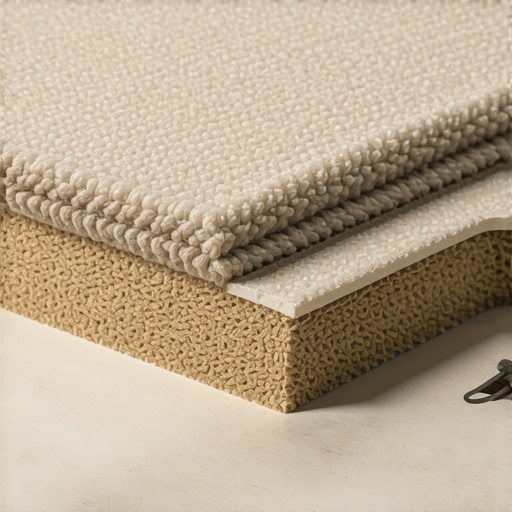
Perimeter expansion gaps and subfloor ventilation are mandatory components of a floor leveling strategy that prevents the trapping of stagnant, chemically-laden air. Many installers jam the carpet right against the baseboard without considering how air moves through the cushion. The cushion, or padding, is often made of rebond foam, which is itself a collection of recycled polyurethane scraps held together by more adhesives. If you have a moisture issue in your basement, that foam acts like a sponge for both water and smells. I have ripped up floors that were only two years old and found the padding had practically fused to the concrete because of high pH levels in the slab. You have to understand the physics of the stack. It is not just carpet. It is the slab, the primer, the leveler, the pad, and then the textile. Each layer has a chemical signature.
| Material Type | VOC Emission Level | Acclimation Time | Common Chemical Markers |
|---|---|---|---|
| Synthetic Nylon | Medium-High | 48-72 Hours | 4-Phenylcyclohexene |
| Natural Wool | Low | 24 Hours | Lanolin (Natural) |
| Rebond Padding | High | 72 Hours | Toluene Diisocyanate |
| Laminate Core | Medium | 48 Hours | Formaldehyde Resin |
Why your subfloor is lying to you
Subfloor moisture content must be measured using calcium chloride tests or in-situ probes before any carpet install begins to ensure the adhesives do not re-emulsify. A slab might look dry on the surface, but the moisture is deep in the pores. When you cover it with a dense carpet and a moisture-barrier pad, you are creating a cap. The moisture rises, hits the barrier, and turns into liquid water. This water then reacts with the alkaline salts in the concrete and the chemicals in the carpet backing. This reaction creates a pungent, ammonia-like odor that people often mistake for the carpet itself. It is actually a chemical soup happening under your feet. In regions with high humidity like the Gulf Coast, this is a death sentence for flooring. You cannot ignore the hygrometer. If your installer doesn’t pull out a moisture meter within the first ten minutes of being on the job, you should show them the door.
The 1/8 inch that ruins everything
Flatness tolerances of 1/8 inch over 10 feet are the industry standard for laminate and hardwood, but carpet installers often ignore these rules to their own peril. While carpet is flexible, a subfloor with significant dips causes the backing to flex every time you walk on it. This mechanical stress breaks down the latex bond faster, leading to delamination and an increased release of chemical dust. I have seen laminate floors fail because the installer thought the underlayment would bridge a 1/4 inch gap. It does not work that way. The locking mechanisms snap. With carpet, the failure is quieter but more toxic. The constant rubbing of the backing against a high spot in the concrete grinds the SBR latex into a fine powder that gets kicked up into your breathing zone every time you vacuum. It is a mechanical failure that masquerades as an air quality issue.
“Failure to address subfloor moisture is the primary cause of adhesive degradation and secondary backing failure in textile floor coverings.” – NWFA Technical Guidelines
The danger of carpet near showers
High moisture areas like showers or bathrooms should never be carpeted because the vapor emissions will lead to mold colonization and accelerated chemical breakdown. I don’t care if it’s the 1970s aesthetic you are after. The humidity from a single shower can raise the localized RH of a room to 90 percent. This moisture gets trapped in the carpet fibers and the padding. Because most carpets are synthetic, they don’t rot, but the organic dirt trapped in them does. This creates a bio-film that interacts with the factory chemicals to create a smell that is impossible to remove. If you want a soft surface near a bath, use a washable rug. Putting wall-to-wall carpet in a wet zone is asking for a toxic environment. I have seen subfloors under bathroom carpets that were so rotted I could put a screwdriver through the plywood with one finger.
Regional humidity and the Phoenix effect
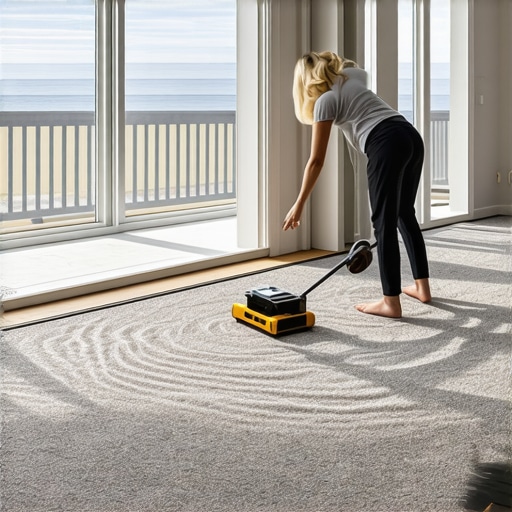
Atmospheric pressure and regional humidity levels in cities like Phoenix or Las Vegas cause carpet off-gassing to happen much faster but also more intensely. In a dry climate, the VOCs are pulled out of the material rapidly. This is the Phoenix effect. While the smell might dissipate in three days instead of seven, the concentration in the air during those three days is significantly higher. Conversely, in a place like Seattle, the damp air keeps the chemicals heavy and close to the floor. You need mechanical ventilation. High-volume fans and open windows are not optional. You have to flush the air. I always tell my clients to crank the HVAC and stay out of the house for at least 48 hours. If you can smell it, you are breathing it. There is no such thing as a safe chemical smell.
Critical steps for a healthy floor installation
- Verify subfloor moisture using a pin-less meter or RH probes before the roll arrives.
- Ensure the room temperature is maintained between 65 and 85 degrees Fahrenheit for 48 hours prior to install.
- Use only CRI Green Label Plus certified adhesives and cushions to minimize the total VOC load.
- Vacuum the subfloor with a HEPA filter after any grinding or leveling work is completed.
- Provide cross-ventilation for a minimum of 72 hours post-installation to flush out 4-PC gases.
The chemistry of 4-phenylcyclohexene
4-phenylcyclohexene is a byproduct of the polymerization process and is detectable by the human nose at concentrations as low as 0.5 parts per billion. This is why the smell is so pervasive. Even a tiny amount of off-gassing feels like a chemical assault. It is a cyclic olefin. Its molecular structure allows it to cling to other fabrics in the home, such as curtains and upholstery. This is why the smell lingers even after the carpet is aired out. The chemicals have literally moved house into your sofa. To combat this, you need more than just a window open. You need an air purifier with a heavy activated carbon filter. Standard HEPA filters do nothing for gases. You need the carbon to adsorb the molecules. If you don’t understand the chemistry of the air, you have no business installing floors in a modern home.