The ‘Kick Test’ for Poorly Stretched Room Carpets
The mechanical reality of a loose carpet and why it fails
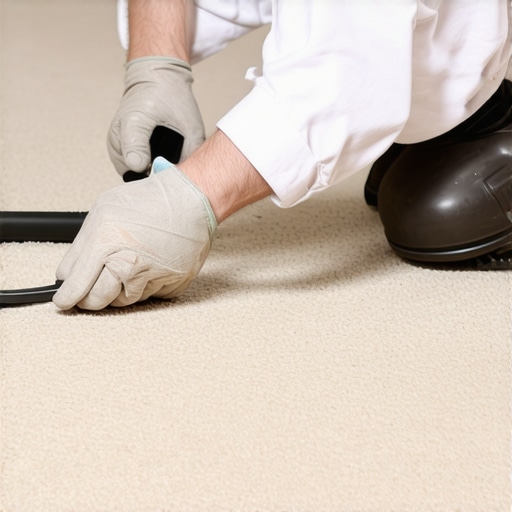
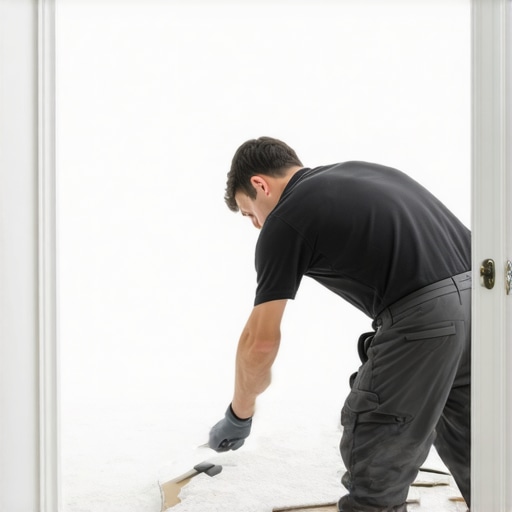
Most guys skip the leveling compound. They think the underlayment will hide the dip. It won’t. I spent three days grinding concrete on a job last month just so the floor wouldn’t click like a castanet. This is the same level of negligence I see when people talk about carpet stretching. I have spent twenty five years with sawdust under my nails and the smell of WD-40 on my clothes, and if there is one thing I know, it is that a floor is a structural assembly, not a piece of clothing. When you walk across a room and the carpet moves under your feet, that is not a minor aesthetic issue. It is a mechanical failure of the secondary backing and the tack strip interface. A professional carpet install requires more than a knee kicker and a prayer. It requires the understanding of how synthetic fibers behave under tension and how the subfloor serves as the anchor for that tension. I once walked into a luxury suite where the owner complained of ripples. I did the kick test and the whole floor moved two inches. The installer had used a knee kicker on a room that was thirty feet long. That is like trying to hold back a flood with a paper towel. It is an insult to the trade.
The physics of the power stretcher
A power stretcher uses a long pole system to apply hundreds of pounds of pressure across the entire room to lock the carpet backing onto the tack strips. This tool is mandatory for any room larger than ten feet to ensure the latex backing does not develop memory ripples. Without this mechanical advantage, the carpet will eventually succumb to the elastic limits of its own materials. When we talk about the carpet install process, we are talking about permanent deformation versus elastic deformation. A properly stretched floor is under a state of constant tension. This tension keeps the primary and secondary backings, usually made of polypropylene, from rubbing against each other. If that tension is lost, the friction between the layers breaks down the SBR latex adhesive. Once that glue turns to dust, your carpet is dead. It becomes delaminated, and no amount of stretching will fix it then.
“A floor is only as good as the subfloor beneath it; deflection is the enemy of every joint.” – Master Flooring Axiom
Why your subfloor is lying to you
Floor leveling is the most overlooked phase of any installation because it is dusty, expensive, and hidden once the job is done. A subfloor with more than a three sixteenths of an inch deviation over ten feet will cause laminate to bounce and carpet to pool. I have seen installers try to fill dips with scraps of padding. That is a crime in my book. When the subfloor is uneven, the carpet cannot maintain uniform tension. It is like trying to stretch a drum skin over a rock. The high spots take all the stress and the low spots stay loose. If you are putting down laminate or hardwood, those dips turn into air pockets. Every time you step, the tongue and groove joint flexes. Eventually, that joint snaps. Now you have a floor that squeaks and clicks like a haunted house. I always tell my clients that if they do not pay for the prep, they are paying for a failure. I would rather spend two days with a straightedge and a bag of self-leveling compound than spend one hour explaining why a floor is falling apart six months later.
The 1/8 inch that ruins everything
The expansion gap is the lifeblood of a floating floor and the primary reason why laminate fails in high humidity environments. A gap of exactly one eighth to one quarter inch must be maintained around every vertical obstruction to allow the material to breathe as ambient moisture levels shift. Most DIYers and cheap crews shove the laminate right up against the baseboard or the door casing. When the humidity hits seventy percent in the summer, those planks expand. Since they have nowhere to go, they peak. The floor literally lifts off the ground. I have seen laminate floors rise four inches in the middle of a room because some guy thought the gap was ugly. You cover the gap with shoe molding, you do not eliminate it. This is even more vital near showers or laundry rooms where the relative humidity fluctuates hourly. You have to respect the material physics. Wood and laminate are hygroscopic, they are always moving, even if you cannot see it with the naked eye.
The chemistry of the kick test
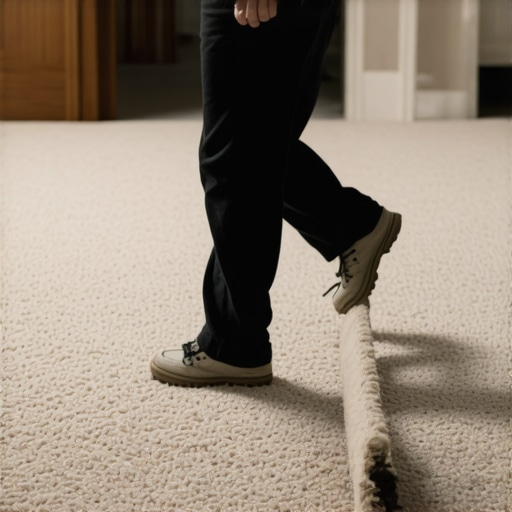
The kick test is performed by placing the ball of your foot firmly on the carpet and shoving forward to see if the material ripples or snaps back into place instantly. If the carpet moves more than a fraction of an inch, it lacks the structural tension required to prevent long term delamination. It is a simple test but it tells you everything about the installer. If I can move your carpet with a casual kick, it means the tack strips are not holding or the power stretcher never left the truck. We are looking for the sound of a drum. A tight carpet does not just look better, it lasts twice as long. The fibers stay upright instead of leaning over. When fibers lean, they catch dirt. When they catch dirt, the grit acts like sandpaper and cuts the pile. A loose carpet is a dirty carpet, and a dirty carpet is a dead carpet.
Carpet tension and material comparison
| Material Type | Recommended Stretch | Fiber Elasticity | Risk of Rippling |
|---|---|---|---|
| Nylon 6,6 | 1.5 Percent | High | Moderate |
| Polypropylene | 1.0 Percent | Low | High |
| Wool Blend | 1.2 Percent | Medium | Low |
| Polyester (PET) | 1.5 Percent | High | Very High |
The intersection of carpet and showers
Transitioning from a plush carpet to a tiled bathroom or shower area requires a moisture resistant barrier and a reinforced transition strip to prevent subfloor rot. Moisture wicking from the bathroom can penetrate the carpet padding and create a breeding ground for mold if the seal is not perfect. I hate seeing carpet run right up to a shower curb. It is a recipe for disaster. The steam from the shower settles into the carpet fibers, and the moisture travels down the tack strip nails into the plywood. I have pulled up carpets near showers where the tack strip had completely rusted away and the wood underneath was the consistency of wet cake. You need a solid threshold, preferably marble or a high density transition, to act as a dam. It is about moisture management. If you do not control the water, the water will control your renovation budget.
Installation integrity checklist
- Check subfloor for moisture content below 12 percent for wood and 3 lbs for concrete.
- Ensure floor leveling compound has cured for at least 24 hours before covering.
- Space tack strips exactly one half the thickness of the carpet away from the wall.
- Use a power stretcher to achieve a minimum of 1 percent stretch in both directions.
- Verify that all laminate transitions have a minimum quarter inch expansion gap.
- Perform the kick test in the center of the room and at all four corners.
The reality of the trade is that people want things fast and cheap. But a carpet install is a mechanical process. You are loading a spring. That spring is the carpet backing. If you do not load it correctly, the whole system fails. I have seen guys use a knee kicker until their joints were swollen, thinking they were doing a good job. They were not. They were just hurting themselves while doing a mediocre job. You need the poles. You need the head of the stretcher digging into the backing. You need to hear that creak of the carpet being pulled to its limit. That is the sound of a floor that will last twenty years. Anything less is just a rug sitting on a floor. And if you are paying for an installation, you deserve more than a rug. You deserve a surface that is part of the architecture of the home. Do not let them skip the stretch. Do not let them skip the leveling. Watch them work. If you do not see a power stretcher, send them home. It is your house and your money. Protect it by demanding the standards that the NWFA and the TCNA have set for us. Those standards are written in the blood and sweat of guys like me who had to fix the messes left by the amateurs.