
The ‘Flashlight’ Trick for Finding Hidden Peaks in Your Subfloor
The flashlight trick for floor leveling
The flashlight trick involves placing a high-intensity light source flat on your subfloor to project long shadows across any high spots or peaks that need grinding. This method identifies floor leveling issues that are invisible to the naked eye but will cause laminate or hardwood to fail prematurely. It is a fundamental technique for ensuring a flat installation surface.
I have spent twenty-five years on my knees with a moisture meter and a level. My hands are stained with floor wax and my lungs have seen more oak dust than I care to admit. I once spent three days grinding concrete on a job last month just so the floor would not click like a castanet. Most guys skip the leveling compound. They think the underlayment will hide the dip. It won’t. I have seen fifteen thousand dollar wide-plank floors turn into potato chips because of laziness. You cannot build a skyscraper on a swamp, and you cannot put a premium floor on a subfloor that looks like a topographical map of the Ozarks. This is a structural engineering challenge. If you treat it like a craft project, you will fail. If you treat it like a physics problem, you might just get it right. I smell like WD-40 and sawdust most days because I do not take shortcuts. I have seen what happens when a carpet install hides a structural nightmare in a bathroom near the showers. The mold finds a home in the subfloor dips where water pools under the pad. It is a mess that smells like rot and regret.
The physics of the straightedge
A straightedge is a rigid piece of aluminum or steel that reveals the physical reality of your subfloor deflection over a specific distance. Most manufacturers require a tolerance of one eighth of an inch over ten feet. This is not a suggestion. It is a mathematical requirement for the locking mechanisms of modern laminate and luxury vinyl plank floors. When a floor spans a peak, it creates a bridge. Every time you walk on that bridge, the tongue and groove joint flexes. This friction generates heat and mechanical stress. Eventually, the plastic or wood fiber snaps. You hear that clicking sound. That is the sound of your investment breaking. I have walked into hundreds of homes where the homeowner complained about ‘defective’ flooring. The floor was fine. The subfloor was a disaster. You must use a ten-foot straightedge or a long level to find these areas before you even open a box of material. You slide the level across the room. If you see daylight under the level, you have a valley. If the level rocks back and forth like a see-saw, you have found a peak. This is where the work begins.
“A floor is only as good as the subfloor beneath it; deflection is the enemy of every joint.” – Master Flooring Axiom
The chemical bond of leveling compounds
Modern self-leveling underlayment is a complex mixture of Portland cement, graded sands, and polymer resins that create a high-flow, high-strength surface. These compounds are designed to have a specific gravity that allows them to seek level under the pull of gravity before the hydration process begins. However, you cannot just pour it onto a dusty slab. You need a primer. The primer acts as a bridge between the old concrete and the new leveler. It seals the pores of the substrate to prevent ‘pinholing,’ which happens when air escapes from the subfloor and creates bubbles in your leveling mix. The molecular bond of a high-quality primer ensures that the leveler does not delaminate when the house settles. In high-humidity areas like the Gulf Coast, this is vital. The moisture in the air slows the cure time, but it also increases the risk of alkali-silica reaction in the slab. If your pH levels are too high, your leveling compound will pop off the floor like a scab. I always check the calcium chloride levels before I pour. If that slab is sweating, no amount of chemical engineering will save you.
Why your subfloor is lying to you
Plywood and OSB subfloors often appear flat to the naked eye because the wood grain camouflages the subtle bowing of the joists underneath. Over time, wood floor structures settle and crawlspaces experience humidity fluctuations that cause the subfloor panels to crown at the seams. This is a structural lie. You think you have a solid foundation, but the flashlight reveals the truth. When you lay a powerful flashlight on the floor, the light rays travel parallel to the surface. Any elevation change, even as small as one sixteenth of an inch, will cast a long, dark shadow. These shadows are the roadmap for your belt sander. In older homes, the floor joists may have dried out and shrunk at different rates. This creates a rollercoaster effect. If you ignore these peaks, your laminate will feel ‘spongy.’ That bounce is the air gap between the plank and the wood. It is the leading cause of joint failure in click-lock systems.
The 1/8 inch rule for laminate stability
Laminate flooring relies on a floating installation method where the entire floor moves as a single unit during seasonal expansion and contraction. If the subfloor has a peak that exceeds one eighth of an inch, the laminate cannot move freely because it is pinned against the high spot. This creates internal tension. In a dry climate like Phoenix, the boards will shrink and pull apart at the seams because they are stuck on a hump. In a humid place like Houston, they will expand and buckle upward. I have seen floors tent three inches off the ground because someone didn’t grind down a high spot in the concrete. The locking system is the weakest point of any floor. It is only a few millimeters of material holding the whole room together. If you force that joint to act as a weight-bearing bridge over a valley, it will disintegrate. You need a flat plane, not just a level one. Level means the floor is parallel to the horizon. Flat means there are no bumps. You can have a floor that is out of level but perfectly flat, and the laminate will perform fine. But a level floor with bumps will fail every single time.
| Subfloor Type | Common Defect | Correction Method | Acclimation Time |
|---|---|---|---|
| Concrete Slab | High ridges at joints | Diamond Cup Grinding | 28 Days Minimum |
| OSB Plywood | Swollen Seams | Belt Sanding (36 Grit) | 72 Hours |
| Old Hardwood | Cupping/Crowning | Planetary Sanding | 96 Hours |
| Radiant Heat | Vertical Deflection | Self-Leveling Pour | 14 Days |
The ghost in the expansion gap
Expansion gaps are the breathing room of a floor, yet they are often the first thing a lazy installer ignores to make the trim look better. A floor needs at least a quarter-inch gap around the entire perimeter to allow for the natural physics of wood fibers. If you run your laminate tight against a wall or a heavy kitchen island, the floor is locked. When the humidity hits, the floor has nowhere to go but up. This is how you get peaks in the middle of a room that weren’t there during the install. I call these ‘ghost peaks.’ They are caused by pressure, not the subfloor. However, if you have an actual subfloor peak combined with a lack of expansion gaps, you have a recipe for a total floor replacement. I have had to tell homeowners that their brand-new five thousand dollar floor is garbage because they wanted ‘zero-threshold’ transitions without T-moldings. T-moldings are ugly, but they are the safety valves of a floating floor. Without them, the floor will eventually tear itself apart.
“Deflection in the subfloor is the primary cause of ceramic tile fracture and grout failure.” – TCNA Handbook Standards
Moisture barriers and the Gulf Coast humidity
In regions where the air is thick enough to drink, a moisture barrier is not an option; it is a legal requirement for your floor’s survival. Concrete is a sponge. It pulls moisture from the earth through capillary action. If you put laminate or carpet over a damp slab, that moisture gets trapped. In a carpet install, the pad acts as a secondary sponge, holding the water against the subfloor and creating a breeding ground for mildew. For laminate, the moisture will swell the core material from the bottom up. By the time you see the damage on the surface, the floor is already dead. You need a six-mil polyethylene vapor barrier at a minimum. I prefer a high-grade underlayment with an integrated vapor retarder and a high Sound Transmission Class rating. Too many people buy the thickest, squishiest underlayment they can find. This is a mistake. Too much cushion allows the floor to bounce too much, which snaps the locking joints. You want firm support, not a pillow. The underlayment should be no more than three millimeters thick for most click-lock applications.
The checklist for a perfect surface
- Remove all baseboards and sweep the floor until it is clean enough to eat off of.
- Use the flashlight trick to mark every peak and valley with a carpenter’s pencil.
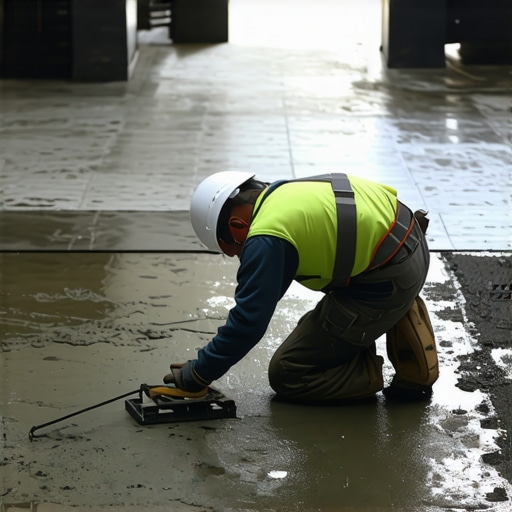
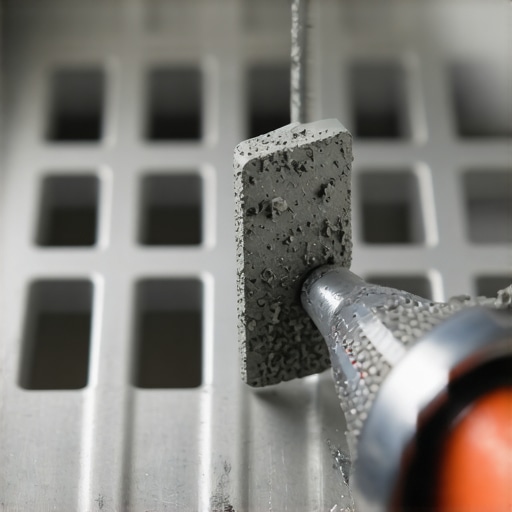
- Grind down concrete peaks using a vacuum-shrouded diamond grinder to manage dust.
- Sand down plywood seams using a heavy-grit sandpaper on a belt sander.
- Fill low spots with a high-compressive-strength Portland-based patch.
- Check the moisture content of the subfloor and the new flooring material.
- Ensure the room temperature is between sixty-five and seventy-five degrees Fahrenheit.
- Verify that the subfloor is within 1/8 inch of flat over a 10-foot radius.
Structural zooming into the mortar bed
When you are dealing with showers and tile, the subfloor requirements are even more stringent than for laminate. The Tile Council of North America specifies a deflection limit of L/360 for ceramic tile and L/720 for natural stone. This means the floor cannot bend more than a fraction of an inch under a heavy load. If your floor joists are too bouncy, your grout will crack and your tiles will pop. I have seen guys try to fix a bouncy floor by adding more thin-set mortar. This is a disaster. Mortar is not a structural filler; it is an adhesive. More mortar just means more shrinkage as it cures, which can actually pull the tiles into a concave shape. You fix a bouncy subfloor by sistering the joists or adding a layer of 3/8 inch exterior-grade plywood on top of the existing subfloor. You must offset the seams and use the correct screw pattern. I see people using drywall screws for subfloors. It makes my blood boil. Drywall screws have no shear strength. They will snap the first time someone walks across the room. You use subfloor screws or ring-shank nails. Anything else is just waiting to fail.
The truth about big-box discount retailers
The material you buy at a discount warehouse is often manufactured to a lower specification than what you get at a dedicated flooring showroom. The wear layers are thinner, and the core materials are less dense. This makes them even more sensitive to subfloor imperfections. A high-end, twenty-mill wear layer LVP can hide some tiny flaws, but the six-mill stuff from the clearance rack will show every grain of sand you forgot to sweep up. I have seen the ‘telegraphing’ effect where the texture of the plywood underneath actually shows through the vinyl because the subfloor wasn’t prepped correctly. If you are going to buy cheap material, you have to do the most expensive prep. You cannot have it both ways. I spend more time on my prep than I do on the actual install. That is why my floors are still flat twenty years later. I don’t care about the ‘aesthetic’ if the structural integrity is compromised. A pretty floor that squeaks is a failure. A pretty floor that feels hollow underfoot is a failure. You do the work, you use the flashlight, and you respect the physics of the house. That is how you build a floor that lasts. Leave the shortcuts to the guys who don’t mind getting sued. I have a reputation to protect, and I have the sawdust under my nails to prove I earned it.