Why Your Tile Grout Is Turning Yellow Inside the Shower
I spent three days grinding concrete on a job last month just so the floor wouldn’t click like a castanet. Most guys skip the leveling compound. They think the underlayment will hide the dip. It won’t. I have spent twenty five years on my knees with a moisture meter and a level, and I can tell you that a shower is not just a place to wash. It is a complex chemical reactor. When I walk into a bathroom and see yellow grout, I do not see a dirty homeowner. I see a failure of physics and a misunderstanding of molecular porosity. A floor is a performance surface. It is a structural engineering challenge. If you treat a shower floor with the same casual attitude as a basic carpet install or a click lock laminate project, you are going to face a yellowed mess within six months. This yellowing is a symptom of a deeper sickness in the assembly.
The chemical betrayal of iron and minerals
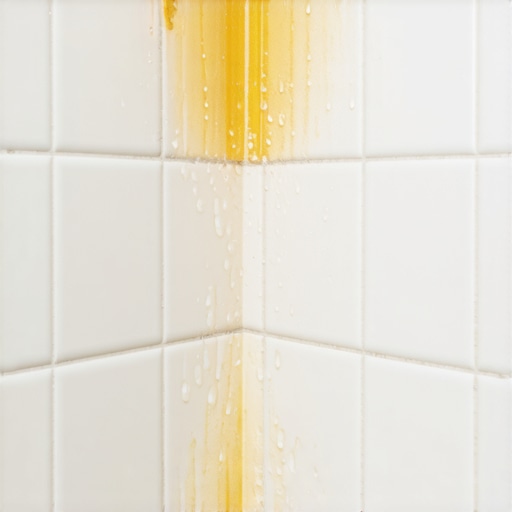
Yellow grout often results from iron oxidation or manganese deposits found in hard water. When well water or unfiltered municipal water permeates the porous cement grout, minerals oxidize upon contact with oxygen, creating a rusty or yellowish hue. This is a chemical reaction, not a surface stain. Most homeowners think they can just scrub this away. They cannot. Once iron has oxidized inside the crystalline structure of the Portland cement, it is there to stay. The grout acts like a filter. As the water evaporates, it leaves behind the heavy metals. Over time, these metals build up. The yellowing starts at the bottom of the joint and moves upward. This is why surface cleaning only works for a few days. You are fighting the water chemistry of the entire house.
“The success of a tile installation is 90 percent preparation of the substrate and the understanding of moisture migration.” – Master Flooring Axiom
Why your waterproof membrane is holding onto secrets
Trapped moisture beneath the tile surface leads to anaerobic bacteria growth and wicking of surfactants. If the shower pan was not constructed with a pre-slope, water sits in the mortar bed, becoming stagnant and reacting with the alkalinity of the concrete. This creates a yellow or orange sludge that wicks back up through the grout lines through capillary action. This is the subfloor secret that no one wants to talk about. In a proper TCNA compliant shower, the water should flow toward the weep holes in the drain. If those weep holes are clogged with thin-set, the water has nowhere to go. It sits. It rots. It turns yellow. You can scrub the surface until your fingers bleed, but as long as that mud bed is a swamp, the yellowing will return every single time the shower dries out.
| Grout Type | Porosity Level | Stain Resistance | Best Use Case |
|---|---|---|---|
| Sanded Cement | High | Low | Large joints, low moisture |
| Unsanded Cement | High | Low | Wall tile, narrow joints |
| High Performance Cement | Medium | Medium | General residential showers |
| Epoxy Grout | Zero | High | Steam showers, commercial |
The organic sludge factor in porous cement
Soap scum and body oils react with the calcium carbonate in grout to create a waxy yellow film. These organic materials penetrate the micro-pores of the grout and begin to decompose, attracting more dirt and minerals. This is not just a cleaning issue. It is a structural issue. When the grout is not sealed properly, it absorbs these oils like a sponge. Think of it like a wooden cutting board that has never been oiled. It absorbs everything. In a shower, the heat from the water opens up the pores of the grout, making it even more receptive to these contaminants. This is why a shower that looks white when wet might look yellow when dry. The drying process brings the oils to the surface through evaporation.
How floor leveling impacts shower drainage
Incorrect pitch and subfloor deflection cause water to pool in low spots, leading to localized mineral concentration and yellowing. Even if the main floor area looks flat, a floor leveling error in the bathroom can lead to hydrostatic pressure issues. In my experience, if the subfloor is not perfectly rigid, the grout lines will develop micro-fractures. These fractures are the perfect highway for dirty water to enter the substrate. Once the water gets under the tile, it starts dissolving the salts in the thin-set. This process is called efflorescence. While efflorescence is usually white, in a shower environment with iron-rich water and soap surfactants, it often presents as a dingy yellow crust.
The myth of the maintenance free shower
Chemical cleaners containing bleach or acid can actually degrade the sealer and cause the grout to turn yellow through chemical burning. Many people reach for the strongest bottle of bleach they can find. This is a mistake. Bleach is a base. If you do not rinse it off completely, it continues to react with the minerals in the grout. Over time, this causes the grout to become brittle and yellowed. It also strips away any protective sealer you might have applied. A floor is only as good as the chemistry you apply to it. Using the wrong cleaner is like putting diesel in a gasoline engine. It might run for a minute, but you are destroying the internal components. You need a pH-neutral cleaner that lifts the dirt without attacking the cement binder.
- Check the moisture levels in the subfloor before any tile installation.
- Ensure the shower pan has a 1/4 inch per foot slope toward the drain.
- Clean weep holes during the drain installation process.
- Use a high-quality penetrating sealer every six to twelve months.
- Switch to synthetic soap to reduce organic fatty acid buildup.
Solving the iron oxidation crisis
Water filtration and iron removal systems are the only permanent solutions for yellowing caused by mineral content. If your water is the problem, no amount of scrubbing will help. You need to stop the iron at the point of entry. Install a whole house water softener or an iron filter. This will prevent the minerals from ever reaching your grout. For the existing yellowing, you can try an alkaline cleaner specifically designed for grout. Avoid vinegar. Vinegar is an acid. It will dissolve the calcium in the grout and make the pores even larger. This makes the problem worse in the long run. You want to lift the minerals out, not dissolve the floor itself.
“Grout is not waterproof. It is a filter that catches everything you try to wash away.” – TCNA Handbook Insight
Choosing the right sealer for long term success
Penetrating sealers based on fluoropolymers offer the best protection against yellowing by creating a hydrophobic barrier inside the grout. A topical sealer is a mistake in a shower. It will peel. You need something that gets inside the pores and stays there. I always tell my clients that sealing is not a one-time event. It is a maintenance cycle. If you see water soaking into the grout and turning it dark, your sealer has failed. The grout should shed water like a freshly waxed car. If the water is soaking in, the minerals are soaking in too. This is the 1/8 inch that ruins everything. That tiny layer of protection is the only thing standing between a white floor and a yellow mess.