Why Your Laminate Floor Clicks When You Walk Toward the Windows
The subfloor secret that ruins every installation
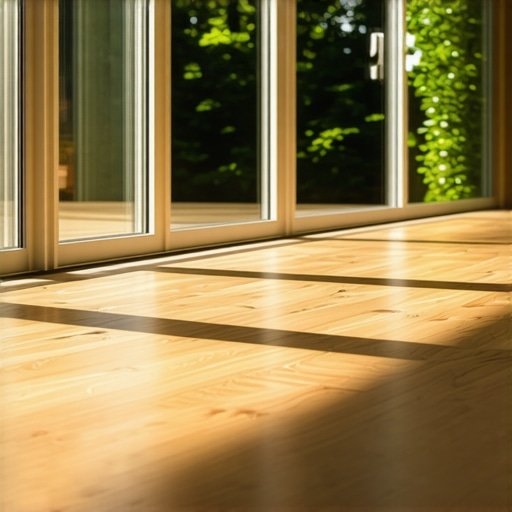
Most guys skip the leveling compound. They think the underlayment will hide the dip. It won’t. I spent three days grinding concrete on a job last month just so the floor wouldn’t click like a castanet. I remember walking into a high-end remodel in a coastal town where the owner had spent a fortune on wide-plank laminate. As soon as I took three steps toward the floor-to-ceiling windows, the sound started. It was a rhythmic, sharp snapping. The homeowner thought the boards were breaking. They weren’t. The installer had ignored a 1/4-inch dip in the concrete slab right where the sunlight hit the floor. The heat from those windows was expanding the High-Density Fiberboard core while the dip in the subfloor gave the locking mechanism space to move. Every step was forcing those plastic tongues to grind against the grooves. It is a sound that signals a slow death for your floor. If you ignore it, the locking mechanism will eventually shear off entirely, leaving you with gaps that no amount of tapping will fix. Flooring is a structural engineering challenge, not a decorative choice. You cannot hide a bad foundation with a pretty surface.
The ghost in the expansion gap
Laminate floor clicking occurs when thermal expansion forces HDF planks to push against perimeter walls or pinch points. This creates a vertical deflection in the locking mechanism. When you walk toward sunlit windows, the infrared heat expands the boards, causing them to bow and snap against the subfloor. This is not a manufacturing defect. It is a failure of geometry. Laminate is a floating floor. It needs to move as a single, cohesive unit. If you pin it down with a heavy kitchen island or fail to leave a 3/8 inch gap at the drywall, the energy has nowhere to go. It goes up. When the board bows up, it leaves a pocket of air between the plank and the subfloor. Your weight then forces that air out and the joint back down, creating the clicking sound. It is physics. You cannot argue with it. You must respect the perimeter.
“A floor is only as good as the subfloor beneath it; deflection is the enemy of every joint.” – Master Flooring Axiom
The physics of infrared heat and HDF cores
High-density fiberboard is the heart of your laminate floor, and it is incredibly sensitive to temperature fluctuations and moisture vapor. When sunlight hits the floor near a window, the surface temperature can jump by thirty degrees in an hour. This causes molecular expansion within the wood fibers. Because the top of the plank is getting hotter than the bottom, the plank wants to curl. This is known as cupping or crowning on a micro-scale. If the floor is locked too tightly against the baseboards, this expansion creates internal stress. The clicking you hear is the sound of that stress being released under the pressure of your foot. It is the sound of the tongue and groove rubbing together like a violin bow on a string. You need to understand that wood is alive. Even when it is ground up and glued back together into a laminate plank, it still reacts to the environment. The sun is an active participant in your floor installation. You must account for it.
The 1/8 inch that ruins everything
Subfloor flatness is the most ignored specification in the entire flooring industry, yet it is the most vital for click-lock systems. The National Wood Flooring Association and most laminate manufacturers require a subfloor to be flat within 1/8 inch over a 10-foot radius. If you have a dip larger than that, the floating floor will bridge the gap. It creates a trampoline effect. Every time you step on that bridge, you are stressing the milled profile of the joint. Over time, the friction wears down the factory seal. This leads to creaking and clicking. I have seen guys try to fix this by injecting glue into the joints. It never works. You are just masking a structural void. The only real fix is to pull the floor back and use a self-leveling underlayment or a portland-based patch to fill the low spots. Do not trust the foam underlayment to fix a hole. Foam is for sound reduction, not for structural support.
Technical specifications for laminate stability
| Metric | Requirement | Impact of Failure |
|---|---|---|
| Subfloor Flatness | 1/8″ per 10 feet | Joint fatigue and clicking sounds |
| Expansion Gap | 1/4″ to 1/2″ | Buckling and peak at joints |
| Relative Humidity | 35% to 55% | Core shrinkage or swelling |
| Acclimation Time | 48 to 72 hours | Immediate post-install gapping |
| Wear Layer | AC3 to AC5 rating | Surface scratches and dulling |
The underlayment paradox and locking failure
Thick underlayment is often sold as a luxury feature, but excessive cushion is a primary cause of joint failure in laminate flooring. While a 5mm or 6mm pad feels soft underfoot, it provides too much vertical travel. When you step on a plank, the pad compresses. This forces the locking mechanism to bend at an angle it was never designed to handle. A thinner, high-density pad is always superior to a thick, soft one. You want compressive strength. You want the pad to support the joint, not swallow it. If your floor clicks specifically near the windows, check the pad. If the heat has softened the HDF core and the pad is too squishy, you have a recipe for total structural breakdown. I have pulled up floors where the plastic locking tongues had turned to dust because they were worked back and forth so many times by a soft underlayment.
Regional climate impacts on laminate performance
Humidity and weather logic dictate how your floor will behave in your specific ZIP code. In the swampy humidity of Houston, solid wood is a death wish; you need engineered cores or high-quality laminates with wax-coated joints. However, even laminate will fail if the moisture vapor emission rate from the concrete slab is too high. In dry climates like Phoenix, the HDF core will shrink. This pulls the joints apart. The clicking you hear in a dry climate is often the sound of the dry joints rubbing together because the internal moisture has vanished. You must maintain a consistent indoor environment. If you turn off your HVAC while you go on vacation, do not be surprised if your floor sounds like a bowl of Rice Krispies when you get back. The floor needs stability. Sudden changes in ambient humidity are the enemy of any floating system.
“Standard hardwood and laminate installations require a subfloor that does not exceed 3/16 inch in 10 feet for flatness.” – NWFA Technical Guidelines
A checklist for silencing the click
- Remove the baseboards and check for a minimum 3/8 inch expansion gap.
- Use a moisture meter to check the slab and the underside of the planks.
- Identify if the clicking happens only during peak sunlight hours.
- Check for heavy furniture like refrigerators or islands that are pinning the floor down.
- Inspect the locking profile for debris or factory milling defects.
- Verify that the underlayment is not exceeding 3mm in thickness.
The chemistry of the wear layer and thermal absorption
Aluminum oxide is the standard coating for modern laminate, providing the AC rating durability we all rely on. This layer is incredibly tough, but it also acts as a thermal conductor. When the sun beats down on that dark oak or walnut finish, the aluminum oxide absorbs the heat and transfers it directly into the melamine wear layer and the core below. This thermal loading is what causes the rapid expansion. If the installer didn’t use transition moldings in doorways or in rooms longer than 30 feet, the cumulative expansion of 40 planks hitting a wall will create immense pressure. The clicking is a warning. It is the floor telling you that it is binding. You might need to cut in a transition strip even if you hate the look. Clean lines are nice, but a floor that doesn’t click is better. I have seen people try to use silicone spray in the joints to stop the noise. That is a temporary fix for a permanent problem. It might lubricate the joint for a week, but it won’t fix the fact that your subfloor is uneven or your gaps are non-existent.
The truth about waterproof laminate claims
Waterproof laminate usually refers to the topical surface and the tightness of the joint, but it does not mean the floor is immune to subfloor moisture. If your floor clicks, it might be because moisture is rising from the crawlspace and swelling the bottom of the plank. This creates bowing. Homeowners always ask why their waterproof vinyl or laminate is buckling. Usually, it is because they locked it under a heavy kitchen island, killing the floor’s ability to breathe. If the bottom of the plank is wet and the top is dry and hot from the window, the plank will warp. No amount of clicking it back together will fix a board that has lost its dimensional stability. You must use a 6-mil poly vapor barrier over concrete. It is a non-negotiable step. If your installer skipped the plastic, he didn’t give your floor a chance to survive. The click is the heartbeat of a dying floor. Listen to it before the joints snap for good.