How a Hairdryer Can Fix Your Laminate Edge Peel
The 1/8 inch that ruins everything
Most guys skip the leveling compound. They think the underlayment will hide the dip. It won’t. I spent three days grinding concrete on a job last month just so the floor wouldn’t click like a castanet because the subfloor was out of spec by half an inch across a ten-foot span. When you walk on a floor with that much deflection, the tongue and groove joints act like a pair of scissors. They rub, they grind, and eventually, the top wear layer begins to delaminate. I saw a $10,000 laminate job in a high-rise last week where every single joint was peaking. The owner thought the product was defective. The reality was that the installer didn’t check the flat of the floor. The stress of that constant vertical movement snapped the factory bond between the decorative paper and the HDF core. This is where the hairdryer comes in, but you have to understand the chemistry of why it works before you start blowing hot air at your expensive floor.
The physics of a lifting laminate edge
Laminate edge peeling occurs when the melamine resin bond fails due to localized stress or moisture. This failure typically starts at the corner of a plank where the protective wear layer is most vulnerable. A hairdryer provides controlled thermal energy to soften the underlying resins, allowing for a temporary reactivation of the adhesive properties to reseal the edge. You are essentially performing a localized re-lamination process. Modern laminate is a sandwich of duraluminum oxide, decorative paper, High-Density Fiberboard, and a balancing layer. When the top layer curls, it is usually because the HDF core has absorbed a microscopic amount of moisture and expanded, pushing the wear layer upward. If the core is dry but the edge is lifting, it is a mechanical failure of the factory adhesive. Heat is the only way to manipulate these thermo-set resins once they have cured. You have to be careful not to scorch the surface, as melamine will yellow and char if you exceed 300 degrees Fahrenheit. A standard household hairdryer usually tops out around 140 degrees, which is the sweet spot for softening the bond without ruining the aesthetic.
“A floor is only as good as the subfloor beneath it; deflection is the enemy of every joint.” – Master Flooring Axiom
The ghost in the expansion gap
Expansion gaps are mandatory 3/8 inch spaces around the perimeter of a room that allow the floor to move. If you pin a laminate floor against a wall or under a heavy kitchen island, the planks cannot slide. When the humidity rises, the planks expand. If they have nowhere to go, they push against each other at the seams. This pressure is immense. It creates a ‘peak’ at the joint, which is the most common reason for the edge to start peeling. The hairdryer trick won’t work if the floor is still under pressure. You have to pull the baseboards and ensure that the floor is floating freely. If the floor is tight against the drywall, you need to cut back the edges with a oscillating saw before you even think about fixing the peel. I have seen entire floors buckle into a literal tent because someone installed 500 pounds of cabinets on top of a floating floor. That floor is dead. It can’t breathe, and no amount of heat will fix a joint that is being crushed by its own neighbors.
The precise hairdryer repair protocol
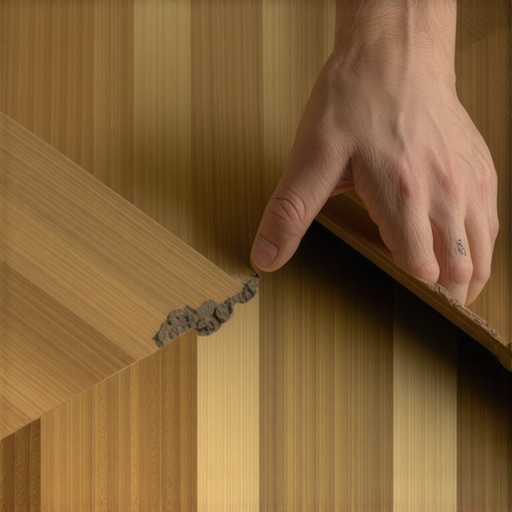
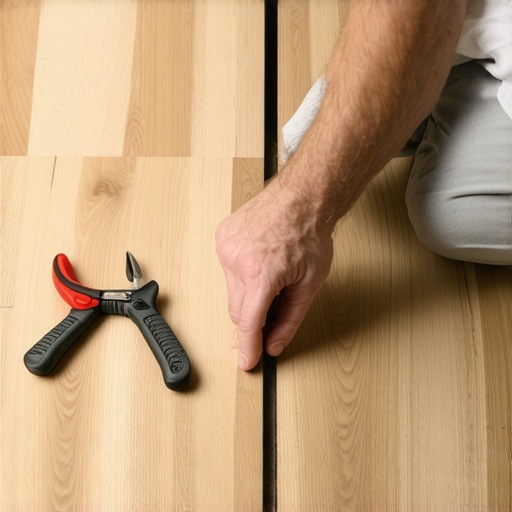
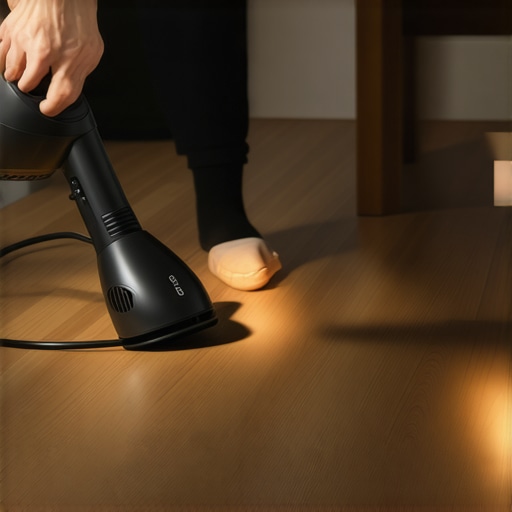
Fixing a peeling laminate edge requires a hairdryer, a clean microfiber cloth, and a heavy weight for the cooling phase. You must first clean the gap with a vacuum to ensure no grit is trapped between the decorative layer and the core. Any debris left inside will create a permanent bump. Once clean, hold the hairdryer four inches from the surface and move it in a circular motion for 60 seconds. You are looking for the wear layer to become slightly pliable. Once the material is warm to the touch, use the microfiber cloth to press the edge down firmly. Do not use your bare fingers as the resin can get hot. You need to maintain this pressure until the material cools. The cooling phase is when the chemical bond re-sets. If you let go too early, the memory of the plastic will pull it back into a curled position. I usually tell people to stack a pile of heavy books on the spot for at least four hours. If the factory glue is too far gone, you might need a tiny drop of PVA glue, but the heat is usually enough for minor lifts.
| Layer Type | Material Composition | Function | Vulnerability |
|---|---|---|---|
| Wear Layer | Aluminum Oxide / Melamine | Scratch and UV resistance | Brittle, can crack if core flexes |
| Decorative Layer | Printed Kraft Paper | Aesthetic appearance | Fades if overheated |
| Core Layer | High-Density Fiberboard (HDF) | Structural integrity | Swells with 10% moisture increase |
| Balancing Layer | Resin-saturated paper | Prevents plank warping | Failure leads to cupping |
Why your subfloor is lying to you
Subfloor flatness is the single most ignored specification in the residential flooring industry today. Most manufacturers require the floor to be flat within 3/16 of an inch over a ten-foot radius. If your floor has a dip, the laminate will bridge that gap. Every time you step on it, the floor bends. This constant bending stresses the tongue and groove. It eventually causes the clicking sound that homeowners hate. That clicking is the sound of the locking mechanism slowly being pulverized into sawdust. Once the locking mechanism is gone, the edges of the planks are free to move independently. This is when the peeling starts. You can fix the peel with heat, but if the dip in the subfloor remains, the peel will return within a month. You are fighting physics, and physics always wins. I tell clients that if they don’t want to pay for self-leveling compound now, they will pay for a new floor in three years. There are no shortcuts here. Carpet installs are more forgiving because the padding hides the sins of the concrete, but laminate is a snitch. It tells you exactly where your subfloor is uneven.
- Check perimeter expansion gaps at every wall
- Verify subfloor flatness with a 10-foot straight edge
- Ensure moisture levels in concrete are below 75% RH
- Clean out all debris from the locking channels before clicking planks together
- Use a tapping block to avoid damaging the delicate edge profiles
The chemistry of the contact bond
Laminate resins are thermo-plastic in nature, meaning they react to changes in temperature by softening and hardening. This is the fundamental reason the hairdryer technique is effective. The melamine-formaldehyde resins used in the manufacturing process are high-performance adhesives that create a rigid surface. However, they can be brittle. When the floor is subjected to extreme temperature swings or improper acclimation, these resins can micro-fracture. By applying 140 degrees of heat, you are allowing the resin molecules to reach a state of higher entropy, where they can flow slightly and re-establish contact with the HDF core. If you use a heat gun instead of a hairdryer, you risk the ‘alligatoring’ effect where the finish bubbles and turns black. A hairdryer is safer because it lacks the intensity to cause immediate chemical decomposition. I always suggest starting with the lowest setting and slowly increasing the heat. If you smell something sweet, that is the resin off-gassing, and you need to back off immediately. That smell is the sound of your floor dying.
“Laminate is a floating system; if it cannot float, it will fail at the weakest point which is the seam.” – Master Flooring Axiom
The bathroom disaster and moisture intrusion
Installing standard laminate in a bathroom with showers is a recipe for edge failure within six months. Even the products labeled as waterproof are only water-resistant from the top down. If water gets into the expansion gap at the perimeter, it travels under the floor and attacks the HDF core from the bottom. The core swells, the edge peaks, and the laminate layer peels off like an orange skin. In high-moisture areas, you must use a 100% silicone sealant in the expansion gaps to prevent this. A hairdryer cannot fix a floor that has ‘blown’ due to water damage. Once the HDF fibers have expanded, they are permanently deformed. You can tell the difference because a heat-fixable peel is a clean separation, while a moisture-ruined edge feels soft and pulpy. If the core is soft, you are looking at a plank replacement, not a repair. This is why I always tell homeowners to keep three extra boxes of flooring in the attic. You will never find that same dye lot five years from now when the dishwasher leaks.