The Secret to Invisible Carpet Seams in High Traffic Areas
The invisible seam myth
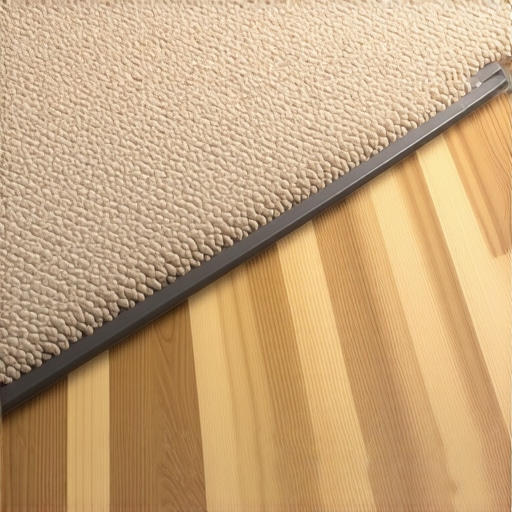
To achieve invisible carpet seams in high traffic areas, you must align the pile direction perfectly, use a premium low-profile seam tape, and ensure the subfloor is perfectly level. High traffic zones exert mechanical stress on the adhesive bond, meaning the structural integrity of the seam depends on the microscopic fusion of the thermoplastic resin with the carpet backing. Most installers fail because they rush the cooling process or ignore the subfloor irregularities that force the seam to flex. I spent three days grinding concrete on a job last month just so the floor wouldn’t click like a castanet, and that same level of obsession is required for carpet. If the subfloor has a dip, the seam will peak or valley, and no amount of grooming will hide it. I once walked into a house where the homeowner complained about a line across their living room. It wasn’t a bad seam, it was a 1/8 inch ridge in the plywood that caught the light every morning at 10 AM. You smell the WD-40 on my tools and the oak dust on my shirt because I live in the reality of these surfaces. A carpet is a textile engineering project, not a rug you just throw down. When you walk across a seam, your weight creates a shear force. If the seam tape isn’t wide enough or the adhesive didn’t penetrate the secondary backing, that force will eventually pull the fibers apart. This creates a shadow line. Once that shadow appears, the seam is no longer invisible. It is a failure.
“A floor is only as good as the subfloor beneath it; deflection is the enemy of every joint.” – Master Flooring Axiom
The physics of the thermal bond
The thermal bond of a carpet seam is created by the precise melting and recrystallization of hot-melt adhesive at temperatures between 150 and 180 degrees Fahrenheit. This process requires a steady hand and a calibrated iron to ensure the adhesive flows into the primary backing without scorching the synthetic fibers. If the iron is too hot, you melt the polypropylene; if it is too cold, the bond is merely superficial. I have seen guys turn their irons up to 5 just to move faster. That is how you end up with brittle seams that snap in six months. The chemistry of the adhesive matters. Modern tapes use a blend of ethylene-vinyl acetate (EVA) copolymers. These resins are designed to remain flexible after they set, allowing the carpet to move slightly with changes in humidity and temperature. In high traffic areas, this flexibility is what prevents the seam from peaking. You also have to consider the cooling cycle. If you use a seam roller too aggressively while the adhesive is still molten, you squeeze the glue out of the sides, leaving a hollow spot in the center. This hollow spot becomes a pivot point. Every time a foot hits that spot, the edges of the carpet rub against each other. This friction creates static and eventually wears down the pile, making the seam visible through fiber loss rather than structural separation.
Why your subfloor is lying to you
Subfloor flatness is the single most important factor in seam invisibility because light refraction is sensitive to even a 1/32 inch deviation. When a floor is not level, the carpet is forced to stretch over undulations, which pulls the seam open at the highest points of the floor. You might think a thick underlayment will hide a dip, but the opposite is true. Too much cushion allows the carpet to sink when stepped on, which puts an incredible amount of tension on the seam tape. I always tell my apprentices that the subfloor is the foundation of the house. If the foundation is crooked, the windows won’t open. If the subfloor is wavy, the seams will show. We use a ten-foot straightedge to check for high spots. If we find a hump, we grind it. If we find a dip, we fill it with a high-compressive-strength portland-based leveling compound. Do not use those cheap gypsum-based patch products. They crumble under the weight of heavy furniture. You need something that can handle the PSI of a piano leg or a heavy bookshelf. In regions like the Pacific Northwest, where humidity swings are common, the subfloor can expand and contract. If you don’t leave an expansion gap at the perimeter, the entire floor will pressure-up and the seam will be the first place it buckles. It is basic physics. The energy has to go somewhere, and the seam is the weakest link in the entire installation.
“Proper acclimation and subfloor preparation are the non-negotiable pillars of a professional installation that lasts decades.” – National Wood Flooring Association Standard
The checklist for a professional seam
- Check pile direction using the clip test to ensure both pieces of carpet are oriented toward the primary light source.
- Seal all cut edges with a latex-based or thermoplastic edge sealer to prevent fraying and fiber loss.
- Use a 6-inch wide premium seam tape for all high traffic transitions to distribute mechanical stress.
- Maintain a consistent iron speed of approximately 2 feet per minute to allow for total adhesive penetration.
- Vacuum the subfloor three times before laying the cushion to prevent grit from grinding into the backing.
- Verify that the carpet has acclimated to the room temperature for at least 48 hours to prevent post-install shrinkage.
Comparing seam tapes for heavy foot traffic
| Tape Type | Adhesive Weight | Reinforcement Material | Best Use Case |
|---|---|---|---|
| Standard Gold | Medium | Paper/Fiber | Bedrooms and low traffic |
| Premium Wide | Heavy | Fiberglass Mesh | Hallways and living rooms |
| Silicone Release | Heavy | Reinforced Paper | Patterned carpets and stiff backings |
| Low Melt Thermal | Light | Synthetic Mesh | Delicate specialty fibers |
The ghost in the expansion gap
The expansion gap at the perimeter of the room acts as a pressure release valve for the carpet and the subfloor system. Without this gap, the carpet will eventually develop ripples, and those ripples often terminate at the seam, causing it to peak and catch the light. Most installers think the tack strip is just for holding the carpet tight. It is actually a structural anchor. If the pins on the tack strip are bent or dull, the tension on the carpet won’t be uniform. This uneven tension pulls on the seam from different angles. Imagine a tug-of-war where one side is pulling harder than the other. The middle point, which is your seam, is going to move. We use architectural-grade tack strips with three rows of pins in high traffic areas. It costs more, but it ensures that once we stretch that carpet with a power stretcher, it stays stretched. Never rely on a knee-kicker for a large room. A knee-kicker is for positioning. A power stretcher is for installation. If you don’t get the proper percentage of stretch, usually about 1 to 1.5 percent in both directions, the carpet will go limp in the summer heat. When it goes limp, the seam becomes a visible ridge. It is a predictable failure that can be avoided by following the CRI 104 installation standards.
The regional humidity factor
In high humidity environments like the Gulf Coast or the humid summers of the Midwest, the moisture content of the subfloor can destabilize the seam adhesive. Wood subfloors are hygroscopic, meaning they absorb moisture from the air. If the subfloor expands more than the carpet backing, it creates a dimensional mismatch. This is why acclimation is not a suggestion, it is a requirement. You need to let that roll of carpet sit in the house, out of its plastic bag, for two days. I have seen guys pull a frozen roll of carpet off a truck in January and try to seam it immediately. The adhesive hits the cold backing and shocks. It freezes before it can bond. The resulting seam looks fine for a week, then it pops open like a zipper. You have to understand the climate of your job site. If you are working in a dry climate like Phoenix, the carpet can become brittle and the fibers can snap during the stretching process. You have to adjust your technique. In those dry areas, I often use a slightly lower iron heat to avoid drying out the backing further. It is about balance. You are managing the relationship between the textile, the adhesive, the subfloor, and the atmosphere. If you ignore any one of those four, the floor will fail. I don’t care how pretty the color is. If the seam is visible, the job is a failure. My reputation is built on the floors people forget are there. When you walk across a room and don’t see a single line, that is when I have done my job right. It takes more time, and it requires better tools, but the result is a floor that looks like a single, continuous piece of fabric. That is the secret. There are no shortcuts, only physics and chemistry.