The ‘Penny Test’ to See if Your Shower Floor Actually Slopes to the Drain
The Penny Test for Shower Floor Drainage and Subfloor Integrity
I spent three days grinding concrete on a job last month just so the floor wouldn’t click like a castanet. When it comes to showers, the stakes are higher. I once walked into a luxury master bath where the water pooled in the corner furthest from the drain. The installer thought a bit of extra thin-set would mask the dip. It did not. Water is a relentless auditor of poor craftsmanship. If your subfloor is out of level by even an eighth of an inch, your finish material is a ticking clock. I’ve spent twenty-five years on my knees with a moisture meter and a six-foot level. I’ve seen $20,000 marble installs ruined because some kid didn’t understand the physics of a mud bed. The penny test is the simplest way to see if your installer was a pro or a pretender.
The brutal reality of standing water
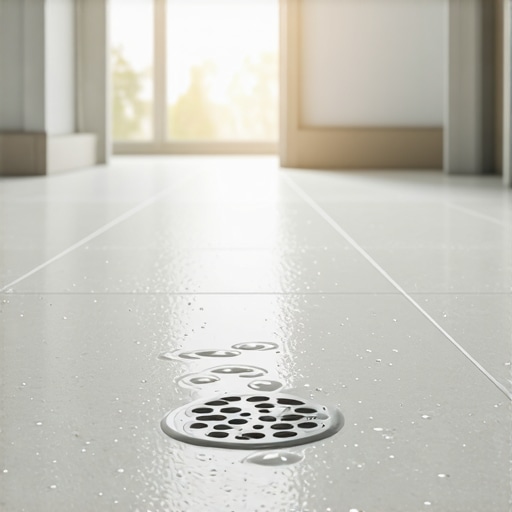
Shower floor slope requires a minimum 1/4 inch per foot drop toward the drain to ensure gravity overcomes surface tension. Proper drainage prevents moisture accumulation in grout and prevents structural rot. A level subfloor must exist before the mud bed or pre-sloped pan is installed. If you don’t have that 2 percent grade, the water stays. It sits in the microscopic pores of your grout. It breeds mold. It eventually works its way through the thin-set via capillary action. I’ve seen it happen in the humid swamps of Houston and the dry heat of Phoenix. In Houston, that moisture never evaporates, turning your subfloor into a petri dish. In Phoenix, the rapid evaporation leaves behind mineral deposits that choke your drain. You need that pitch. You need it to be perfect. Anything less is a failure of engineering, not just aesthetics.
“A floor is only as good as the subfloor beneath it; deflection is the enemy of every joint.” – Master Flooring Axiom
Scientific standards for shower floor elevation
TCNA Handbook Method B415 dictates the geometry of a shower receptor to ensure complete evacuation of liquids. The slope must be consistent from the perimeter to the drain. This requires a substrate that is structurally sound and free from deflection exceeding L/360. When you talk about floor leveling, you aren’t just making it flat. You are preparing a stage for hydraulic performance. A lot of guys try to use laminate techniques in a wet room. They think a little underlayment will hide the sins of the joists. It won’t. I use a 2:1 ratio of sharp sand to Portland cement for my mud beds. This creates a semi-dry pack that I can beat into place. It’s hard work. It smells like wet stone and sweat. But it doesn’t move. It doesn’t shrink. It provides the foundation for a lifetime of use. Most modern installers use pre-sloped foam trays. They’re fine if the subfloor is dead level. If that plywood is bowing, that foam is going to flex. When it flexes, the grout cracks. When the grout cracks, the penny test becomes the least of your worries.
| Material Type | Minimum Slope | Maximum Slope | Friction Coefficient |
|---|---|---|---|
| Unglazed Mosaic | 2 percent | 4 percent | 0.42 DCOF |
| Large Format Tile | 2 percent | 3 percent | 0.50 DCOF |
| River Stone | 3 percent | 5 percent | 0.60 DCOF |
The 1/8 inch that ruins everything
Precision in flooring is measured in increments that the average homeowner cannot see with the naked eye. A dip of 1/8 inch over a ten-foot span can cause pooling that leads to efflorescence and grout failure. Accurate floor leveling requires self-leveling underlayment or manual grinding of high spots. People love the look of large format tiles. They want those clean lines. But large tiles are the enemies of a sloped floor. To make a large tile slope toward a center drain, you have to do an envelope cut. You have to slice that tile diagonally to follow the pitch. If you don’t, you get lippage. Lippage is more than a trip hazard. It’s a dam. It stops the water from reaching the drain. I’ve seen people try to install laminate in bathrooms too. It’s a disaster. Even the waterproof stuff has limits. If the floor isn’t level, the locking mechanisms snap under the weight of a person walking. Then the water gets into the core. It swells like a sponge. You can’t fix that. You rip it out and start over.
Mechanics of the penny test
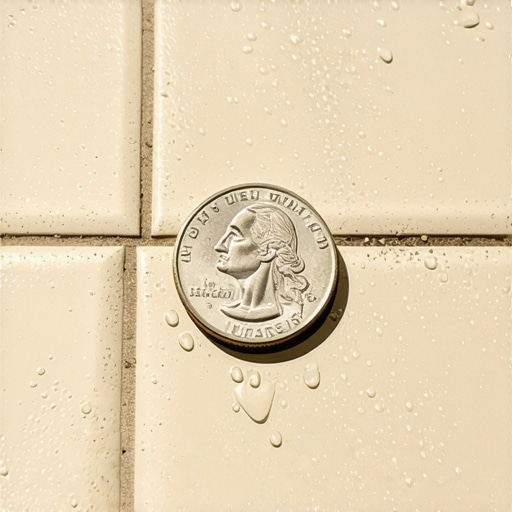
The penny test involves placing a coin on various points of the shower floor to observe its movement or the path of water around it. A successful test shows the coin being carried toward the drain by gravity or water flow without snagging. This confirms the 2 percent pitch required by code. Here is the checklist for a proper assessment. Do not skip these steps if you want a dry house.
- Clean the floor of all soap scum and debris.
- Place a penny twelve inches from the drain at the twelve, three, six, and nine o’clock positions.
- Turn on the shower head at low pressure.
- Observe if the penny moves or if water pools behind it.
- Check the perimeter corners where the wall meets the floor.
- Verify that no water remains after five minutes of the shower being turned off.
If that penny doesn’t budge or if it moves toward the wall, your installer failed you. They probably didn’t use a level. They probably ‘eyeballed’ it. In this business, eyeballing is a crime. You use tools. You use a spirit level and a straight edge. You check the joists. You check the subfloor. You check the waterproofing membrane. Only then do you lay the tile.
“Standard practice requires a slope to drain of 1/4 inch per foot to prevent moisture entrapment.” – TCNA Technical Bulletin
Why your subfloor is lying to you
Subfloors often appear level but contain subtle troughs and crowns caused by house settling or moisture fluctuations. Using a six-foot straight edge is the only way to identify these variances before tile installation begins. Floor leveling compounds must be used to create a predictable substrate. I’ve been in basements where the concrete slab looked fine. Then I poured a bucket of water. The water ran away from the floor drain. The builder had smoothed the top but didn’t check the pitch. If you are doing a carpet install in a bedroom, you can get away with a little dip. In a shower, that dip is a grave. The chemistry of the bond is also at play. Use a high-quality modified thin-set. You need those polymers. They allow for a tiny bit of movement without losing the bond. If you use cheap, unmodified thin-set on a subfloor that hasn’t been leveled, the tile will pop. It will sound like a gunshot in the middle of the night. That’s the sound of your money disappearing. Always check the mil-thickness of your wear layer too. For shower floors, I prefer a thick porcelain. It’s dense. It’s waterproof. It handles the penny test better than any porous stone ever will. Don’t be the homeowner who buys a pretty tile and ignores the mud beneath it. The mud is the floor. The tile is just the skin.