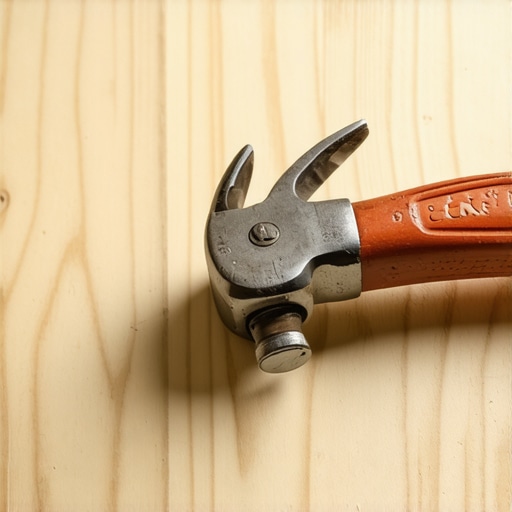
The ‘Hammer’ Test for Finding Loose Subfloor Nails
The subfloor secret that ruins your luxury finish
Most guys skip the leveling compound. They think the underlayment will hide the dip. It won’t. I spent three days grinding concrete on a job last month just so the floor wouldn’t click like a castanet. I have spent twenty five years with sawdust under my nails and the smell of WD-40 on my shirt. I have seen fifteen thousand dollar walnut floors turn into potato chips because an installer was too lazy to check the moisture or the subfloor integrity. A floor is not a decoration. It is a performance surface. When you walk across a room and hear that rhythmic chirp or feel a slight give, you are witnessing a structural failure at the fastener level. The subfloor is the foundation of every single thing you do in a home. If the subfloor is garbage, your finish is garbage. I do not care how much you paid for that Italian porcelain or that hand scraped oak. If the plywood is moving, the floor is dying. This is why I rely on the hammer test before every single project.
“A floor is only as good as the subfloor beneath it; deflection is the enemy of every joint.” – Master Flooring Axiom
The acoustic signature of a loose nail
Subfloor diagnostics require identifying loose fasteners and voids through acoustic resonance. By dragging a heavy hammer or steel pipe across plywood or OSB, an installer detects hollow thuds or high-pitched chirps indicating nail withdrawal or subfloor deflection that leads to laminate failure and noise. You do not just hit the floor. You listen to the floor. When a nail has lost its friction bond with the joist, it creates a microscopic gap. This gap acts as a resonating chamber. When you drag a metal tool across that area, the frequency changes. It goes from a solid, dull thunk to a sharp, metallic ping. That ping is the sound of money leaving your pocket. It means the wood is rubbing against the metal shank. This friction creates heat and wear. Over time, that tiny movement will snap the locking tongues on your laminate or crack the grout lines in your showers. You have to find every single one of those ghosts before the finish goes down. I mark them with a red wax pencil. Every red circle is a problem that needs a screw.
The physics of the friction bond
Fastener withdrawal resistance is the mechanical force required to pull a nail from lumber or engineered wood. In a subfloor, ring-shank nails provide superior mechanical interlock compared to smooth-shank nails, which often fail due to moisture-induced wood shrinkage and cyclical loading from foot traffic. When wood is harvested, it has a high moisture content. Even kiln-dried lumber moves. As the house settles and the HVAC system cycles, the wood fibers shrink and swell. A smooth nail relies entirely on lateral pressure to stay in place. Once the wood fibers pull away, the nail is just a pin in a hole. Ring-shank nails have tiny ridges that bite into the wood fibers like a fishhook. However, even these can fail if the joist is crowned or if the installer missed the center of the beam. A missed nail is a ticking time bomb. It sits there, hidden under your carpet install, waiting for the one spot where the homeowner walks every morning. Then it starts. Squeak. Squeak. Squeak. It is the sound of a job done poorly.
The floor leveling paradox
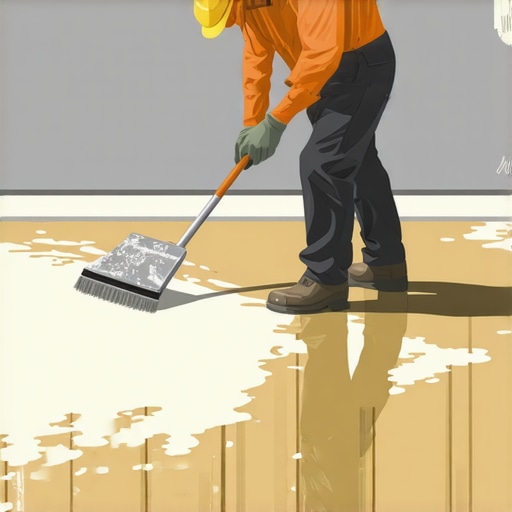
Floor leveling with self-leveling underlayment or patching compounds requires a structurally sound base. If you pour polymer-modified cement over a bouncing subfloor without fixing the fastener pattern, the new surface will crack and delaminate, destroying the bond strength required for Laminate or LVP. People think leveler is a magic wand. They think they can just pour a bag of soup over a bad subfloor and call it a day. That is a lie. If the subfloor has deflection, the leveler will crack. Cement has great compressive strength but terrible tensile strength. It cannot bend. If the plywood underneath it moves one sixteenth of an inch, the cement will shatter. You must ensure the subfloor is rigid. This means checking the joist spacing. If you have sixteen inch centers, you might be fine with three quarter inch plywood. If you have twenty four inch centers, you are looking at a trampoline. No amount of floor leveling compound can fix a trampoline. You need more fasteners, or you need to sister the joists.
| Fastener Type | Withdrawal Resistance | Common Usage | Failure Risk |
|---|---|---|---|
| Smooth Shank Nail | Low | Production Framing | High squeak potential |
| Ring Shank Nail | Medium | Standard Subfloors | Moderate over time |
| Deck Screw | High | Subfloor Repair | Snap risk if non-structural |
| Structural Wood Screw | Extreme | Joist Anchoring | Very low |
The wet truth about showers and subfloors
Shower subfloor preparation demands zero deflection to prevent waterproofing membrane failure and tile delamination. According to TCNA standards, the subfloor must be mechanically fastened with corrosion-resistant screws to withstand the high-moisture environment and the static load of a mortar bed or pre-sloped tray. When you are building a shower, you are building a tank. That tank sits on wood. Wood moves. Water does not. If your subfloor nails are loose in a bathroom, your grout will crack. Once the grout cracks, water gets to the substrate. Even with a topical membrane like Kerdi, movement is the enemy. I have seen entire shower floors lift because the installer used a hammer and nails instead of screws. The impact of the hammer can actually loosen the surrounding fasteners. Always use a high-torque impact driver for bathroom subfloors. You want that plywood pulled down so tight to the joist that they become a single monolithic unit. No movement. No moisture. No mold.
- Inspect all joists for crowning or rot before laying plywood
- Space fasteners every six inches on the perimeter
- Space fasteners every twelve inches in the field
- Always leave a one eighth inch expansion gap between sheets
- Apply subfloor adhesive to the joists before fastening
- Verify moisture content is within four percent of the joists
Why carpet install hides the rot
Carpet installation often masks structural subfloor issues because the padding and tufted fibers absorb the visual cues of uneven plywood. However, loose nails will eventually telegraph through the primary backing, causing premature wear and audible squeaks that require carpet stretching or replacement to fix. Carpet is the great hider. It is the rug you sweep the dirt under. When I do a carpet install, I still run the hammer test. If I find a loose board, I fix it now. If I don’t, the customer will call me back in six months saying their floor is haunted. They will hear the wood rubbing every time they walk to the bathroom at night. You can’t fix a subfloor once the carpet is tacked down without ripping the whole thing up. Do it right the first time. Check the seams. Check the corners. Use the hammer. It is a five minute test that saves a five thousand dollar reputation. I have seen guys lose their shirts because they ignored a simple squeak.
“Subfloor deflection limits for ceramic tile are L/360, while natural stone requires L/720 to prevent catastrophic shear failure.” – TCNA Handbook
The ghost in the expansion gap
Wood expansion is an environmental certainty caused by the hygroscopic nature of cellulose fibers. A subfloor without a one eighth inch gap will peak at the seams, causing laminate to bounce or hardwood to cup as the equilibrium moisture content shifts with the seasons. Most people think the gap is a mistake. It is not. It is a lung. The house needs to breathe. If you butt those plywood sheets tight together, they have nowhere to go when the humidity hits eighty percent in August. They will push against each other. The weakest point is the fastener. The wood will actually pull the nail right out of the joist. That is the ghost you hear. That is the pop and the crackle. It is the sound of a house trying to grow while it is trapped in a box. Take your spacer. Leave the gap. Run the hammer test to ensure the edges are pinned down. If they aren’t, the laminate will feel like a sponge when you walk on it. While most people want the thickest underlayment, too much cushion actually causes the locking mechanisms on LVP to snap under pressure. You need a flat, hard, dead-quiet floor. Anything else is just a temporary cover.