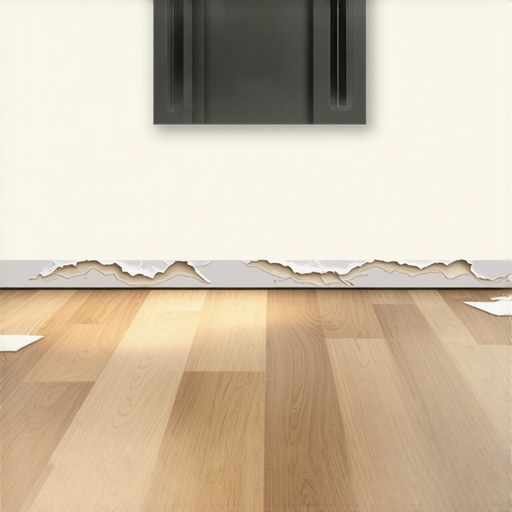
I have spent twenty five years on my knees with a moisture meter and a level. My skin smells like WD-40 and oak dust. I have seen every failure in the book. Homeowners always ask why their waterproof laminate is buckling. Usually, it is because they locked it under a heavy kitchen island or a heat vent, killing the floor ability to breathe. I once walked into a job where the laminate was peeling like a sunburned tourist. The owner thought the product was defective. The reality was a subfloor that looked like the surface of the moon and a heat vent that was pumping 120 degree air directly onto a 1/8 inch gap. That floor was doomed from the day of the carpet install removal. This is not about aesthetics. It is about engineering. If you treat your floor like a rug, it will fail like one. A floor is a performance surface. It requires physics and chemistry to survive. Let us get into the grit of why your laminate is failing near those registers.
The silent killer under the register
Laminate floors peel near heat vents because the localized thermal expansion causes the decorative melamine layer to separate from the High-Density Fiberboard core. This is often exacerbated by rapid humidity fluctuations and improper expansion gaps that prevent the floor from moving as a single unit. When the furnace kicks on, that blast of dry air hits the edge of the plank. It creates a micro-climate of intense heat. The core expands. The decorative layer, which is basically a photo printed on paper and soaked in resin, cannot keep up. It shears. The bond breaks. You get peeling. This is not a manufacturer defect. This is a thermodynamics failure. Most installers forget that laminate is a wood byproduct. It is hygroscopic. It drinks moisture from the air and it sweats it out when the heat rises. If you do not manage that transition, the floor will self-destruct.
The chemistry of decorative layer delamination
Delamination occurs when the adhesive bond between the protective wear layer and the HDF core fails due to excessive heat exposure and mechanical stress. Modern laminate uses a thermosetting resin that requires stable temperatures to maintain its structural integrity over time. The wear layer is usually aluminum oxide. It is incredibly hard. Beneath it is the design layer. These are bonded under immense pressure. However, when a heat vent is positioned directly against a cut edge, the heat bypasses the protective top and attacks the raw edge of the HDF. The HDF swells. The resin becomes brittle. Eventually, the top layer simply flakes off. You can see the brown fiberboard underneath. That is the death of the plank. It cannot be sanded. It cannot be stained. It must be replaced. This is why edge sealing is not just a suggestion. It is a requirement for any area near a heat source.
“A floor is only as good as the subfloor beneath it; deflection is the enemy of every joint.” – Master Flooring Axiom
Why floor leveling is the foundation of success
Floor leveling is the most skipped step in residential flooring projects but it is the primary cause of joint failure and subsequent peeling. If a subfloor has a dip greater than 3/16 of an inch over a 10 foot span, the locking mechanisms will flex until they snap. I spent three days grinding concrete on a job last month just so the floor would not click like a castanet. When the floor flexes, the gaps at the heat vents open and close. This movement acts like a bellows. It sucks in dust and moisture. It stresses the top layer. You cannot hide a bad subfloor with a thick underlayment. In fact, too much cushion actually causes the locking mechanisms on laminate to snap under pressure. You need a flat surface. Not a level surface. A flat one. If your floor is peeling, go find a straight edge. Check the dip near the vent. I bet it is there.
| Material Type | Janka Rating (Approx) | Thermal Expansion Rate | Acclimation Time |
|---|---|---|---|
| Laminate (HDF) | N/A (Wear Dependent) | High | 48-72 Hours |
| Solid White Oak | 1360 | Medium | 7-14 Days |
| Engineered Maple | 1450 | Low | 3-5 Days |
| LVP (Stone Core) | N/A | Very Low | 0-24 Hours |
The 1/8 inch that ruins everything
Expansion gaps at the perimeter must be maintained at a minimum of 1/4 inch to 3/8 inch to allow for seasonal movement of the entire floor system. Heat vents are often cut too tight, which pins the floor and prevents the necessary expansion. When the floor hits the vent cover, it has nowhere to go. The energy from the expansion has to go somewhere. It goes up. It creates a peak. The heat from the vent then bakes that peak. The friction of people walking over that raised edge grinds the finish away. Within six months, you have a peeling mess. I always use a multi-tool to undercut the vent area. I make sure that floor can slide. If it cannot slide, it will buckle. It is a simple rule of physics. Wood moves. You cannot stop it. You can only direct it.
How showers and bathrooms destroy laminate edges
Laminate in bathrooms fails because the high ambient humidity and standing water penetrate the click-lock joints, causing the HDF core to swell and push the wear layer upward. This creates a lip that is easily chipped or peeled by foot traffic. Even if the box says waterproof, the core is still susceptible to vapor pressure. In a bathroom, the steam from the shower settles in the joints. It stays there. The core expands at the edges. This is called telegraphing. You see the outline of every plank. Once that edge is raised, the vacuum cleaner or even a pair of socks will catch the corner. It peels. If you must put laminate near showers, you need to use a high-grade silicone sealant in the expansion gaps and a joint sealer during assembly. Without it, you are just counting down the days until failure.
- Check subfloor flatness with a 10 foot straight edge.
- Seal all cut edges near heat vents with a moisture-resistant foil tape.
- Maintain a consistent 35 percent to 55 percent humidity level in the home.
- Leave a 3/8 inch gap around all vertical obstructions.
- Avoid heavy furniture placement on floating floor perimeters.
The carpet install trap
The transition from a soft carpet install to a rigid laminate floor often fails because the subfloor heights are not properly reconciled. This creates a trip hazard and a point of mechanical stress that leads to peeling at the threshold. When people rip out carpet, they find a subfloor that was never meant for a flat floor. It is full of staples and divots. If you do not patch those, the laminate will bridge the gaps. Every time you step on it, the floor bends. This bending stresses the joints. If this happens near a vent, the heat makes the material even more pliable. The combination of heat and deflection is the perfect storm for delamination. You need to treat the subfloor like a surgical table. It needs to be clean, dry, and flat.
“Standard installation practices for laminate flooring require a minimum 1/4 inch expansion space around all fixed objects to prevent structural peaking.” – NWFA Technical Guidelines
Fixing the vent gap with thermal breaks
To fix peeling near a heat vent, you must remove the damaged planks and reinstall them with a thermal break or a heat-resistant transition strip. This involves undercutting the vent register to ensure the floor has room to move without direct contact with the metal. I often see people try to glue the peeling layer back down. It never works. The resin is gone. The fiberboard is compromised. You have to pull the baseboards. You have to lift the floor back to the vent. Replace the planks. When you put the vent back, make sure the metal is not touching the wood. I sometimes use a high-temp foam gasket. This blocks the direct heat from hitting the raw HDF. It keeps the core cool. It keeps the floor stable. It is the only way to stop the cycle of peeling. If you do not fix the heat issue, the new planks will peel in a year. Fix the physics first. The aesthetics will follow.
The regional climate reality
In regions with extreme seasonal shifts, the humidity can swing from 10 percent in the winter to 80 percent in the summer, making laminate floor stability nearly impossible without active climate control. If you live in a place where the furnace runs six months a year, your heat vents are basically blowtorches for your floor. You need a humidifier. You need to keep that wood at a steady state. If the moisture content of the HDF jumps back and forth, the internal bonds will fatigue. Think of it like bending a paperclip. Eventually, it breaks. In 2026, we are seeing more extreme weather. Our floors are feeling it. This is why I tell people to stop looking at the color and start looking at the technical data sheet. Look at the swell rate. Look at the heat resistance. That is what determines if your floor lasts twenty years or twenty months.