The 1/8 inch that ruins everything
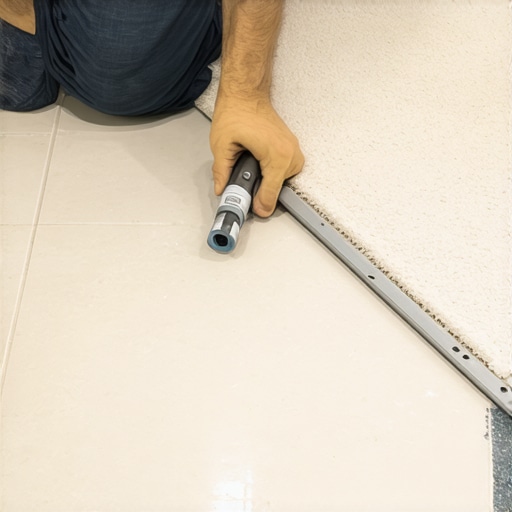
Most guys skip the leveling compound. They think the underlayment will hide the dip. It won’t. I spent three days grinding concrete on a job last month just so the floor wouldn’t click like a castanet. That job was a wake-up call for the homeowner who thought the carpet could just float over the mess. When you are dealing with the interface between a soft surface like carpet and a hard surface like tile, the subfloor is the only thing that matters. Fixing frayed carpet edges requires a mechanical lock known as the Z-bar tactic, which involves a metal transition strip tucked under the carpet edge to provide a flush, durable finish. This method ensures that the carpet fibers are physically compressed and protected from the lateral shear forces of foot traffic. If you leave a carpet edge exposed to the friction of a hallway, the primary and secondary backings will separate. This is called delamination. Once the latex bond breaks, the face yarns pull out, and you are left with a messy fringe that no vacuum can fix. In the flooring world, we don’t look at this as a cosmetic issue. We look at it as a structural failure of the transition assembly. [image_placeholder_1]
“A floor is only as good as the subfloor beneath it, deflection is the enemy of every joint.” – Master Flooring Axiom
The mechanical anatomy of the Z-bar
A Z-bar is a specialized metal transition strip designed to create a tuck-and-roll edge that prevents carpet fraying at tile or stone junctions. It works by acting as a cantilevered guard. You install the tack strip about a quarter inch away from the tile, then you place the Z-bar under the tack strip. The carpet is stretched over the pins, trimmed with exactly enough slack to tuck, and then the Z-bar is hammered down to pinch the edge into a hidden pocket. This isn’t just about looks. It is about physics. When someone walks from a rigid tile floor onto a soft carpet, the carpet compresses. If that edge isn’t locked down, the carpet moves horizontally. That tiny movement, repeated thousands of times, acts like a saw against the tile edge. By using a Z-bar, you eliminate the horizontal play. I have seen 20-year-old carpets that look brand new at the transition because the installer took the time to use a metal bar instead of just tucking it into a gapped wood strip. The metal protects the delicate yarns from the hard edge of the ceramic or porcelain.
Why your subfloor is lying to you
Floor leveling is the mandatory foundation for any carpet to tile transition because even a 3 millimeter deviation can cause the Z-bar to sit unevenly. You walk across a room and it feels flat, but your level will show you the truth. If the subfloor dips at the doorway, the Z-bar will have a hollow spot beneath it. When you step on it, the metal will flex. Eventually, the metal will fatigue and snap, or the nails will pull out of the wood or concrete. This is especially true near showers or bathrooms where moisture levels fluctuate. I always use a high-flow self-leveling underlayment to ensure that the two different materials meet at a perfectly synchronized height. You cannot rely on the carpet pad to make up the difference. Carpet padding is air and foam. It has zero structural integrity. If you have a 1/4 inch height difference between your tile and your plywood subfloor, you need to shim the subfloor before the carpet goes down. If you don’t, that Z-bar will be under constant tension, and the first time a heavy piece of furniture rolls over it, the whole system will fail. I have replaced hundreds of transitions where the previous guy thought he could just wing it. He couldn’t.
| Feature | Z-Bar Transition | Standard T-Molding | Metal Reducer |
|---|---|---|---|
| Fray Protection | Superior | Moderate | Low |
| Subfloor Grip | Mechanical | Adhesive or Track | Nail-down |
| Aesthetic | Flush | Visible Overlap | Exposed Edge |
| Longevity | 20+ Years | 5 to 8 Years | 10 Years |
The physics of the heat bond tape interface
Heat bond tape provides the secondary chemical reinforcement necessary to keep the carpet backing from fraying once it is tucked into the Z-bar pocket. You don’t just cut the carpet and tuck it. You need to seal that edge. I use a high-melt adhesive tape along the cut line. This fuses the individual fibers to the primary backing. Think of it like cauterizing a wound. If the fibers are melted together at the edge, they cannot unravel. When you combine this chemical bond with the mechanical pinch of the Z-bar, you create a transition that can withstand the abuse of pets, vacuum cleaners, and heavy foot traffic. In high-humidity regions like Houston, this is even more essential. Humidity softens the latex in the carpet backing. Without a sealed edge and a Z-bar, the carpet will literally stretch itself out of the transition during the summer months. I have seen carpets grow by half an inch in a single season. If that edge isn’t locked in a Z-bar, it will puff up and become a trip hazard. A proper installer knows that the weather outside affects the tension of the floor inside.
“Substrate preparation is the most significant factor in the success of any finished floor covering installation.” – TCNA Handbook
The 2026 checklist for edge protection
- High-carbon steel Z-bars with a galvanized coating to prevent rust in damp areas.
- Commercial grade tack strips with 1 inch architectural pins for maximum grip.
- Modified thin-set mortar for the tile edge to ensure no lippage occurs.
- Industrial heat-seaming iron set to 350 degrees for edge sealing.
- Digital moisture meter to verify the concrete slab is below 3 percent moisture content.
The ghost in the expansion gap
Expansion gaps are the breathing room your floor needs to survive temperature swings without buckling or snapping the Z-bar. Every material expands and contracts at a different rate. Tile is relatively stable, but the wood subfloor and the carpet are not. If you jam the carpet too tight against the tile without a Z-bar, there is no place for that energy to go. The carpet will eventually hump up in the middle of the room. The Z-bar acts as a buffer. It holds the carpet in place while allowing the subfloor to move slightly underneath it. It is a sophisticated piece of engineering disguised as a simple piece of metal. You also have to consider the alkalinity of the concrete. If you are nailing your Z-bar into a fresh slab, the high pH can eat away at the metal. I always use a primer on the concrete before I install any metal transitions. It is these small, technical details that separate a master from a handyman. You have to think about the chemistry of the house, the moisture in the air, and the physics of the weight being moved across the floor. Anything less is just a temporary fix. [image_placeholder_2]Final field notes for the 2026 tactic. Always measure twice and cut once, but more importantly, always check your level twice and grind once. A flat floor is a happy floor, and a Z-bar is the only way to keep your carpet from looking like a tattered rug within two years.