How to Fix a Bubbled Laminate Plank Caused by a Spill
The smell of wet sawdust and WD-40 is the standard aroma of a job site where someone ignored the physics of moisture. Most homeowners think they can just wipe up a spill and the floor will forgive them. It will not. I have spent twenty five years on my knees fixing the mistakes of DIY enthusiasts and builders who think a floor is just a cosmetic skin. Homeowners always ask why their waterproof vinyl is buckling. Usually, it is because they locked it under a heavy kitchen island, killing the floor ability to breathe, or they bought laminate for a bathroom and expected it to handle a toddler splashing in the tub. Laminate is a composite of wood fibers and resins. When water sits on a seam, it does not just stay there. It migrates into the core of the plank via capillary action. Once the high density fiberboard gets a taste of water, the wood fibers swell. They expand at a molecular level as the hydrogen bonds within the cellulose fibers are disrupted and forced apart. This is why you see that ugly peak at the edge of your boards. You are not looking at a surface stain. You are looking at a structural failure of the core material. This is why professional installers obsess over subfloor leveling and moisture barriers before a single plank ever touches the ground.
The physics of the swollen edge
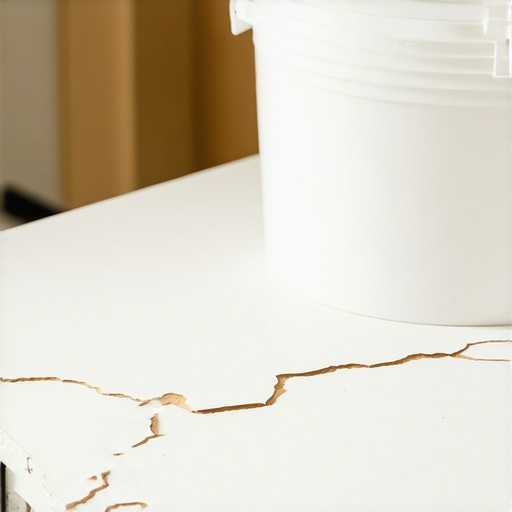
To fix a bubbled laminate plank caused by a spill you must either facilitate a slow evaporation of the trapped moisture or perform a surgical replacement of the compromised boards by cutting them out and glueing in new tongues. If the swelling is minor, you might save it with controlled heat and pressure, but most HDF cores are effectively ruined once they expand past ten percent of their original thickness. The core of your laminate is made of wood particles ground into a flour and bonded with resins like urea formaldehyde. This core is incredibly dense, but it is also hygroscopic. It wants to reach equilibrium with the air around it. When a spill happens, the water is sucked into the edges where the wear layer does not protect the wood. The fibers grow. The resin bonds snap. The result is a bubble that feels like a mountain under your socks. If you ignore this, the board will eventually begin to crumble or delaminate from the bottom up. I have seen entire living rooms ruined because a pet bowl leaked for three days and the owner thought the underlayment would save them. It did not. Underlayment is for sound and minor cushion, not for flood protection.
“A floor is only as good as the subfloor beneath it; deflection is the enemy of every joint.” – Master Flooring Axiom
The surgical extraction of a dead board
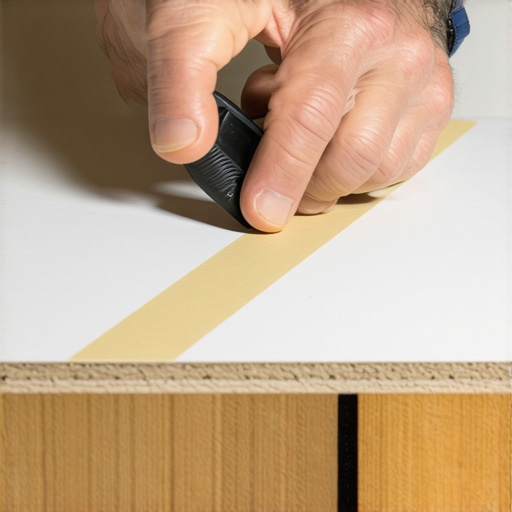
Replacing a single laminate plank requires a circular saw, a sharp wood chisel, and a high grade PVA wood glue to create a new bond where the locking mechanism used to be. You cannot just pull up the whole floor to reach one board in the middle. That is a waste of time. Instead, you set your saw blade to the exact depth of the laminate, which is usually around eight to twelve millimeters. You cut a relief rectangle inside the damaged board. You must be careful not to nick the underlayment or the subfloor. Once the center is gone, you carefully chisel out the remaining tongue and groove sections from the surrounding boards. This is where most people fail. If you are too aggressive, you will damage the healthy boards. You are a surgeon here, not a demolition crew. You have to remove the damaged material until the surrounding edges are clean and dry. If the subfloor is damp, you stop. You do not put a new board over a wet subfloor. You wait until your moisture meter reads below twelve percent for wood or five percent for concrete. Using a fan or a dehumidifier is the only way to win this game. If you rush it, you are just burying a mold problem for next year.
| Material Type | Swell Rate (24hr Soak) | Recovery Potential |
|---|---|---|
| High Density Fiberboard | 12-18% | Very Low |
| Medium Density Fiberboard | 20-25% | None |
| Solid White Oak | 4-6% | Moderate |
| Engineered Plywood Core | 2-4% | High |
The myth of the waterproof click lock
While many manufacturers claim their laminate floors are waterproof for forty eight hours, the reality is that the surface is waterproof but the joints are merely water resistant. The wax or silicone coatings on the click profile can only hold back the tide for so long. Eventually, the pressure of the standing water will force its way through. This is why I tell people to keep laminate away from showers and laundry rooms. It is the wrong tool for the job. In a high humidity environment like Houston, the air itself is trying to swell your floor. In a dry climate like Phoenix, the wood shrinks, opening those gaps even wider and making it easier for a spilled glass of water to reach the core. While most people want the thickest underlayment they can find, too much cushion actually causes the locking mechanisms to snap under pressure because the floor flexes too much. You want a firm, flat base. If your floor leveling is not within three sixteenths of an inch over ten feet, your laminate is doomed from the start. You will hear it clicking like a castanet every time you walk across it. That sound is the sound of your floor slowly destroying its own joints.
- Assess the moisture level with a pinless meter before starting.
- Remove the baseboards to check for expansion gaps at the wall.
- Cut out the center of the damaged plank using a plunge cut.
- Clean the surrounding grooves with a vacuum and a stiff brush.
- Trim the tongue off the replacement board for a drop in fit.
- Apply a bead of wood glue to the remaining groove.
- Weight the new board down for twenty four hours with a heavy box.
Why floor leveling is the secret to survival
A perfectly flat subfloor prevents the vertical movement that allows water to seep into the gaps between your laminate planks during a spill. If your subfloor has dips or humps, the boards will move when you walk on them. This movement creates a bellows effect, literally sucking water from the surface down into the core. I have seen guys try to hide a half inch dip with extra underlayment. It never works. You have to use a self leveling compound. It is a messy, difficult job, but it is the difference between a floor that lasts thirty years and one that fails in three. I spent three days grinding concrete on a job last month just so the floor would not click. Most installers skip this because they want to get to the carpet install or move on to the next house. They do not care about the physics of your home. They care about their tailpipe fading into the distance. You should demand a level subfloor. It is the foundation of everything. If you are moving from carpet to laminate, you will be shocked at how bad your subfloor looks once the pad is gone. Do not ignore it.
“Wood and water are in a constant state of negotiation where water always wins the initial argument.” – NWFA Professional Guidelines
The 1/8 inch that ruins everything
An expansion gap of at least one quarter inch around the perimeter of the room is the only way to allow your laminate to grow and shrink without buckling or bubbling. If you push your planks tight against the drywall, they have nowhere to go when the humidity rises. They will push against each other until they pop up in the middle of the room. It looks like a bubble caused by a spill, but it is actually a structural failure caused by a lack of space. This is why the baseboard and quarter round exist. They are there to hide the gap that the floor needs to survive. If you are fixing a bubble, check your edges. If the floor is tight against the wall, you need to trim the edges before you try to fix the boards in the middle. Use a oscillating multi tool to cut back the planks. You might find that the bubble settles down on its own once the pressure is released. It is a simple fix that most people overlook because they are focused on the water damage instead of the mechanical stress. Floor installation is an engineering challenge. It is not an art project. You are managing the forces of expansion, contraction, and gravity. If you respect the material, it will respect you back. If you treat it like a plastic rug, it will fail you every single time.