Why Your Kitchen Laminate is Squishing Like a Sponge Near the Dishwasher
The physics of the kitchen swamp
Laminate flooring squishes near a dishwasher because the High-Density Fiberboard (HDF) core has absorbed water, causing the wood fibers to swell and lose structural integrity. This happens through capillary action where moisture travels between the tongue and groove joints, bypassing the surface wear layer. Once the core is saturated, the floor becomes a literal sponge that compresses under your weight.
I once walked into a house where a $15,000 wide-plank walnut floor was cupping so bad it looked like a potato chip because the installer didn’t check the crawlspace humidity. While that was hardwood, the laminate in your kitchen is facing a similar chemical death. You step down, and you hear that sickening squelch. That sound is the sound of money leaving your bank account. It is the sound of a failed installation and a moisture barrier that was either never there or was overwhelmed by a slow, silent leak from a dishwasher supply line. I have spent 25 years pulling up floors that smelled like a locker room because someone thought a little bit of water wouldn’t hurt. It always hurts. The chemistry of HDF is simple. It is wood dust held together by resins. When water hits those resins, the bond breaks. The wood fibers expand. They have nowhere to go but up, and eventually, they turn into a pulp that has the structural strength of a wet cardboard box.
The ghost in the expansion gap
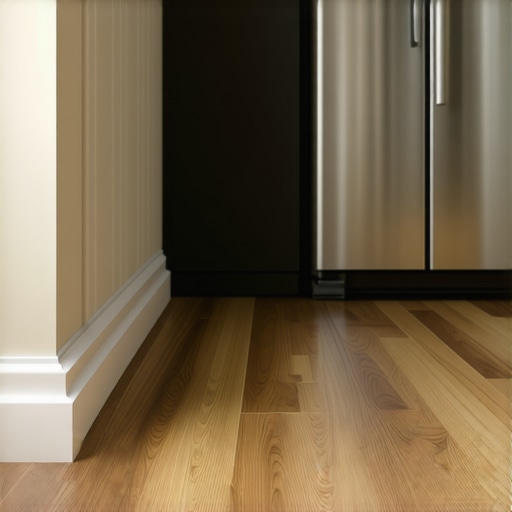
A proper expansion gap allows a floating floor to move without buckling, but it also provides a direct highway for liquid to reach the raw core. When your dishwasher leaks, even a tiny amount, that water follows the path of least resistance which is usually the perimeter of the room. If the installer did not use a 100 percent silicone sealant around the perimeter of the wet zones, you are doomed.
Most people think laminate is waterproof because the top layer is a melamine resin. That is a lie. Only the top is protected. The sides, the joints, and the bottom are incredibly vulnerable. Think of it like a submarine with a screen door. As soon as the water finds the edge, the game is over. In many kitchen setups, the laminate is run right up to the dishwasher legs. If that appliance has a slow drip from the solenoid valve or a cracked drain hose, the water pools on the subfloor. From there, the HDF core drinks it up. Within 48 hours, the edges of the planks will start to peak. Within a week, the core will be so soft that your heel will sink into it. This is why floor leveling is not just about aesthetics. If the floor is not level, the water will pool in the low spots, staying in contact with the laminate for much longer than it would on a flat surface. Flatness is a structural requirement, not a suggestion.
“A floor is only as good as the subfloor beneath it; deflection is the enemy of every joint.” – Master Flooring Axiom
The molecular reality of HDF swelling
High-density fiberboard consists of wood fibers compressed at over 50 pounds per cubic foot, making it dense but also incredibly thirsty for moisture. When water molecules penetrate the resin matrix, they cause the cellulose fibers to expand in volume by up to 25 percent. This expansion is irreversible because the internal bonds of the board are physically ruptured by the pressure of the swelling wood.
You cannot dry out a squishy laminate floor. People try. They put fans on it. They use dehumidifiers. They pray. It does not work. Once the fibers have expanded and the resin has failed, the board has lost its density. Even if you get the water out, the floor will remain soft and bouncy. It will feel like you are walking on moss. This is the difference between a carpet install and a hard surface install. With carpet, you might be able to dry the pad and the backing. With laminate, the material itself has undergone a permanent chemical change. This is also why showers and laundry rooms are generally no-go zones for standard laminate. The humidity alone is enough to cause edge swelling over time. If you see your floor squishing, you are looking at an autopsy, not a diagnosis. The material is already dead.
| Material Type | Swell Rate (24hr Immersion) | Recovery Capability | Primary Failure Point |
|---|---|---|---|
| Standard Laminate | 12 percent to 20 percent | Zero | HDF Core |
| Water-Resistant Laminate | 5 percent to 8 percent | Minimal | Joint Integrity |
| Luxury Vinyl Plank (LVP) | 0 percent | High | Locking Mechanism |
| Engineered Hardwood | 2 percent to 5 percent | Moderate | Veneer Delamination |
Why your subfloor is lying to you
Subfloors often hide moisture issues for months before the surface floor shows symptoms, leading homeowners to believe the leak is new when it is actually ancient. Concrete slabs can hold gallons of water while appearing dry to the naked eye, a phenomenon that ruins thousands of laminate floors every year. If you did not use a 6-mil poly film moisture barrier over your concrete, the slab is constantly feeding moisture into your floor.
When we talk about floor leveling, we are also talking about moisture management. A dip in the subfloor is a reservoir. If your kitchen floor was not leveled within 3/16 of an inch over a 10-foot radius, the locking mechanisms on your laminate are under constant stress. This stress creates micro-gaps. These gaps are where the dishwasher water enters. It is a chain reaction of failure. The installer skips the self-leveling compound to save a few hundred bucks. The floor has a slight bounce. That bounce wears out the click-lock joint. The dishwasher has a minor leak. The water finds the worn joint. The floor turns into a sponge. It is a predictable cycle. I have seen it in high-end condos and starter homes alike. Nobody wants to pay for the prep, but everyone pays for the failure.
- Check the dishwasher kickplate for signs of hidden moisture or mold.
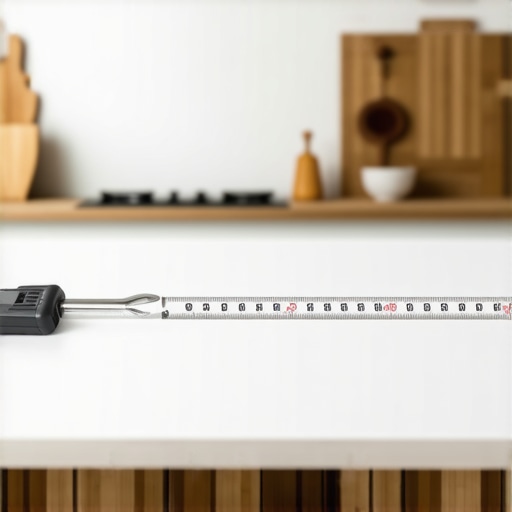
- Use a non-invasive moisture meter to check the perimeter of the squishy area.
- Inspect the expansion gap at the wall to see if the boards are tight against the drywall.
- Verify if a moisture barrier was used by pulling up a single transition strip.
- Look for white mineral deposits on the subfloor which indicate past water evaporation.
The myth of the waterproof click
Marketing terms like waterproof laminate are often misleading because they only refer to surface protection, not protection from subfloor leaks or perimeter flooding. A floor can be waterproof from the top down but will still fail completely if water gets underneath it or into the locking channels from the side. You must treat every laminate floor as if it is allergic to water despite what the box says.
While most people want the thickest underlayment, too much cushion actually causes the locking mechanisms on laminate to snap under pressure. This is a contrarian fact that many big-box retailers will not tell you. They want to sell you the fancy 3mm foam. But that foam allows the floor to deflect too much. When the floor deflects, the tongue and groove rub together. This wears away the wax coating that is supposed to protect the joint. Now, when your dishwasher has a little spill, the water goes straight into the raw wood. If you want a floor that can actually handle water, you move to a stone polymer composite (SPC) or a solid tile. Laminate is a fantastic product for living rooms and bedrooms, but in a kitchen, it requires a level of installation discipline that most contractors simply do not possess. They want to get in and get out. They do not want to wait for the concrete to dry or the floor to acclimate. Acclimation is not a suggestion. It is a requirement of the NWFA and every reputable manufacturer. If that wood dust is not at equilibrium with your kitchen’s humidity before it is locked down, it will move. And when it moves, it leaks.
“The longevity of a floating floor is inversely proportional to the amount of vertical movement allowed by the subfloor.” – Master Flooring Axiom
The 1/8 inch that ruins everything
Small variances in subfloor height create air pockets under laminate planks that act as bellows, sucking in moisture from the air or nearby leaks. This 1/8 inch deviation is often ignored during the carpet install phase of a home’s life, but it becomes a terminal flaw when switching to a hard surface like laminate. You cannot bridge a gap with a brittle material and expect it to survive.
If you find yourself with a squishy floor, the first thing you need to do is pull the dishwasher out. Look at the subfloor. If it is wet, you have to pull the floor. There is no saving it. The smell of mold will eventually take over the kitchen if you do not act. People ask me all the time if they can just replace the affected boards. Technically, yes, if you have extra material and the floor is not a discontinued line. But you have to address the source. Is it a leak? Or is it a lack of a moisture barrier? If it is the slab sweating, replacing three boards will only result in three more squishy boards in six months. Flooring is an ecosystem. You cannot fix one part without understanding the chemistry of the whole room. From the humidity of the crawlspace to the mil-thickness of the wear layer, every detail matters. If you treat your floor like a decoration, it will fail you. If you treat it like an engineering challenge, it will last for decades. Stop looking at the color and start looking at the moisture meter readings. That is the only way to avoid the kitchen sponge.