Why Your Hardwood Floor is Gapping in the Winter and How to Fix It
I once walked into a house where a $15,000 wide-plank walnut floor was cupping so bad it looked like a potato chip because the installer didn’t check the crawlspace humidity. The homeowner was frantic. They thought the wood was defective. It wasn’t. The wood was just doing what wood does. It was reacting to an environment that hadn’t been stabilized. I have spent twenty five years with sawdust under my nails and a moisture meter in my pocket, and if there is one thing I have learned, it is that wood is alive. It breathes. It moves. It reacts. When the temperature drops and the furnace kicks on, your house becomes a giant dehydrator. That expensive white oak or classic walnut starts to surrender its internal moisture to the dry air. This is not a defect. It is physics. If you are seeing gaps between your planks right now, you are witnessing the physical manifestation of the Equilibrium Moisture Content shifting in real time. It is frustrating, but it is often preventable and usually fixable if you understand the structural engineering of the surface beneath your feet.
The seasonal battle for moisture balance
Hardwood floor gapping occurs when the relative humidity inside a home drops below 30 percent, causing the wood cells to release bound water and physically contract in size. This process is governed by the Equilibrium Moisture Content or EMC, which is the point where wood neither gains nor loses moisture. In the winter, the air is naturally drier. When you heat that air, the relative humidity plummets even further. The wood planks act like sponges. In the summer, they soak up moisture and expand. In the winter, they dry out and shrink. I have seen guys try to fill these gaps with wood putty during the winter, which is the biggest mistake you can make. When summer returns and the wood expands, that dried putty has nowhere to go. It will squeeze out or, worse, cause the wood to crack and splinter. You have to respect the cycle.
“A floor is only as good as the subfloor beneath it; deflection is the enemy of every joint.” – Master Flooring Axiom
Physics of the shrinking plank
Wood is an anisotropic material, meaning its dimensions change differently depending on the direction of the grain. Tangential shrinkage is usually twice as great as radial shrinkage. This is why plain-sawn lumber gaps more significantly than quarter-sawn lumber. When the wood cells lose water, the cellulose microfibrils pull closer together. On a microscopic level, the lumen of the wood cell stays relatively stable, but the cell wall itself thins out. If you have five inch wide planks, a 1 percent change in moisture content can translate to a gap you could fit a credit card into. Multiply that across a thirty foot room, and you have a significant structural shift. Unlike a carpet install where the fabric hides the movement, or a laminate floor that is mostly plastic resins and glue, real hardwood is a legacy product that requires active climate management. You cannot just set it and forget it.
[IMAGE_PLACEHOLDER]
Why your subfloor is lying to you
Floor leveling is the foundation of a stable hardwood installation because subfloor dips and high spots create pockets of air that accelerate uneven drying and mechanical stress on tongue and groove joints. If your subfloor is not flat to within 3/16 of an inch over a ten foot radius, your planks are already under tension. When the winter dry spell hits, that tension finds the weakest point. The boards will pull away from each other at the fastest rate where the floor is unlevel. I have spent three days grinding concrete on a job just so the floor would not click like a castanet. Most installers skip the leveling compound because it is messy and takes time. They think the underlayment will hide the dip. It won’t. It just creates a trampoline effect that wears out the fasteners. If your floor was not leveled properly during the hardwood installation, your winter gaps will be twice as wide as they should be.
The humidity sweet spot
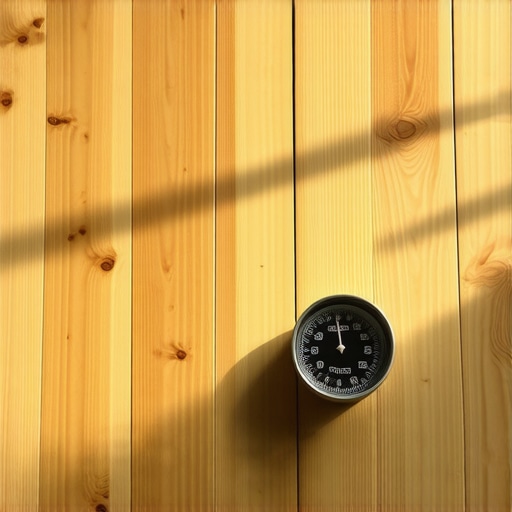
The National Wood Flooring Association recommends maintaining a home humidity level between 30 percent and 50 percent and a temperature between 60 and 80 degrees Fahrenheit to minimize seasonal wood movement. If you let your home drop to 15 percent humidity in January, you are basically putting your floor in a kiln. You need a whole house humidifier or, at the very least, several high quality room humidifiers. I tell my clients to buy a hygrometer. It is a ten dollar tool that saves a twenty thousand dollar floor. You need to monitor the air daily. If you see the humidity dropping, you need to add water to the air before the wood starts to shrink. This is especially true if you have radiant heat. Heat coming from directly beneath the planks is like a blowtorch to the wood’s moisture reserves. You must be vigilant.
| Wood Species | Janka Hardness Rating | Tangential Shrinkage Percentage |
|---|---|---|
| White Oak | 1360 | 10.5% |
| Red Oak | 1290 | 8.6% |
| Hickory | 1820 | 12.6% |
| Black Walnut | 1010 | 7.8% |
| Brazilian Cherry | 2350 | 8.0% |
Gaps versus structural failure
Normal seasonal gapping is thin, uniform, and disappears when the humidity rises in the spring, whereas structural failure involves permanent gaps, cupping, or crowning that suggests a moisture barrier failure or subfloor issues. If you can see the subfloor through the gap, or if the gap is wider than a nickel, you have a problem that goes beyond the weather. This could be a sign that the wood was not acclimated properly. I have seen guys pull wood off a cold truck and nail it down the same day. That is a crime. Wood needs to sit in the room where it will be installed for at least a week, sometimes two, until its moisture content matches the room’s baseline. If you skip acclimation, you are building a floor that is destined to pull itself apart. Also, check your fasteners. If the installer used the wrong gauge of cleats or staples, the wood will move more than it should.
“Wood flooring will perform best when the environment is controlled to stay within a consistent range of relative humidity.” – NWFA Technical Manual
Fixing the void without ruining the wood
The best way to fix hardwood gaps is to increase the indoor humidity to 45 percent and wait three weeks for the wood to rehydrate and expand naturally. Do not reach for the caulk gun. Do not reach for the wood filler. If the gaps are truly permanent because the house has settled or the wood was poorly installed, you can use rope caulking or wood strips cut from the same species. I prefer the slivering method. You take a thin piece of matching wood, glue it on one side, and tap it into the gap. Then you sand it flush. This allows the floor to still move a bit without the filler cracking. But 90 percent of the time, the fix is just water. Buy a humidifier. Stop the dry air from stealing the life out of your oak. It is that simple.
Regional climate reality
In regions with extreme winters like the Midwest or the Northeast, the vapor pressure differential between the warm indoor air and the freezing outdoor air creates a moisture vacuum that can shrink even the most stable engineered hardwood. If you live in a place where the air hurts your face in February, your floor is feeling the same pain. You have to be proactive. In these climates, solid 3/4 inch hardwood is more prone to movement than engineered cores. Engineered wood is built like a sandwich with layers running in different directions. This creates dimensional stability. If you are building a new home in a dry climate, I usually suggest an engineered product with a thick wear layer. It looks like solid wood, but it handles the seasonal shifts much better. If you are dead set on solid wood, you better have a top tier HVAC system with integrated humidity controls.
Lessons from other surfaces
Managing moisture is a universal law in construction, whether you are dealing with showers where waterproofing membranes like Kerdi are used to keep water in, or a carpet install where tack strips hold tension against delamination. Even laminate, which people love because it is cheap, has its own moisture issues. Laminate is basically high density fiberboard. If water gets into the joints, it swells and stays swollen. It does not have the resilience of real wood. With hardwood, you have the ability to repair and maintain it. You just have to treat it with the respect a natural material deserves. You would not leave a fine acoustic guitar next to a radiator. Why would you do that to your floor? The physics of the subfloor, the chemistry of the adhesives, and the biology of the wood all have to work in harmony.
Checklist for winter floor maintenance
- Monitor your hygrometer daily to ensure humidity stays above 30 percent.
- Run a humidifier consistently during the months the furnace is active.
- Avoid using wet mops or excessive water, which can cause surface swelling and later stress cracks.
- Check perimeter expansion gaps under the baseboards to ensure they are not blocked.
- Inspect doorway transitions for signs of excessive movement or pinching.
- Ensure crawlspaces are properly encapsulated to prevent ground moisture from affecting the subfloor.
Ultimately, a hardwood floor is a long term investment. It is the only floor that can last a century if you take care of it. Gaps in the winter are a warning sign. They are the floor telling you that the air is too dry. Listen to the wood. Adjust your environment. If you treat your floor like the structural engineering marvel it is, it will serve you for decades. If you treat it like a cheap rug, you will be replacing it in five years. The choice is yours. Respect the wood, respect the subfloor, and keep your humidity in check. That is the only way to win the battle against the winter dry spell.