The ‘Flashlight’ Secret for Finding Low Spots in Concrete Floors
Most guys skip the leveling compound. They think the underlayment will hide the dip. It won’t. I spent three days grinding concrete on a job last month just so the floor wouldn’t click like a castanet. I once walked into a house where a homeowner had spent a fortune on high-end laminate only to have every joint snap within six months. They blamed the product. I blamed the slab. The slab always wins if you do not respect the physics of flatness. I smell like oak dust and the bitter scent of industrial grinding disks most days, and if there is one thing I have learned, it is that your subfloor is lying to you. It looks flat to the naked eye under vertical light. It is not. You need to change your perspective to see the truth.
The shadow trick that reveals structural flaws
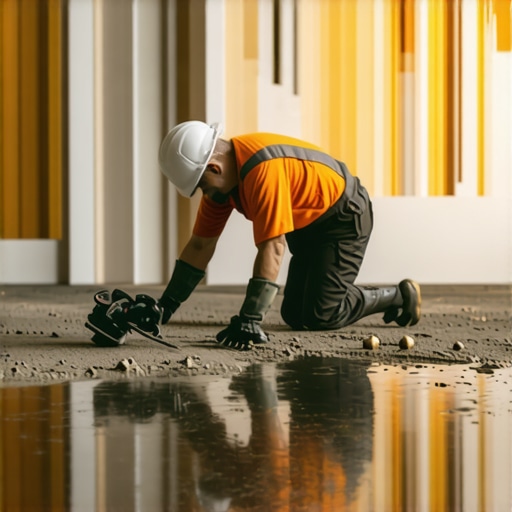
To find low spots in concrete floors you must place a high-intensity flashlight directly on the surface to cast long shadows across the slab. This horizontal light path highlights every deviation, dip, and humped ridge that would otherwise remain invisible under standard overhead room lighting or natural sunlight. When you lay a flashlight flat on the ground, the light travels parallel to the plane of the concrete. Any dip deeper than three sixteenths of an inch will create a dark pocket where the light cannot reach. A hump will catch the light and cast a long, tapered shadow behind it. This is the only way to truly map the topography of a room before you even think about opening a box of flooring. I have seen guys try to use a six foot level and miss a valley because they did not slide it every two inches. The flashlight does not miss. It is the most honest tool in my bag.
“A floor is only as good as the subfloor beneath it; deflection is the enemy of every joint.” – Master Flooring Axiom
The 1/8 inch that ruins everything
Flooring manufacturers require subfloors to be flat within one eighth of an inch over a ten foot radius to prevent mechanical failure. If a concrete slab exceeds this tolerance, the locking mechanisms on laminate or luxury vinyl planks will eventually fatigue, crack, and separate under walking pressure. People talk about waterproof flooring like it is a magic shield. It is not. If your slab has a birdbath, a term we use for a shallow depression, the plank will bridge over that gap. Every time you step on it, the plank flexes. That repetitive motion is exactly like bending a paperclip back and forth. Eventually, it snaps. The physics of deflection do not care about your warranty. You must address the substrate before the first plank is laid. In my experience, ninety percent of flooring failures are substrate related rather than product defects. If you ignore a quarter inch dip, you are just waiting for the floor to fail. It will buckle. The joint snaps. Then you cry.
Why your subfloor is lying to you
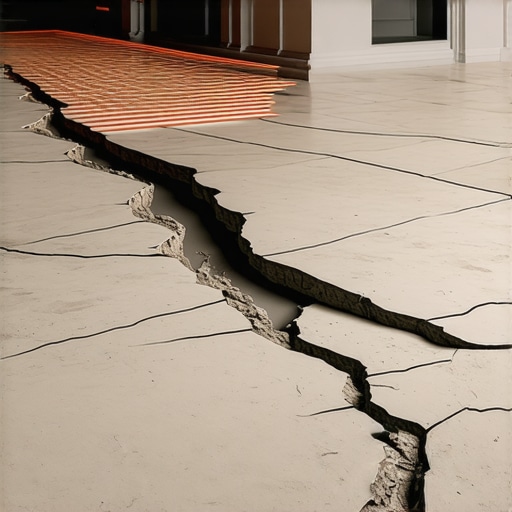
Concrete slabs appear solid and stable but they are porous, dynamic structures that move and breathe based on ambient humidity and internal moisture levels. A slab that looks flat today might have curled edges or settled centers due to the drying process or hydrostatic pressure from the earth. When concrete is poured, the top often dries faster than the bottom. This causes the edges of the slab to curl upward, a phenomenon known as slab curling. If you install a rigid floor over a curled slab, you will have hollow sounds in every corner. I have spent decades analyzing the chemistry of concrete. It is a crystalline matrix of calcium silicate hydrate. If that matrix is disturbed by excess water during the pour, the surface will be soft and dusty. You cannot glue a floor to dust. You cannot float a floor over a mountain range of cured cement. You must grind the high spots and fill the low spots. There is no middle ground in professional installation.
| Flooring Type | Max Deviation (10 ft) | Moisture Tolerance (RH) | Acclimation Time |
|---|---|---|---|
| Solid Hardwood | 1/8 inch | 6% to 9% | 7 to 14 days |
| Laminate Flooring | 3/16 inch | 75% RH | 48 hours |
| Luxury Vinyl Plank | 3/16 inch | 85% RH | 48 hours |
| Ceramic Tile | 1/8 inch | No Limit | None |
The science of the flat floor
Leveling a concrete floor requires an understanding of rheology and the chemical bond between the original slab and the new underlayment material. You must use a primer to close the pores of the concrete to prevent pinholes and air bubbles from ruining the leveling compound. Most DIY installers buy a bag of self-leveler and just pour it out. That is a recipe for disaster. The concrete will suck the water out of the leveler before it has a chance to flow. This results in a lumpy, unworkable mess. You need to use a high-quality acrylic primer. This creates a bridge between the old thirsty concrete and the new material. I prefer a spiked roller to release trapped air. This ensures the surface is as smooth as glass. If you are prepping for a shower or a wet area, the stakes are even higher. You need a slope for drainage, but the transition to the main floor must be perfectly level to avoid a trip hazard. The chemistry of these polymers is fascinating. They use superplasticizers to reduce the water-to-cement ratio while maintaining a fluid consistency. This allows the material to seek its own level without shrinking as it cures. It is a precise balance of tension and gravity.
“Subfloor flatness is the foundation of every successful installation; ignore it at your own peril.” – Master Flooring Axiom
Preparation checklist for concrete substrates
- Vacuum the entire slab to remove all particulates and drywall dust.
- Check for moisture using a calcium chloride test or an electronic meter.
- Perform the flashlight test to mark high and low spots with a wax pencil.
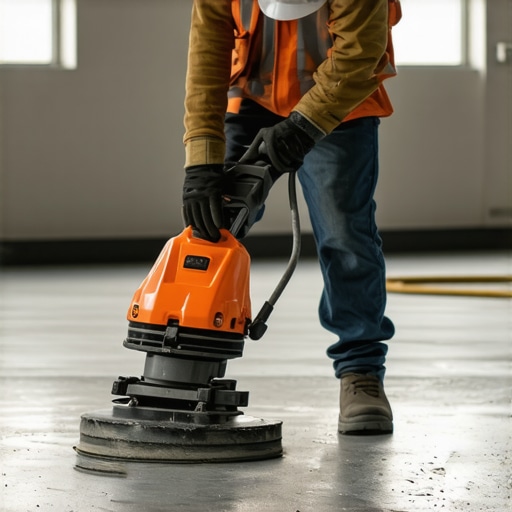
- Grind down humps using a diamond cup wheel on an angle grinder.
- Prime the slab with the manufacturer recommended bonding agent.
- Mix self-leveling underlayment using a high-speed drill and a mixing paddle.
- Pour from the lowest point and spread with a gauged rake.
The regional impact on concrete stability
Regional climate conditions like the high humidity of the Gulf Coast or the extreme dry heat of the desert directly influence how concrete behaves and how flooring must be installed. High humidity regions require aggressive moisture barriers while dry climates demand longer acclimation periods for wood products to prevent shrinkage. If you are in a swampy area like Houston, your concrete slab is basically a sponge. It is pulling moisture from the soil through capillary action. If you don’t use a six mil polyethylene vapor barrier, that moisture will eventually delaminate your adhesive or cause your laminate to swell. In a dry climate like Phoenix, the concrete is often so dry it will suck the life out of any water-based product you put on it. You have to be fast. The working time of your leveler might be cut in half. I have worked in both environments and the tools are the same but the timing is completely different. You have to respect the local weather. It dictates the pace of the job. If you fight the climate, you lose every time.
The hidden danger of thick underlayments
While many people believe a thicker foam underlayment will hide a bumpy floor, too much cushion actually increases the vertical movement of the flooring and leads to joint failure. High-density underlayments are superior because they provide support while offering better sound dampening properties. It is a common myth in the big box stores. They sell you a thick, squishy pad and tell you it will make the floor feel soft. It will. But it will also kill your floor. The locking system on a click-lock floor is not designed to handle more than a few millimeters of vertical compression. If the pad is too soft, the tongue snaps off the groove. Then you have a floating floor that is actually floating away. I always recommend a high-density rubber or cork underlayment. These materials do not compress over time. They keep the joint stable. They also provide better IIC and STC ratings, which are the industry standards for sound insulation. If you want a quiet floor, buy a flat slab and a dense pad. Do not try to fix a bad slab with a thick carpet pad under your laminate. It is a structural engineering failure waiting to happen. The floor must be solid. It must be flat. It must be silent. Anything less is a compromise I am not willing to make.