Why Your New Carpet Smells Like Chemicals and How to Vent It
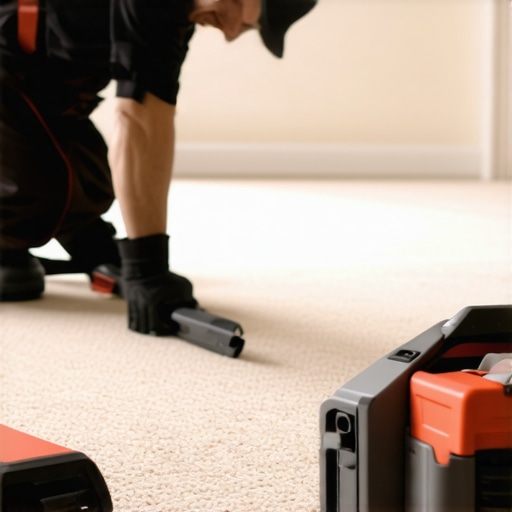
Homeowners always ask why their waterproof vinyl is buckling. Usually, it is because they locked it under a heavy kitchen island, killing the floor’s ability to breathe. Carpet is no different in its need for physical respect. I once walked into a luxury penthouse where the owner had spent twenty thousand dollars on high-pile nylon, only to find the family sleeping in a hotel because the chemical odor was so overwhelming they couldn’t stand it. The installers had ignored the basic physics of air exchange and subfloor preparation. This was not a defect in the material. It was a failure of the environment. When you bring a new carpet install into your home, you are bringing in a massive surface area of fresh chemical compounds that are finally meeting a temperature-controlled environment after sitting in a warehouse. This is a structural engineering challenge disguised as an interior design choice.
The hidden chemistry of the factory floor
The new carpet smell is primarily caused by 4-phenylcyclohexene, which is a chemical byproduct of the styrene-butadiene latex rubber used to attach the secondary backing to the carpet fibers. This compound is detectable by the human nose at concentrations as low as 0.5 parts per billion. While it is not inherently toxic in these trace amounts, it is a volatile organic compound that requires active management. When a carpet is manufactured, the latex is applied at high temperatures. As it cools and is rolled tight for shipping, those vapors are trapped within the density of the fibers. The moment you unroll that carpet in a bedroom, you are effectively releasing months of trapped manufacturing gases into a small volume of air. This is why the initial 72 hours are the most critical for the physical success of the installation and the health of the occupants. You are not just dealing with the carpet itself. You are dealing with the interaction between the backing, the cushion, and the adhesives used at the seams.
“A floor is only as good as the subfloor beneath it, and the air above it must be managed with the same precision as the moisture below it.” – Master Flooring Axiom
The physics of air exchange and vapor pressure
To effectively vent carpet chemicals, you must achieve a minimum of 10 to 15 air exchanges per hour to prevent the concentration of 4-phenylcyclohexene from reaching peak intensity levels. This requires more than just opening a window. You need to create a cross-breeze using high-velocity floor fans that push air across the surface of the carpet. The chemistry of off-gassing is driven by temperature and pressure. If the room is too cold, the molecules move slowly and the off-gassing process can drag on for weeks. If the room is warm, the molecules move faster, allowing you to flush the majority of the VOCs out in a three-day window. I always recommend bumping the thermostat to 75 degrees Fahrenheit during the first 48 hours while maintaining aggressive ventilation. This accelerates the migration of chemicals from the latex backing through the fiber structure and into the air where your fans can move them outside. It is a process of forced evaporation that requires constant mechanical assistance.
Why your subfloor might be trapping odors
The subfloor serves as the foundation for every install and if it contains high moisture levels or alkaline salts, it will react with the carpet adhesives and exacerbate the chemical smell. Most guys skip the leveling compound. They think the underlayment will hide the dip. It won’t. I spent three days grinding concrete on a job last month just so the floor wouldn’t click like a castanet and to ensure the surface was clean enough for the adhesive to bond without creating a secondary chemical reaction. If you are installing carpet over a concrete slab that has not been tested for moisture vapor emission rates, you are asking for trouble. Moisture rising through the concrete can hit the waterproof latex backing of the carpet and become trapped. This creates a humid micro-climate where the styrene-butadiene begins to break down, releasing a much more pungent and persistent odor than the standard new carpet smell. This is often mistaken for a bad carpet batch when it is actually a subfloor moisture issue. Before any carpet install, the slab must be dry and the floor leveling compounds must be fully cured to prevent any trapped moisture from reacting with the new materials.
| Material Type | Typical VOC Level | Acclimation Time | Primary Off-gassing Agent |
|---|---|---|---|
| Nylon Carpet | Moderate | 72 Hours | 4-phenylcyclohexene |
| Laminate Flooring | Low to Moderate | 48 Hours | Formaldehyde resins |
| Engineered Wood | Low | 72 Hours | Adhesive urea |
| Solid Hardwood | Very Low | 7 to 14 Days | Natural tannins |
The difference between carpet and laminate off-gassing
Laminate flooring and carpet both release chemicals but the delivery mechanism is fundamentally different due to the density of the materials and the types of resins used. While carpet relies on latex backings, laminate often uses urea-formaldehyde in the core board construction. Carpet has significantly more surface area because of the individual fibers, which means it can release a higher volume of air-borne particles in a shorter amount of time. Laminate is a dense, non-porous product that off-gasses much more slowly from the edges and joints. This is why you might smell carpet immediately, whereas the smell from laminate or even products used in showers like waterproof membranes can linger for weeks if not properly addressed. If you are sensitive to smells, you need to understand that the physical structure of carpet makes it a giant filter. It will trap every other chemical in the house, including paint fumes and cleaning agents, and then release them slowly over time. This is why I tell my clients to finish all painting and floor leveling at least a week before the carpet arrives. You do not want the carpet to absorb the off-gassing from other construction materials.
Tactical steps for a clean installation
Achieving a professional result requires a strict adherence to a specific sequence of ventilation and temperature control measures starting from the moment the roll enters the building. You cannot treat this as a passive process. It is an active mechanical purge of the environment. Follow these steps to ensure the air quality in your home remains high after the installers leave.
- Request that the carpet be unrolled and aired out in the warehouse for 24 hours before it is delivered to your home.
- Ensure the HVAC system is running with a fresh MERV-13 filter to capture any loose particulates or dust during the tear-out of the old floor.
- Maintain a room temperature of 72 to 75 degrees to encourage the rapid migration of VOCs out of the carpet backing.
- Use at least two floor fans per room to create a high-pressure air stream that moves toward an open window.
- Operate a high-quality air purifier with a charcoal filter specifically designed to trap volatile organic compounds.
- Keep all interior doors closed to prevent the chemical smell from migrating into the rest of the house during the first 48 hours.
The risk of trapped moisture and mold
If a carpet is installed over a subfloor that has not been properly leveled or dried, the odor can change from a chemical scent to a musty, organic smell within weeks. This is the nightmare scenario for any master installer. When we talk about floor leveling, we aren’t just talking about making it flat. We are talking about creating a stable, breathable surface. If you have a dip in the floor, moisture can pool there. If you have just finished a remodel that involved wet trades like tiling showers or pouring concrete, the humidity in the home will be spiked. That moisture wants to go somewhere. It will find its way into the carpet cushion. Once the moisture is trapped under the latex backing, it can lead to the growth of mold or the degradation of the adhesive. This produces a smell that no amount of ventilation will fix. You have to pull the carpet up and start over. I always use a pinless moisture meter on the subfloor before a single tack strip is nailed down. If the slab is over 4 percent moisture, the carpet stays in the truck. You have to respect the science of the slab.
“Deflection is the enemy of every joint and moisture is the assassin of every adhesive bond.” – Master Flooring Axiom
Understanding the long term air quality
The long term air quality of a carpeted room is dependent on the maintenance of the fibers and the initial success of the off-gassing period. Once the initial 72 hour window has passed, the chemical smell should be 90 percent gone. If it persists beyond a week, there is an issue with the material or the installation environment. It could be that the carpet was stored in a damp warehouse and has developed a secondary odor. Or it could be that the padding underneath is a low-quality bonded foam that is off-gassing its own set of chemicals. This is why I only use synthetic felt or high-density frothed foam pads. They don’t have the same chemical profile as the cheap multi-colored scrap pads you see at the big box stores. You get what you pay for in the flooring world. A cheap carpet install usually comes with a cheap smell that lasts way too long. Invest in the prep work. Invest in the ventilation. And for the love of your home, make sure that subfloor is dry and level before the first piece of carpet touches it.