Why your kitchen laminate is separating near the stove
Thermal Stress and Mechanical Failure of Kitchen Laminate Near Ranges
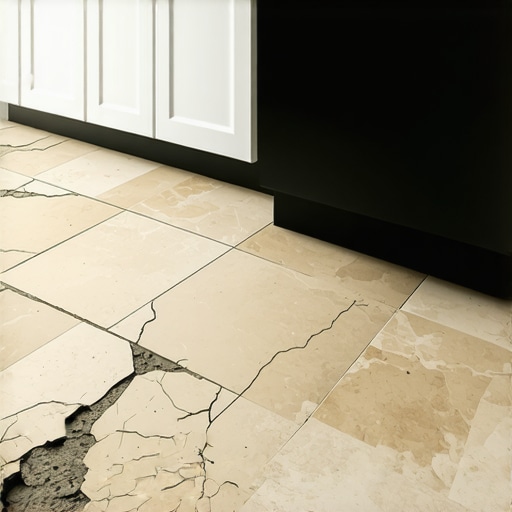
Homeowners always ask why their waterproof vinyl or high-quality laminate is buckling or gapping near the stove. Usually, it is because they locked the floor under a heavy kitchen island or a range, killing the ability of the floor to breathe. I once walked into a kitchen where the laminate had gapped so wide near the stove that you could see the underlayment peaking through like a sore thumb. The owner thought the product was defective. The truth was that the installer had pinned the floor between a massive refrigerator and a sub-zero range, leaving no room for the natural thermal expansion that occurs during a self-cleaning cycle. Laminate is a living system. It moves, it reacts, and if you do not respect the physics of that movement, it will fail every single time.
The heat signature of a modern oven
Kitchen laminate separation occurs because of thermal expansion and the mechanical failure of the locking mechanism when exposed to localized heat. When a range or oven operates, it creates a thermal gradient across the subfloor and the laminate planks, causing the high-density fiberboard (HDF) to expand at a different rate than the surrounding floor. This specific localized movement puts immense pressure on the tongue-and-groove joints, eventually leading to a visible gap. Most people do not realize that a stove can radiate enough heat to raise the surface temperature of the floor by twenty degrees in minutes. This rapid change triggers a physical response in the wood fibers of the core, forcing the plank to grow in length and width. If the floor is blocked by a wall or a heavy appliance, that energy has nowhere to go but to push against the next plank, often snapping the delicate locking profile.
“A floor is only as good as the subfloor beneath it; deflection is the enemy of every joint.” – Master Flooring Axiom
The 1/8 inch that ruins everything
Subfloor flatness is the most ignored factor in laminate floor gaps and plank separation near heat sources. If the subfloor has a dip or a crown within six feet of the stove, the vertical deflection caused by walking on the floor will weaken the locking system over time. When you add the variable of heat, the material softens slightly, making the mechanical bond even more vulnerable to failure. A dip as small as 1/8 inch can create a leverage point. Every time someone steps near the stove, the planks flex. In a kitchen, this is compounded by the fact that we stand in front of the stove for long periods. This constant pressure, combined with the heat-induced expansion, acts like a slow-motion pry bar on the floor joints. You can buy the most expensive 12mm laminate on the market, but if you do not use a self-leveling compound to achieve a truly flat surface, those joints will open up within the first year.
The chemical reality of HDF swelling
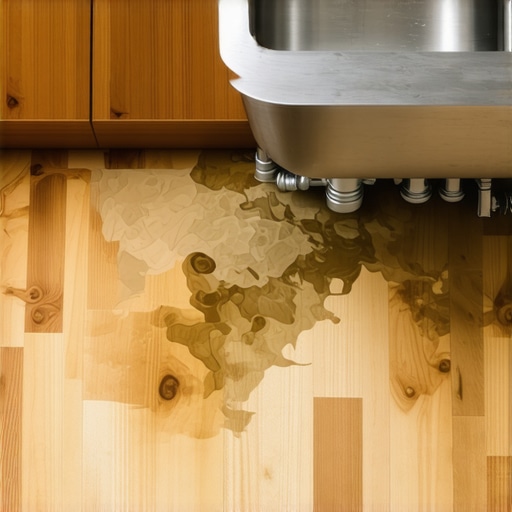
Moisture vapor transmission and hydrostatic pressure from the concrete slab often combine with heat to destroy laminate cores near kitchen appliances. While the top wear layer is often a tough aluminum oxide or melamine resin, the core is made of compressed wood fibers held together by resins. Heat from the stove acts as a catalyst. If there is any residual moisture in the subfloor, the heat draws that moisture up into the HDF core. This causes the fibers to swell at the edges, a process known as peaking. Once the edges swell, they are easily damaged by foot traffic. This is why you see the edges of your laminate looking raised or chipped near the oven or dishwasher. It is a chemical reaction to the micro-climate created under your feet. Using a 6-mil polyethylene vapor barrier is not optional, it is a structural necessity for any installation over concrete, especially in high-heat areas like the kitchen triangle.
[IMAGE_PLACEHOLDER_1]
Why the heavy island kills your floor
Floating floor systems must remain free to move across the entire subfloor surface without being pinned by heavy cabinetry or fixed appliances. When you install a heavy kitchen island on top of laminate, you effectively bolt that section of the floor to the ground. When the stove heats up the planks five feet away, the floor tries to expand toward the island. Since the island is too heavy to move, the expansion force is reflected back toward the stove. This creates a compression stress that either causes the floor to buckle or, more commonly, causes the locking mechanism to shear off. Once the lock is sheared, the planks can slide apart freely, creating the gap you see. This is why professional installers always recommend installing the floor around the island, or using a transition strip to isolate the heavy area from the rest of the floor. You cannot treat a floating floor like it is glued down, it needs a perimeter expansion gap of at least 3/8 inch around every single vertical obstruction.
| Material Type | Expansion Coefficient | Recommended Gap | Heat Resistance |
|---|---|---|---|
| Standard Laminate | High | 3/8 Inch | Moderate |
| Engineered Hardwood | Medium | 1/2 Inch | High |
| SPC Vinyl Plank | Low | 1/4 Inch | Low |
| Solid Oak | Extreme | 3/4 Inch | High |
The ghost in the expansion gap
Perimeter expansion gaps are often hidden by baseboards and quarter-round molding, but their absence is the primary cause of floor separation near heat sources. If an installer pushed the planks tight against the wall, the floor has zero room to grow. When the heat from the stove hits the floor, the planks expand and hit the wall. The resulting pressure has to be relieved somewhere, and it usually happens at the weakest point, which is the joint closest to the heat source. I have seen floors where the baseboard was nailed through the laminate, effectively pinning it to the wall. This is a rookie mistake that costs thousands in repairs. You must ensure that the molding is nailed only to the wall, never to the floor itself. This allows the floor to slide back and forth under the trim as the seasons and temperatures change. Without this freedom, the floor is under constant mechanical stress.
Humidity and the regional climate factor
Ambient relative humidity levels between 35 percent and 55 percent are mandatory for maintaining the structural integrity of HDF-based flooring. In a humid climate like Houston or Miami, the wood fibers in your laminate are already near their maximum expansion point. When you add the heat from a kitchen, you push them over the limit. Conversely, in a dry climate like Phoenix, the lack of moisture makes the planks brittle. When the stove heats them up, the sudden change can cause the clicking mechanism to crack because the material lacks the flexibility to absorb the movement. This is why acclimation is so vital. You cannot bring laminate from a cold warehouse and install it in a warm kitchen the same day. The material needs at least 48 to 72 hours to reach equilibrium with the home environment. Skipping this step is a recipe for immediate joint separation.
“Floor movement is not a flaw; it is a physical property. Failure to account for it is a failure of design.” – NWFA Technical Guidelines
Remediation without a full tear-out
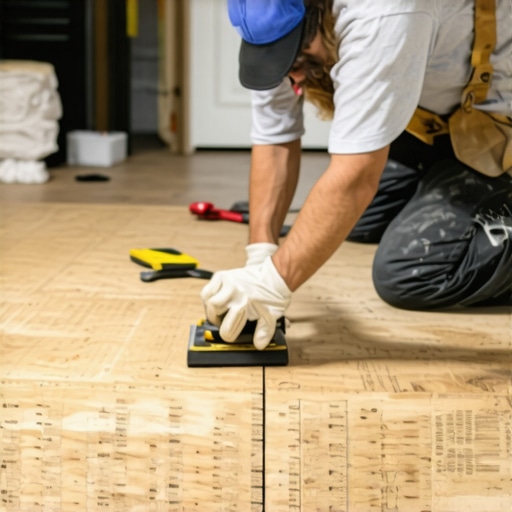
Repairing laminate gaps near the stove involves mechanical reset of the planks and the application of a high-strength floor adhesive to the joint. If the locking mechanism is still intact, you can often use a suction cup tool or a floor gap fixer to pull the planks back together. However, simply pulling them back is not enough. You must first vacuum out any debris, dust, or kitchen grease that has settled into the open joint. If you trap a grain of sand in that joint, it will never close properly. Once clean, a small bead of PVA wood glue can be applied to the tongue before sliding the planks back together. This creates a permanent bond that is stronger than the original lock. This should only be done as a last resort, as it technically turns that section of the floor into a non-floating element. If the gap returns, it is a sign that the expansion gap at the wall is non-existent and needs to be cut in with a multitool.
Kitchen Floor Maintenance Checklist
- Check that refrigerator water lines are not leaking onto the subfloor.
- Verify a 3/8 inch expansion gap exists behind all baseboards.
- Ensure the stove is leveled to prevent uneven heat distribution.
- Maintain indoor humidity between 35% and 55% year-round.
- Use a moisture meter to check for slab dampness before any repair.
- Avoid steam mops which inject heat and water directly into laminate joints.
The final word on thermal stability
Laminate floor durability is a product of proper installation and environmental control rather than the price per square foot. While most people want the thickest underlayment, too much cushion actually causes the locking mechanisms on laminate and LVP to snap under pressure. This is because the excessive flex creates a vertical shear force that the thin plastic or fiber tongues cannot withstand. If you are experiencing separation near the stove, look at the subfloor flatness and the perimeter gaps first. The heat is merely the catalyst that reveals the underlying structural deficiencies of the installation. Flooring is an engineering challenge. Treat it with the same precision you would use for the foundation of the house itself. By respecting the physics of expansion and the chemistry of the materials, you can ensure a kitchen floor that stays tight and beautiful for decades.