Why your laminate floor smells like a wet basement
Listen, I have spent thirty years on my knees with a moisture meter and a level. I have seen every way a floor can fail, but the most common disaster is the one you smell before you see. Most guys skip the leveling compound. They think the underlayment will hide the dip. It won’t. I spent three days grinding concrete on a job last month just so the floor wouldn’t click like a castanet, and that is where the real work happens. If your laminate smells like a wet basement, you are not just dealing with a cosmetic issue. You are witnessing a structural failure of the moisture management system. It is a slow motion train wreck happening under your socks. Flooring is not a decoration, it is a performance surface that must manage the laws of physics and chemistry every single day.
The logic of trapped moisture and microbial growth
The damp smell in your laminate flooring is caused by microbial volatile organic compounds or MVOCs produced by mold and bacteria thriving in the dark, damp space between your subfloor and the laminate planks. When moisture is trapped without airflow, it saturates the high-density fiberboard core and causes structural rot. This process begins the moment the relative humidity under your planks exceeds sixty percent. It is not just about a spill you forgot to wipe up. It is about the hydrostatic pressure of the earth itself pushing water vapor through a concrete slab that you thought was dry. Concrete is a sponge. It looks solid, but it is full of tiny capillaries that pull moisture from the ground. If you did not put down a six-mil polyethylene vapor barrier, that moisture has nowhere to go but into the bottom of your floor.
Why your concrete slab acts like a wick
Concrete is never truly dry, it is just in a state of equilibrium with its environment. When we talk about floor leveling, we are also talking about creating a stable base that does not allow for air pockets where condensation can collect. I have walked onto jobs where the installer just rolled out the cheapest foam they could find and called it a day. That is a recipe for a swamp. When the temperature shifts, the air trapped in those subfloor dips reaches its dew point. Water droplets form on the underside of the laminate. This is the chemistry of failure. The high-density fiberboard, or HDF, that makes up the core of your laminate is essentially compressed sawdust and resin. It is incredibly thirsty. Once it starts drinking that condensation, the fibers expand, the edges swell, and the smell of rot begins to permeate the room.
“A floor is only as good as the subfloor beneath it; deflection is the enemy of every joint.” – Master Flooring Axiom
The chemical reality of microbial organic compounds
That basement smell is actually the waste product of fungi. When mold spores find a food source, like the cellulose in your laminate core, and a water source, like the vapor coming off your slab, they begin to digest the floor. This releases gases. These are not just unpleasant odors, they are indicators of an active biological colony. People think laminate is plastic. It is not. The wear layer is a melamine resin, but the heart of the plank is organic material. If you are smelling that musty, earthy funk, the structural integrity of your locking mechanisms is already compromised. The tongue and groove joints are the thinnest parts of the floor. They are also the first to rot. Once they soften, the floor starts to move and squeak. Then the joints open up, allowing even more moisture and household spills to enter the mix. It is a cycle of degradation that only ends one way, and that is with a dumpster in your driveway.
Why your vapor barrier is failing you
The mistake I see most often is the improper overlapping of the vapor retarder. If you do not tape those seams with a moisture-resistant tape, you might as well not have a barrier at all. Water vapor is persistent. It will find the smallest gap and concentrate there. I have seen carpet install pros try to transition into laminate and treat the subfloor like they are just laying pad. You cannot do that. Laminate requires a precision environment. You need to understand the difference between a moisture barrier and a moisture retarder. A barrier stops it, a retarder slows it down. In a basement or a high-humidity area, you need a total block. I have seen guys use newspaper or old carpet padding as an underlayment. That is not just lazy, it is professional malpractice.
| Material Type | Moisture Resistance | Typical Acclimation Time | Density Rating |
|---|---|---|---|
| Standard HDF Core | Low | 48 to 72 Hours | 800 kg/m3 |
| Wax-Coated Joints | Medium | 48 Hours | 850 kg/m3 |
| Waterproof Composite | High | 0 to 24 Hours | 900 kg/m3 |
| Stone Plastic Core | Extreme | None | 1900 kg/m3 |
The ghost in the expansion gap
One of the most overlooked causes of floor failure and smell is the lack of a proper expansion gap around the perimeter. I always leave a quarter-inch to a half-inch gap at every wall and vertical obstruction. If the floor is tight against the drywall, it cannot breathe and it cannot move. When the humidity rises and the planks expand, they have nowhere to go but up. This creates a bubble. That air space under the bubble becomes a stagnant pocket where mold thrives. You might think hiding that gap with baseboard is just for looks, but it is actually a vital part of the ventilation of the subfloor system. If you jam the floor in tight, you are essentially sealing a petri dish. I have pulled up floors that were buckled so hard they looked like a mountain range, and the smell of ammonia and damp earth that came from underneath was enough to make your eyes water.
“The presence of moisture in a subfloor system is the primary cause of finish failure and structural instability.” – NWFA Technical Guidelines
Checklist for a dry and odorless installation
- Perform a calcium chloride test on the concrete to check for vapor emission rates.
- Grind down high spots and fill low spots to achieve a flatness of 1/8 inch over 10 feet.
- Use a minimum 6-mil polyethylene vapor barrier with 6-inch overlapped and taped seams.
- Allow the flooring to acclimate in the room for at least three days prior to opening boxes.
- Maintain a constant indoor relative humidity between 30 and 50 percent year-round.
- Ensure that the dishwasher and refrigerator water lines are not leaking into the subfloor.
- Check the exterior grading of the house to ensure water is moving away from the foundation.
The 1/8 inch rule that keeps floors quiet
Precision is everything. If your subfloor is out of level by more than an eighth of an inch over a ten-foot span, your floor is going to fail. I don’t care how expensive the planks were. When you walk on an uneven floor, the planks flex. That flexing acts like a bellows, pumping the air and the smell of the damp subfloor up through the joints and into your living space. This is why floor leveling is the most important part of the job. You have to get the substrate flat. Not level, flat. There is a difference. A floor can be slanted and still be flat enough for laminate, but a wavy floor will snap the locking tabs. Once those tabs snap, the moisture protection is gone. You are left with a clicking, smelling mess that no amount of scented candles will fix. You have to address the physics of the base before you can enjoy the aesthetics of the surface. If you don’t have the stomach for grinding concrete or pouring self-leveler, you have no business installing a floating floor.
Lessons from the showers and wet zones
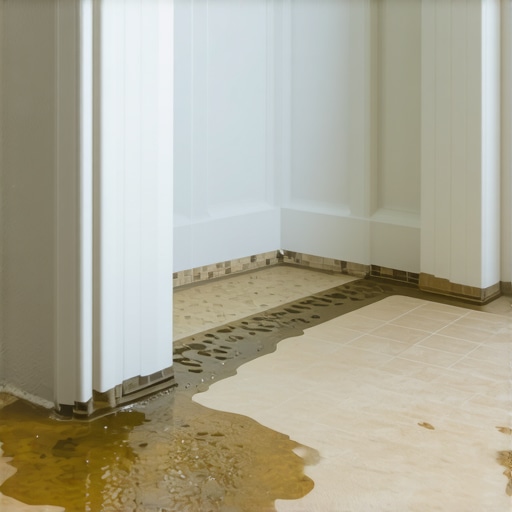
People love the look of wood in their bathrooms and near their showers, but they don’t understand the risk. Every time someone steps out of a shower, they are introducing liquid water to a system that is designed to handle vapor at most. If that water gets under the baseboard, it gets under the laminate. In these zones, you have to be even more aggressive with your sealing. Use a 100 percent silicone caulk in the expansion gaps in wet areas. It stays flexible and creates a gasket. This prevents the bathroom from smelling like an old gym locker. I have seen beautiful laminate jobs ruined in six months because the homeowner didn’t want to see a bead of caulk along the tub. You have to choose between a tiny line of silicone or a floor that smells like a swamp and feels like a sponge under your feet. Choose the silicone every time. It is about engineering a solution that lasts longer than the warranty period.