How to stop a squeak in a brand new laminate floor
The 1/8 inch that ruins everything
To stop a squeak in a new laminate floor, you must first identify if the noise is caused by subfloor deflection, lack of expansion gaps, or friction in the locking mechanism. Use a moisture meter to check humidity, ensure a 1/4 inch gap exists at all walls, and apply powdered graphite to the joints as a temporary lubricant. Most guys skip the leveling compound. They think the underlayment will hide the dip. It won’t. I spent three days grinding concrete on a job last month just so the floor wouldn’t click like a castanet. When you are dealing with a brand new install, the frustration is triple because you expect perfection. You just paid for a transformation, but every step sounds like a haunted house. Laminate is a floating system, meaning it is not nailed or glued. It relies on gravity and the integrity of the locking system. If the subfloor has a valley or a hump, the plank will flex every time you put weight on it. That flex causes the tongue and groove to rub together. That rubbing is the squeak. It is the sound of high density fiberboard protesting against improper preparation. Unlike a carpet install where you can hide a massive dip with extra padding, laminate is honest. It tells you exactly where the slab is uneven. If you have moisture coming up from a basement or near showers, the core of the plank will swell, increasing the pressure in the joints and making the noise even louder. This is why floor leveling is not a suggestion; it is a law of physics.
“A floor is only as good as the subfloor beneath it; deflection is the enemy of every joint.” – Master Flooring Axiom
The ghost in the expansion gap
Expansion gaps are required because laminate floors expand and contract with changes in temperature and relative humidity. A squeak often indicates that the floor is pinned against a wall or a heavy kitchen island, preventing it from moving freely. Trimming the edges to restore a 1/4 inch gap usually solves the problem. I once walked into a house where a $15,000 wide plank walnut floor was cupping so bad it looked like a potato chip because the installer did not check the crawlspace humidity. In the case of laminate, the core is made of wood fibers held together by resins. These fibers are hygroscopic. They drink moisture from the air. In a humid summer, the floor grows. In a dry winter, it shrinks. If you jammed the planks tight against the drywall, the floor has nowhere to go. It will arch up like a bridge. When you walk on that arch, it snaps down against the subfloor. That is the click or the squeak you hear. You must pull the baseboards and check the perimeter. If you find a spot where the floor is touching the wall, take a oscillating saw and cut it back. You need air. You need space. If you do not give it space, the locking mechanisms will eventually snap under the pressure, and then no amount of graphite will save you.
The hidden trap of too much cushion
While most people want the thickest underlayment, too much cushion actually causes the locking mechanisms on LVP or laminate to snap under pressure. Excessive vertical movement from a soft pad creates friction between the planks, leading to constant squeaking and eventual joint failure. Underlayment should be firm and limited to 3mm thickness. Many homeowners make the mistake of buying the thickest, squishiest underlayment they can find, thinking it will make the floor feel like a carpet install. This is a fatal error. Laminate needs a firm foundation. If the padding is too soft, the tongue and groove act like a hinge. Every step causes the hinge to rotate beyond its design limit. This is especially problematic in high traffic areas. Over time, the melamine wear layer wears down at the point of contact, and the squeak becomes a permanent feature. You want an underlayment with a high density. Look for a high IIC (Impact Insulation Class) rating but stay away from anything that feels like a sponge. If you are installing over concrete, your underlayment must also act as a vapor barrier to prevent moisture from the slab from reaching the HDF core. Without this protection, the planks will swell, the joints will tighten, and the friction will create a cacophony of squeaks every time the weather changes.
| Subfloor Type | Max Deviation (per 10ft) | Primary Squeak Cause | Recommended Fix || :— | :— | :— | :— || Concrete Slab | 1/8 inch | High Spots or Dips | Self-leveling compound || Plywood | 3/16 inch | Joist Deflection | Structural screws || OSB | 1/8 inch | Swollen Edges | Sanding and sealing || Radiant Heat | 1/8 inch | Rapid Contraction | Humidity control |
The physics of the click and groove
The locking mechanism of a laminate floor is a marvel of engineering that requires precise tolerances to remain silent. When dust or debris gets trapped in the groove during installation, it prevents the tongue from seating fully, creating a microscopic gap that generates noise when compressed. Think about the chemistry of the adhesive and the resins in that HDF core. It is dense, but it is not indestructible. If you were sloppy during the install and left sawdust in the tracks, you have already failed. Each plank needs to be vacuumed before it is clicked into place. If you have a squeak in the middle of the floor, and you have already checked the expansion gaps and the subfloor levelness, you might have a dirty joint. Sometimes, you can fix this by using a vacuum to suck out the debris or by using a thin lubricant. However, if the joint is already damaged because the floor was walked on while it was uneven, the only real fix is to pull it up and replace the damaged boards. You cannot just put a rug over it and hope it goes away. The friction will continue to eat at the fiberboard until the tongue snaps off entirely. This is why the prep work takes twice as long as the actual installation. If you spend four hours laying floor and zero hours leveling the subfloor, you are going to spend the next ten years listening to it complain.
“Precision in the subfloor preparation is the only guarantee of a silent walking surface.” – Master Flooring Axiom
Why your subfloor is lying to you
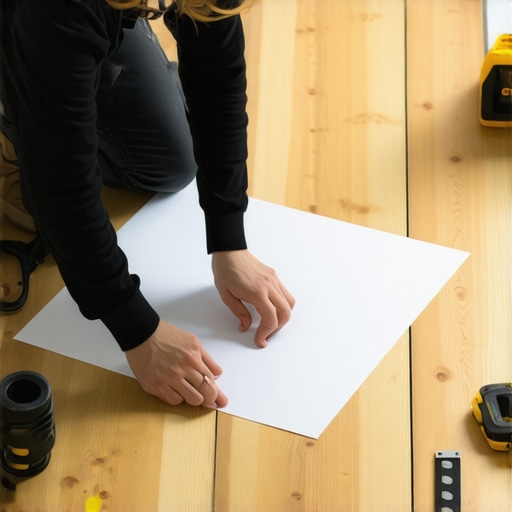
A subfloor might look flat to the naked eye, but even a 3/16 inch dip can cause a floating floor to bounce and squeak. Using a 6 foot or 10 foot straight edge is the only way to verify that the surface meets the manufacturer requirements for laminate installation. I have seen guys use a 2 foot level and say it is good enough. It is never good enough. You need to map the room. Draw a grid. Find the low spots. If you have a wood subfloor, you might need to add a layer of 1/4 inch plywood to stiffen it up. If you have a concrete floor, you are going to be using a lot of floor leveling compound. This stuff is not cheap, but it is cheaper than a new floor. When the leveling compound is drying, do not walk on it. Give it the full 24 hours. The chemistry of the bond depends on a slow cure. If you rush it, the compound will crack and turn into dust under your floor. Then you will have a squeak that sounds like someone walking on dry leaves. This is the difference between a professional and a handyman. A professional knows that the floor is just the skin; the subfloor is the skeleton. If the skeleton is crooked, the skin will never look or feel right.
- Check humidity levels to ensure they stay between 35% and 55%.
- Verify 1/4 inch expansion gaps at all vertical obstructions.
- Inspect perimeter molding to ensure it is not pinching the floor.
- Test individual planks for vertical movement or deflection.
- Check for heavy furniture like kitchen islands that might be locking the floor in place.
- Use a straight edge to verify subfloor flatness of 1/8 inch over 10 feet.
The chemistry of powdered graphite and silence
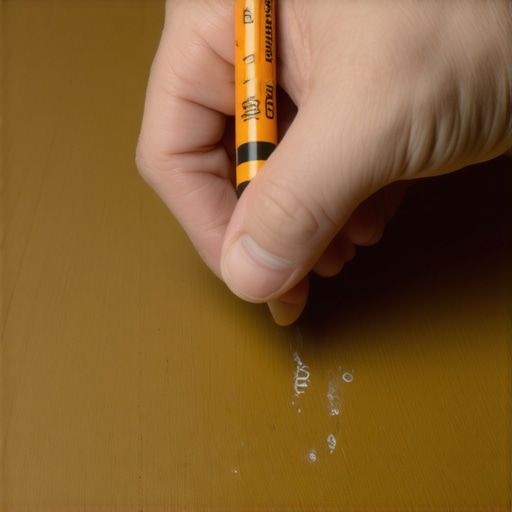
Powdered graphite is a dry lubricant that can be puffed into the joints of a squeaky laminate floor to reduce friction without damaging the wood fibers. Unlike oil based lubricants, graphite does not attract dust or cause the HDF core to swell, making it a safe option for temporary noise reduction. If you have a minor squeal, you can try this before you start ripping up boards. You puff the powder into the joint and then walk on it to work the particles down into the locking mechanism. It works like tiny ball bearings. It reduces the surface tension between the tongue and the groove. But let us be clear; this is a band aid. If the reason for the squeak is a 1/2 inch hole in your concrete slab, all the graphite in the world will not help you. You are just lubricating a disaster. In regions with high humidity like the Gulf Coast, you have to be even more careful. The moisture in the air can turn some lubricants into a sticky mess. Stick to dry teflon or graphite. And for the love of everything holy, do not use WD-40. It is a solvent, not a floor lubricant. It will eat through the finish and ruin the bond of the resins in the plank. You will end up with a floor that is silent but looks like it was cleaned with acid. Stick to the methods that respect the engineering of the material. Laminate is a high performance product, and it requires high performance maintenance.