Why Your Garage Door Won’t Seal Properly on an Uneven Floor
Why Your Garage Door Won’t Seal Properly on an Uneven Floor (and How to Fix It)
There is a specific kind of frustration that comes with standing in your garage at night, turning off the light, and seeing a glowing sliver of moonlight or streetlamp peeking through the bottom of your door. That “light of day” isn’t just an aesthetic annoyance; it is a gateway for pests, a drain on your home’s energy efficiency, and a welcome mat for rainwater and debris. For many homeowners, the immediate reaction is to blame the door itself. You might think the tracks are bent or the door has warped over time. However, as the experts at Garage Door Service & Sales Co have seen time and again, the culprit is often hiding right beneath your feet: an uneven concrete floor.
Achieving a weather-tight seal requires two perfectly parallel surfaces to meet. When your garage floor has dipped, heaved, or was simply poured with a slope that doesn’t align with the door’s horizontal plane, a standard seal will fail. In this comprehensive guide, we will explore why these gaps occur, how to diagnose the specific nature of your floor’s irregularity, and the various solutions ranging from simple weather-stripping upgrades to professional garage door repair and concrete remediation.
The Anatomy of a Bad Seal: Why Gaps Matter
A garage door is the largest moving object in your home, and its primary job – beyond security – is to act as a barrier. When that barrier is compromised by even a small gap, the consequences are more significant than most people realize. A gap as small as 1/4 inch can be the catalyst for a host of household problems.
Energy Loss and Thermal Bridging: If your garage is attached to your home, a poor seal acts like an open window. During the winter, cold air rushes in, cooling the walls of the adjacent living spaces. This forces your HVAC system to work harder, driving up utility bills. Even in an unheated garage, a proper seal prevents “thermal bridging,” where the temperature of the garage floor drops so low it affects the foundation’s temperature.
Pest Entry: One of the most common reasons homeowners seek residential garage door repair is to stop rodents. A mouse only needs a gap the size of a pencil (about 1/4 to 3/8 of an inch) to squeeze its way inside. Once in the garage, they often find their way into the walls of the main house. Insects, including spiders and crickets, find these gaps even more inviting.
Water Damage and Humidity: Wind-driven rain can force its way through a bottom gap, leading to standing water on your garage floor. Over time, this moisture increases the humidity levels in the garage, potentially leading to mold growth on drywall or rusting of tools and the garage door’s own mechanical components. Furthermore, during the winter, this water can freeze, causing the bottom seal to stick to the floor and tear when the door is opened.
Common Causes of Uneven Garage Floors
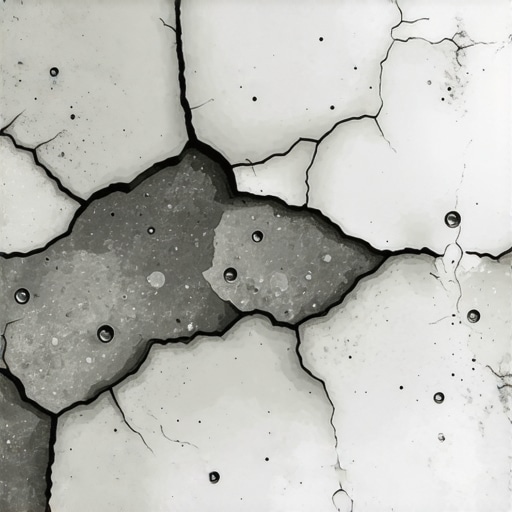
Concrete feels permanent, but it is a dynamic material subject to the whims of the earth beneath it. There are three primary reasons why your garage floor may no longer be level.
Foundation Settlement
Soil is rarely static. Depending on the composition of the earth under your slab – clay, sand, or silt – it can expand and contract with moisture levels. Over decades, the weight of the garage and the vehicles inside can cause the slab to settle unevenly. If one corner of the garage sinks faster than the other, the floor will develop a slope that the straight edge of a garage door cannot follow.
Carport Conversions
Many older homes feature garages that were originally open carports. Carports were frequently built with a significant “pitch” or slope toward the driveway to ensure water didn’t pool under the vehicle. When these spaces are enclosed to become a garage, that drainage slope remains. While great for water runoff, it creates a massive challenge for garage door installers who are trying to fit a rectangular door into a non-rectangular opening. You might find more information on this in our guide on How to Level an Old Concrete Garage Floor for Living Space.
Improper Concrete Pouring and “Birdbaths”
Not every concrete contractor is a master of their craft. Sometimes, the floor was never level to begin with. Dips in the slab, colloquially known as “birdbaths,” can occur if the concrete wasn’t properly screeded during the initial pour. These localized low spots are often the hardest to seal because a standard rubber gasket cannot “reach” down into the dip.
Is it the Door or the Floor? (The Diagnostic Phase)
Before you spend money on parts, you must determine if the problem is the door’s alignment or the floor’s levelness. Here is how to perform a professional-grade diagnosis.
The Level Test
Close your garage door and place a 4-foot or 6-foot level on the bottom panel. If the panel is perfectly level but there is a gap on one side, the floor is the problem. If the panel is not level, your door’s cables may have stretched unevenly, or the spring tension is out of balance, necessitating a call to garage door repair companies.
The Flashlight Test
This is a classic industry trick. Wait until it is dark outside. Have someone stand outside the closed garage door while you stay inside with a high-powered flashlight. Run the beam along the bottom of the door. The person outside will be able to see exactly where the light escapes. This helps identify “high spots” and “low spots” that aren’t visible to the naked eye in daylight. For a deeper dive into this technique, see The Flashlight Test for Catching High Spots in Your Subfloor.
The “Tape and Drag” Method
To find the exact degree of floor flatness, you can use The ‘Tape and Drag’ Method for Checking Floor Flatness. By marking the floor with tape where the door meets the concrete and dragging a straight edge across the line, you can visualize the “deflection” or the amount the floor deviates from a straight line. This measurement is crucial if you plan on ordering a custom oversized seal.
Solution 1: Adjusting the Garage Door Mechanics
In cases where the floor is only slightly out of level (less than 1/2 inch across the width of the door), you may be able to “cheat” the door’s mechanics to close the gap. However, this requires precision and an understanding of door physics.
Adjusting Limit Switches: Most modern garage door openers have “travel limits” that tell the motor when to stop. You can often adjust the “down” limit to force the door to press a bit harder against the floor. Be careful, though; if you set it too low, the door’s safety reversal system will kick in, thinking it has hit an obstruction, and the door will pop back up.
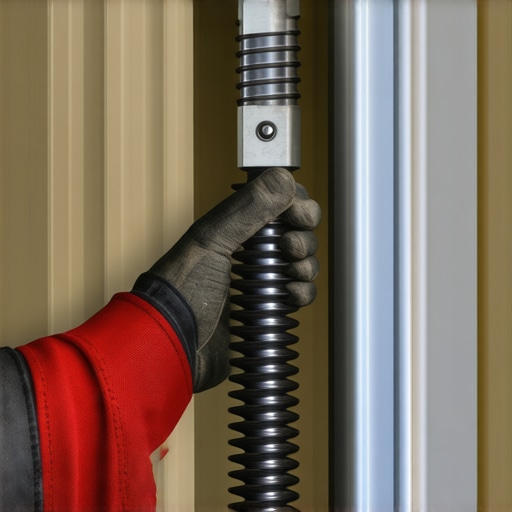
Adjusting Cable Tension: If one side of the door hangs lower than the other, a technician can adjust the tension on the drums and cables. By slightly shortening one cable, the door can be tilted to match a sloping floor. WARNING: This involves the garage door’s torsion springs, which are under extreme tension and can cause fatal injuries if handled improperly. This specific adjustment should always be handled by professional garage door repair companies.
Solution 2: Oversized and Specialized Bottom Seals
If mechanical adjustments aren’t enough, the next step is to upgrade the weather stripping. Not all seals are created equal, and the thin rubber strip that came with your door is often insufficient for uneven floors.
U-Shaped Rubber Seals
This is the most common type of seal. It slides into an aluminum track (the retainer) on the bottom of the door. Standard seals are usually 3 inches wide (when flat). However, you can purchase “heavy-duty” U-shaped seals that are 4, 6, or even 7 inches wide. These larger seals create a much bigger loop of rubber that can compress into high spots while still reaching down into low spots.
Bulb Seals
Bulb seals are circular in cross-section. They are excellent for minor irregularities because they compress evenly in all directions. They are often used on the bottom of high-end wood doors or custom carriage-style doors.
X-Shaped and Specialized Seals
For extreme gaps, some manufacturers offer X-shaped seals or “brush” seals. Brush seals are particularly effective at stopping pests and debris, though they aren’t as good at stopping airflow as solid rubber. When choosing a material, always opt for EPDM rubber over PVC. EPDM remains flexible down to -40 degrees Fahrenheit, whereas PVC tends to become brittle and crack in cold weather, leading to “compression set” where the seal loses its bounce-back ability.
Solution 3: Installing a Garage Door Threshold Seal
When the floor is the primary issue, sometimes the best solution is to bring the floor up to the door. A garage door threshold seal is a heavy-duty rubber or vinyl strip that is glued directly to the concrete floor, acting like a “speed bump” that the door closes against.
This creates a tiered barrier that is incredibly effective at stopping wind-driven rain and snow. However, the success of a threshold seal depends entirely on the bond between the adhesive and the concrete. If your floor is dusty, oily, or has a failing sealer, the threshold will peel up within weeks. This is a common issue we discuss in Why Your Floor Leveler is Peeling Off the Concrete Floor; surface preparation is 90% of the job. You must grind the concrete clean and use a high-quality polyurethane adhesive to ensure a permanent bond.
Solution 4: Concrete Remediation (The Permanent Fix)
If you have a gap larger than 2 inches, or if your floor has a significant dip that causes water to pool, seals and thresholds are merely bandages. You may need to address the substrate itself.
Grinding Down High Spots: If your floor has a “hump” that prevents the rest of the door from touching the ground, a concrete grinder can be used to level the high spot. This is a dusty, labor-intensive process but provides a smooth, flat surface for the seal.
Self-Leveling Compounds: For low spots, you can use a high-strength, polymer-modified self-leveling compound. These products are designed to flow into the low areas and create a perfectly level surface. However, you must choose a product rated for vehicle traffic. For more information on how to handle these repairs without replacing the whole slab, check out How to Fix a Sloping Subfloor Without a Full Rip-Out.
When to Call the Professionals
While many of the solutions mentioned above are DIY-friendly, there are moments when professional intervention is the only safe and effective path. If the gap under your door is caused by a structural shift in your garage’s framing, or if the door itself has become “racked” (pushed out of its rectangular shape), a simple seal won’t help.
Furthermore, if you find that your door is old, rusted, or the panels are cracking, it may be time for a full garage door installation. New doors come with advanced weather-sealing technology and tracks that can be adjusted with much greater precision than older models. When searching for residential garage door repair, look for companies that understand the relationship between the door’s mechanics and the floor’s topography.
Safety Reminder: We cannot stress this enough – never attempt to remove the bottom brackets of your garage door. These brackets are under hundreds of pounds of force from the springs. One wrong turn of a bolt can result in the door falling or the cable snapping with lethal force.
Conclusion
A garage door that won’t seal is more than a minor nuisance; it’s a vulnerability in your home’s envelope. Whether the issue is foundation settlement, a poorly poured slab, or an aging seal that has lost its flexibility, there is always a solution. By combining the right material science – like EPDM rubber seals – with proper diagnostic techniques like the flashlight test, you can reclaim your garage from the elements and the local pest population.
If you’ve tried the DIY route and that stubborn gap remains, it’s time to call in the experts. Garage Door Service & Sales Co specializes in bridging the gap between difficult floors and high-performance doors. We bring the tools, the safety protocols, and the experience necessary to ensure your garage is sealed tight, no matter how uneven your floor might be.
Ready to fix that gap for good? Contact Garage Door Service & Sales Co today at (217) 624-4491 or email us at [email protected]. Let’s get your garage back to being the secure, dry, and energy-efficient space it was meant to be.