The Best Way to Pour Leveler Over Radiant Heating Coils
Most guys skip the leveling compound. They think the underlayment will hide the dip. It won’t. I spent three days grinding concrete on a job last month just so the floor wouldn’t click like a castanet. That job was for a high-end radiant heat system where the owner spent five figures on the heating alone. If I had just poured the leveler wrong, the heat would have cracked the cement or worse, the expansion would have snapped the locking joints on the laminate floor above it. I have spent twenty five years on my knees with a moisture meter and a level. I know when a floor is lying to me. Most subfloors are lying. When you introduce radiant heat into the mix, you are not just building a surface, you are building a thermal radiator that moves. It breathes. It expands. If your leveler cannot handle that movement, the whole system fails within two winters.
The physics of heat and subfloor movement
To pour leveler over radiant heating coils successfully, you must use a high-polymer fiber-reinforced self-leveling underlayment specifically rated for thermal expansion. The substrate must be primed with an epoxy or acrylic primer to ensure a chemical bond that prevents the leveler from delaminating when the heat activates. You are dealing with thermodynamics. When those hydronic tubes or electric cables heat up, they expand at a different rate than the cementitious material surrounding them. If the leveler is too brittle, it cracks. If it is too soft, it lacks the structural integrity to support the finish flooring like a heavy tile or a floating laminate. I always look for a leveler with a high flexural strength. You want something that can handle at least 5,000 psi but remains elastic enough to move. This is the structural engineering of a floor. It is not just about making it flat. It is about managing energy transfer. For people living in the cold winters of Chicago or New York, the temperature swing from a slab at fifty degrees to a heated surface at eighty five degrees is a massive physical event for a house.
The necessity of a primer bond
Primer is the most ignored step in flooring but it is the most vital component for radiant heat installations. Without a proper primer, the dry concrete or plywood subfloor will suck the moisture out of the leveler before it can chemically cure, leading to a weak and dusty surface. I use a high-solids acrylic primer for most jobs. You have to scrub it into the pores of the concrete. It is not like painting a wall. You need to work it in until the surface is sealed. If you see bubbles in your leveler, that is air escaping the subfloor because you did not prime it correctly. Those bubbles become pinholes. Pinholes become weak spots. In a radiant heat setup, those weak spots will eventually flake off. I have seen laminate floors fail because the leveler underneath turned to powder. It happens because the installer was too lazy to wait four hours for a primer to tack up. Patience is the only tool that never breaks. You need that bond to be absolute. The leveler must become one with the subfloor.
“A floor is only as good as the subfloor beneath it; deflection is the enemy of every joint.” – Master Flooring Axiom
The geometry of coil depth and coverage
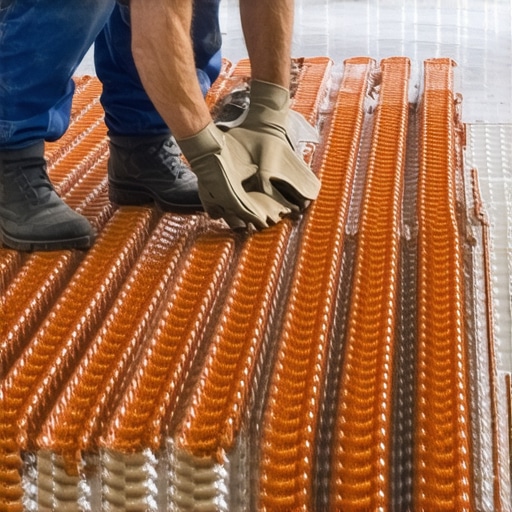
The standard depth for leveler over radiant coils requires a minimum of three eighths of an inch of material above the highest point of the heating element. This thickness provides enough thermal mass to distribute heat evenly and prevents the coils from ghosting through the finished floor. Ghosting is when you can see the outline of the wires through the floor. It happens because the heat is too concentrated. You need mass to hold the heat. I always aim for a half inch of cover if the door thresholds allow it. More mass means the heat stays in the floor longer after the boiler or the electric system clicks off. This is about efficiency. If you go too thin, the leveler will crack over the lines. Imagine a wire heating up and cooling down thousands of times. It acts like a saw if the leveler is too thin. You need that structural bridge. This is especially true for a carpet install where the padding can trap heat. If the leveler is thin, the heat build up can actually degrade the carpet backing over time.
| Leveler Type | Thermal Conductivity | Flexural Strength | Recommended Depth |
|---|---|---|---|
| Fiber-Reinforced | High | 5,200 PSI | 3/8 to 1 inch |
| Standard Gypsum | Medium | 2,500 PSI | 1/2 to 1.5 inches |
| High-Flow Cement | Very High | 4,000 PSI | 1/4 to 3/4 inch |
Mixing chemistry for the heat zone
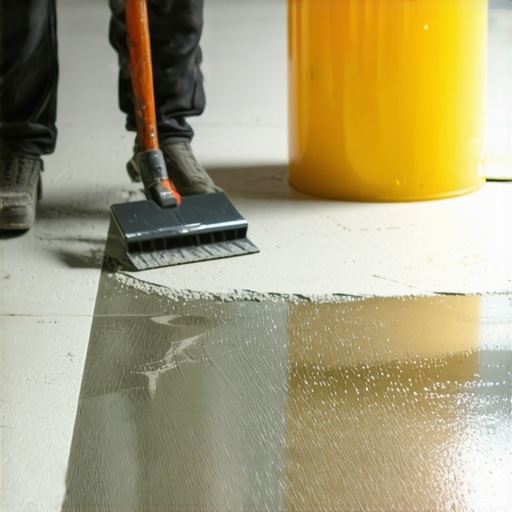
The water ratio in your self-leveling mix is the difference between a rock-hard surface and a chalky disaster. You must use a calibrated measuring bucket and never guess the amount of water needed for the polymer reaction to occur properly. If you add too much water, the polymers float to the top and the sand sinks to the bottom. You end up with a brittle shell that will snap the first time the heat hits eighty degrees. I use a high-speed mixer but I am careful not to whip air into the bucket. Air is an insulator. We want a conductor. The chemistry of these modern bags is incredible, but it is sensitive. You have about fifteen minutes of working time before the slump starts to change. If you are doing a large room, you need three guys. One to mix, one to carry, and one to gauge rake. It has to be a continuous pour to avoid cold joints. A cold joint is a crack waiting to happen. You want the entire floor to be one monolithic slab of heat-conducting stone.
- Ensure the subfloor is free of all wax, oil, and drywall mud.
- Install foam expansion tape around the entire perimeter of the room.
- Secure all heating cables or tubes every twelve inches to prevent floating.
- Mix the leveler for exactly three minutes to activate the polymers.
- Use a spiked roller to release trapped air immediately after pouring.
- Allow forty eight hours of cure time before turning on the heat system.
The 1/8 inch that ruins everything
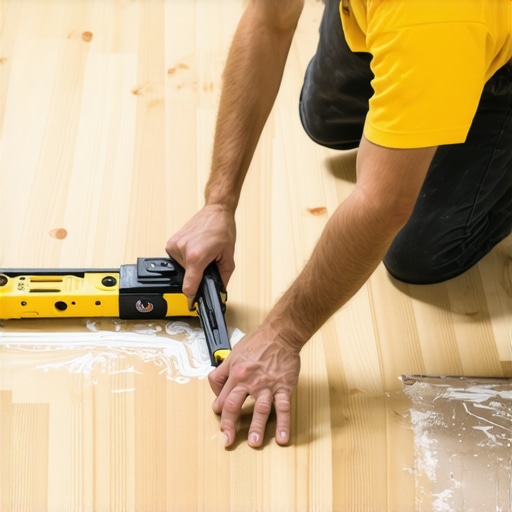
Leveling a floor is a game of tolerances where one eighth of an inch over ten feet is the maximum deviation allowed for most modern flooring. When radiant coils are present, any high spot can lead to a hot spot that damages the laminate or hardwood. I have seen guys try to eyeball it. You can’t. You need a ten foot straight edge. If you have a dip, the floor will bounce. If the floor bounces, the tongue and groove on your laminate will snap. Then you are pulling up the whole floor to fix a five dollar bag mistake. I check the floor three times before I ever open a bag of leveler. I mark the high spots with a pencil. I grind them down. I mark the low spots. I fill them. Only then do I do the final pour. This is why a professional costs more. We aren’t just dumping mud on the floor. We are engineering a flat plane. For a laminate or carpet install, flatness is more important than being perfectly level. The floor needs to be a mirror of the surface you want.
“Thermal expansion is not a suggestion; it is a law of physics that will find the weakest point in your installation.” – NWFA Technical Guidelines
The final check on thermal stability
Before you lay a single piece of laminate or stretch any carpet, you must verify that the leveler has reached its full compressive strength and that the moisture content is below three percent. Radiant heat will drive any trapped moisture upward, which can delaminate glue or rot the underside of your floor. I use a calcium chloride test or a digital pinless meter. Do not trust your eyes. The surface might look dry, but the core could still be wet. If you seal that moisture in with a vapor barrier for a laminate floor, you are creating a greenhouse for mold. The heat will accelerate the growth. I always tell homeowners to wait. Let the leveler cure. Turn the heat on in five-degree increments over a week. Don’t shock the system. If you blast the heat to ninety degrees on day one, you will hear the leveler screaming as it cracks. A floor is a living thing in a house. You have to treat it with respect or it will fail you when you need it most during the dead of winter.