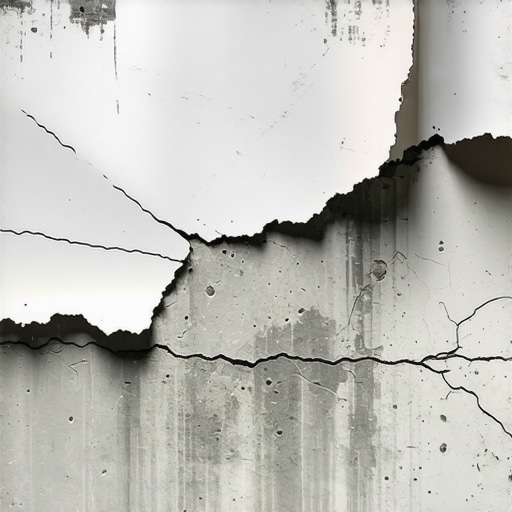
Why Your Floor Leveler is Peeling Off the Concrete Floor
I spent three days grinding concrete on a job last month just so the floor wouldn’t click like a castanet. The previous guy thought he could just pour and go. He didn’t check for laitance. He didn’t check for sealers. The leveler came up in sheets like stale potato chips. I walked into the room and the client was holding a piece of the leveler that was two feet wide. It had no concrete on the back. It was smooth as glass. That is the sound of money disappearing. When you treat a subfloor like a secondary thought, the floor will eventually remind you that it is the most important structural element in the room. I smell like WD-40 and oak dust most days because I do the work that others skip. If your self leveling compound is peeling, it is not a product failure. It is a preparation failure. Concrete is a living, breathing, porous sponge that requires a specific chemical and mechanical bond to accept a topping. If you ignore the physics of the bond, the internal tension of the leveler as it cures will simply pull itself right off the substrate.
The catastrophic failure of the bond
Floor leveler peels off concrete because of poor surface preparation, presence of bond breakers, or improper priming. When the tensile strength of the drying compound exceeds the adhesion strength to the concrete, the leveler curls and delaminates. Common culprits include laitance, curing compounds, and excessive moisture vapor within the slab.
A floor is not a static object. It is a system of layers that must act as a single unit. When you pour a high flow cementitious underlayment, you are introducing a wet, heavy material onto a dry substrate. As that material loses water through evaporation and hydration, it shrinks. This shrinkage creates a lateral pull. If the concrete surface is weak or contaminated, that pull wins the tug of war. I have seen entire laminate installs ruined because the leveler underneath turned into gravel. The laminate starts to bounce. The tongue and groove joints start to crack. It sounds like someone is walking on breakfast cereal. You cannot fix this with a thicker underlayment. You cannot hide it with carpet install tactics. You have to rip it out and start at the molecular level. This is where the structural zooming begins. We are looking at the concrete surface profile, often referred to as CSP in the industry. If your concrete is smooth like a garage floor that has been power troweled, the leveler has nothing to grab onto. It is like trying to glue two pieces of glass together with school glue. It might hold for a minute, but any stress will pop it loose.
Dust is the silent killer of adhesion
Fine particulate matter acts as a physical barrier that prevents the primer from penetrating the concrete pores. Even a microscopic layer of calcium carbonate or silica dust will neutralize the chemical bond. Professional installers must use industrial vacuums with HEPA filtration rather than sweeping to ensure the capillary structure of the slab is open.
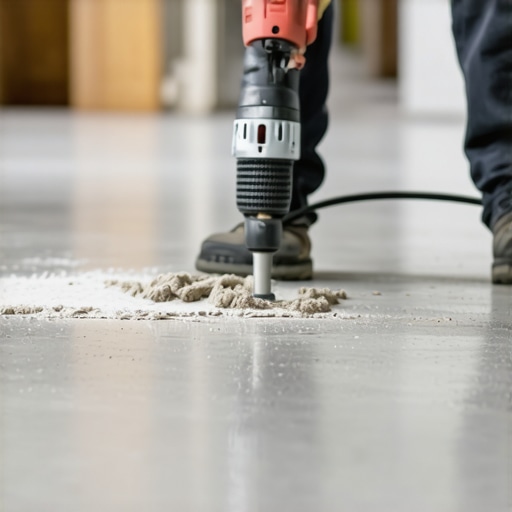
You think the floor is clean because you hit it with a broom. You are wrong. If you run your finger across that slab and see a white streak on your skin, you have a bond breaker. That dust is the result of the concrete finishing process. When the finishers are working the slab, they bring the cream to the top. This cream is called laitance. It is a weak, brittle layer of cement and fine aggregates. It looks solid, but it has no structural integrity. When the leveler shrinks, it simply peels that cream layer right off the top of the slab. I have spent hundreds of hours behind a diamond grinder wearing a respirator just to get past that laitance. You need to see the aggregate. You need to see the little rocks inside the concrete. That is where the strength is. If you are prepping for a shower or a large scale tile job, this is even more critical. The Tile Council of North America is very clear about this. You need a substrate that can handle the weight and the shear stress of the installation.
“A floor is only as good as the subfloor beneath it; deflection is the enemy of every joint.” – Master Flooring Axiom
The chemistry of the primer coat
Primer acts as the bridge between the porous concrete and the cementitious leveler by regulating absorption. Without a proper acrylic or epoxy primer, the concrete will suck the water out of the leveler too fast, preventing full hydration. This leads to a chalky interface and eventual delamination of the entire surface area.
Primer is not just