The ‘Hairdryer’ Hack for Removing Wax from New Carpet
I once walked into a luxury penthouse where the owner had just spent a fortune on a high-pile plush carpet. On the second night, a massive red candle tipped over. The owner panicked and tried to scrub it with a wet rag. By the time I arrived, the wax was driven deep into the primary backing, effectively turning a soft floor into a hardened, scarlet plastic mess. Most homeowners do not understand that carpet is a complex structural assembly. It is not just fabric on the floor. It is a system of fibers, backing, and padding that reacts to every change in temperature and humidity. When you spill wax, you are introducing a foreign polymer into that system. If you do not handle it with the precision of a mechanic, you will ruin the floor forever. I spent twenty years installing everything from commercial glue-down to high-end wool. I have seen every mistake in the book. This guide is about the physics of heat and how to save your investment without melting your floor into a puddle of synthetic sludge.
The mechanics of the hairdryer wax removal trick
Hairdryer wax removal relies on latent heat transfer to move paraffin wax from carpet fibers into an absorbent material. By applying controlled thermal energy, you lower the viscosity of the wax, allowing it to migrate through capillary action into a paper towel or brown paper bag without exceeding the melting point of the carpet material. You are basically reversing the candle-making process right in your living room. You must be careful because different fibers have different thresholds for heat. If you get too aggressive, you will go from removing wax to welding your carpet together in a permanent clump. This is why the hairdryer is better than a clothes iron. It offers more control over the air temperature. You are looking for that sweet spot where the wax liquefies but the nylon or polyester remains stable. Most people just point and pray. I tell them to think like a chemist. You are breaking the physical bond between a petroleum-based wax and a petroleum-based fiber.
The molecular bond between paraffin and polypropylene
Polypropylene and nylon carpet fibers are engineered polymers that share similar chemical structures with many commercial waxes. This similarity causes the wax to bond aggressively to the fiber surface, making mechanical removal almost impossible without a thermal intervention. When wax is liquid, it coats the microscopic ridges of the fiber. As it cools, it shrinks and locks onto the texture. To get it off, you have to break that mechanical lock. If your carpet is a natural fiber like wool, the wax actually penetrates the scales of the hair. This is why wool is much harder to clean than synthetic. Synthetics are basically smooth plastic tubes. Wax sits on the surface. But if you have a cheap builder-grade carpet, the fibers are often thinner and more prone to heat damage. You need to know exactly what you are standing on before you turn on that dryer. If you start blowing hot air on a low-grade olefin, you might see the pile start to shrivel. That is a permanent structural failure. There is no fixing that. You would be looking at a patch job, which never looks right unless you have a donor piece from a closet.
Step by step guide to the hairdryer method
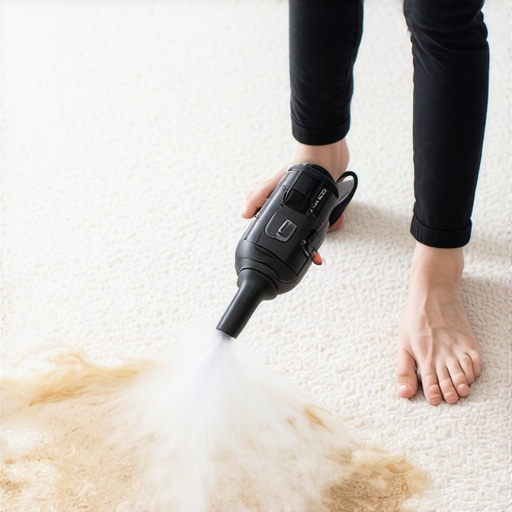
Step by step wax removal involves scraping excess solids, applying indirect heat, and using blotting techniques to ensure the wax is absorbed rather than pushed deeper into the carpet pad. Start by taking a dull knife. Do not use a sharp one or you will slice the pile. Gently flick away the hardened chunks on the surface. This removes about forty percent of the problem. Next, lay a heavy-duty paper towel over the spot. Do not use the cheap, thin kind that falls apart. Set your hairdryer to the medium setting. Do not go to high immediately. Hold the dryer about six inches away and move it in a circular motion. You want to heat the paper towel and the wax underneath it evenly. As the wax melts, you will see a dark spot appear on the paper. That is the wax moving into the towel. This is the moment of truth. Do not rub the paper. If you rub, you are pushing liquid wax sideways into clean fibers. Just lift the paper straight up. Move to a clean section of the towel and repeat. It takes patience. If you rush it, you will fail. I have seen guys spend four hours on a single spot, but that is better than replacing three hundred square feet of carpet.
“A floor is only as good as the subfloor beneath it; deflection is the enemy of every joint.” – Master Flooring Axiom
Why floor leveling matters even under carpet
Floor leveling is a foundational requirement for carpet installation because subfloor irregularities cause uneven wear patterns and create pockets where wax or liquids can pool deep in the pile. People think carpet hides everything. They think they can skip the self-leveling compound because the padding will cushion the dips. They are wrong. If you have a two-inch dip in your plywood or concrete, the carpet will eventually sag into that hole. When you spill wax in a low spot, the liquid flows toward the center of the depression. This makes the hairdryer hack much harder because you are fighting gravity. The wax is sitting in a pool at the base of the fibers. If your floor was level, the wax would stay on the surface longer, giving you a better chance to catch it. I always tell my clients to spend the extra money on floor leveling before the carpet goes down. It makes the floor feel solid underfoot. It also prevents the carpet from stretching and rippling over time. A flat subfloor is the secret to a floor that looks new for ten years instead of two.
Comparing carpet install methods and wax resistance
Carpet install techniques like power stretching or direct glue-down determine how moisture and contaminants move through the backing system during a cleaning emergency. If you have a stretch-in installation with a separate pad, the wax has a place to hide. It can leak through the primary and secondary backing and get trapped in the foam or rubber pad. This is the worst-case scenario. Even if you get the wax off the fibers, the heat from the hairdryer can cause the wax in the pad to wick back up over the next few days. It is like a ghost that keeps returning. Direct glue-down carpet, often used in basements or offices, is easier to clean in this regard. There is no pad for the wax to soak into. However, the adhesive used for glue-down carpet is often sensitive to heat. If you spend too much time with the hairdryer, you might liquefy the carpet glue. Then you have a loose bubble in your floor. It is a balancing act. You have to understand the specific anatomy of your carpet install to know how much heat you can get away with.
| Fiber Type | Melting Point (F) | Heat Sensitivity | Best Tool |
|---|---|---|---|
| Nylon 6,6 | 490 | Low | Hairdryer (Medium) |
| Polyester | 480 | Medium | Hairdryer (Low-Medium) |
| Olefin | 320 | High | Hairdryer (Low only) |
| Wool | 1100 (char point) | Very Low | Brown Paper Bag |
The danger of heat on laminate and vinyl
Laminate and vinyl flooring have wear layers made of melamine or PVC that will delaminate or scorch if subjected to the high temperatures used in carpet wax removal. If you are reading this thinking you can use a hairdryer on your laminate floor to remove wax, stop right now. Laminate is basically a picture of wood glued to a fiberboard core with a plastic coating. If you hit that coating with enough heat to melt wax, you might melt the finish too. Then you have a permanent dull spot or a blister. Vinyl is even worse. It is plastic through and through. Heat makes it expand. If you heat one spot on a luxury vinyl plank, it will buckle. The locking mechanisms will snap. I have seen people try to use heat guns on vinyl and the whole floor just warped like a record left in the sun. For hard surfaces, you are better off using an ice pack. Freeze the wax until it is brittle, then pop it off with a plastic spatula. Do not use the hairdryer hack on anything but carpet. The physics of hard surface flooring are completely different. You are dealing with solid state materials, not flexible fibers.
Moisture issues from nearby showers and bathrooms
Showers and high-humidity areas create atmospheric conditions that cause carpet fibers to swell, which can trap wax molecules more tightly than in a dry environment. If your carpet is near a master bathroom, it is constantly absorbing and releasing moisture. This cycle is called hygroscopic movement. When the air is humid from a hot shower, the fibers are slightly larger. If you spill wax during this state, the wax gets into the open pores of the fiber. When the room dries out and the fibers shrink, they literally lock the wax inside their structure. This is why it is so hard to get spots out of carpets in humid climates like Florida or Houston. The environment is working against you. If you are doing the hairdryer hack in a humid room, you might actually be driving some of that moisture into the wax, creating a cloudy, messy residue. Try to run a dehumidifier or the air conditioner for a few hours before you start the cleaning process. You want the carpet as dry as possible so the wax stays on the surface where the heat can reach it.
“Carpet installation requires a tension-based stretch to ensure dimensional stability over time.” – Flooring Industry Standard
A checklist for professional carpet results
- Verify fiber type before applying any heat to the surface.
- Check the subfloor for dips that might cause wax pooling.
- Use heavy-duty unprinted brown paper or thick white paper towels.
- Keep the hairdryer moving to avoid concentrated hot spots.
- Blot the area with a specialized carpet solvent after the wax is removed.
- Always work from the outside of the spill toward the center.
- Ensure the room is well-ventilated to prevent moisture buildup.
The reality of flooring is that it is a battle against physics. Every day, gravity, friction, and heat are trying to destroy your floor. Whether you are dealing with a botched carpet install or a simple wax spill, you have to respect the materials. Don’t listen to the quick-fix videos that tell you it’s easy. It’s not easy. It’s a precise operation. If you treat your floor with the respect an architect treats a blueprint, it will last. If you treat it like a cheap rug, you’ll be calling me for a replacement in six months. Use the hairdryer, keep your distance, and watch the wax migrate. If it doesn’t move, stop. Sometimes the best thing you can do is admit a job is too big for a DIY fix. But for most small candle disasters, this thermal approach is the only way to save those fibers from a permanent grave. Keep your subfloor level and your heat controlled. That is the secret to a floor that stays under your feet instead of in a landfill.