The Toothbrush Hack for Cleaning Shower Grout Lines
I spent three days grinding concrete on a job last month just so the floor wouldn’t click like a castanet. That is the reality of this business. Most guys skip the leveling compound and think the underlayment will hide the dip. It won’t. I have spent twenty five years on my knees with a moisture meter and a level. I have seen every shortcut in the book and I have seen the disaster that follows every single one of them. When someone asks me about a toothbrush hack for cleaning grout, I do not just see a cleaning tip. I see a structural diagnostic process for the most volatile environment in your home. The shower is not a decoration. It is a wet environment engineering challenge that requires precision at the micron level.
The toothbrush hack for cleaning shower grout lines
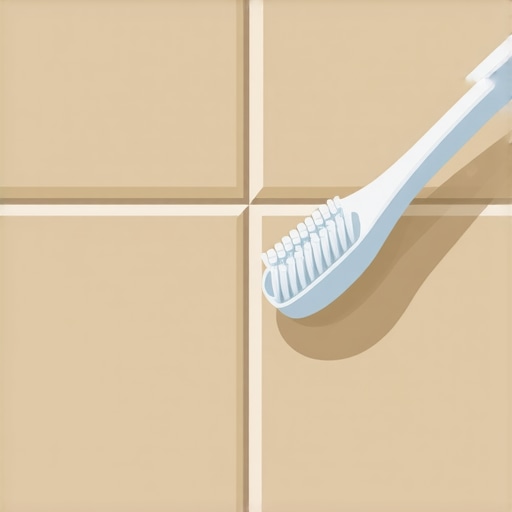
Grout cleaning with a toothbrush works by applying focused mechanical agitation to the narrow valleys of cementitious or epoxy joints. This method allows for precise chemical application and scrubbing without damaging the surrounding tile glaze. It is most effective when combined with an alkaline cleaner to break down organic biofilms and mineral deposits. The physics of a toothbrush are actually quite sophisticated for such a simple tool. You have nylon bristles that are small enough to enter the capillary pores of the grout. If you use a standard scrub brush, the bristles are too thick and they simply glide over the surface tension of the water and soap scum. The toothbrush allows you to reach the root of the crystallization where the mold actually lives. You are not just moving dirt. You are disrupting the molecular bond between the calcium carbonate in the grout and the fatty acids in the soap scum.
The physics of grout and the structural bond
Grout is a porous mineral lattice designed to fill the voids between tiles and accommodate the structural expansion and contraction of the subfloor. Its primary function is to prevent lateral movement and manage the vapor drive within the shower assembly. Cleaning it requires understanding its chemical permeability and the way moisture moves through the cement matrix. Most people think grout is solid like a rock. It is not. Under a microscope, it looks like a sponge. When you use a toothbrush, you are performing a surgical strike on those pores. If you use too much pressure, you are not cleaning. You are excavating. You are literally stripping away the Portland cement binder and leaving the sand particles exposed. This is why your grout feels scratchy after a few years of aggressive cleaning. You have literally scrubbed away the glue that holds the floor together.
“A floor is only as good as the subfloor beneath it; deflection is the enemy of every joint.” – Master Flooring Axiom
The chemistry of the cleaning agents
Selecting the right chemical for grout cleaning depends on the pH balance required to dissolve specific contaminants without etching the cement binder. Alkaline cleaners are superior for removing body oils and soap scum, while mild acids are used only for stubborn mineral scaling. Using the wrong chemical can permanently weaken the grout structure and lead to localized cracking. I see people reaching for vinegar all the time. That is a mistake. Vinegar is acetic acid. Acid dissolves calcium. What is grout made of? Calcium. Every time you spray vinegar on your grout, you are performing a microscopic demolition of your floor. You are eating away the very material that keeps your shower waterproof. Use a pH-neutral cleaner. If the stain is deep, you need an oxygenated bleach that can penetrate the pores without reacting with the cement itself. This is about chemistry, not just elbow grease.
The subfloor secret and why grout fails
Grout failure is rarely a cleaning issue and almost always a result of subfloor deflection or improper mortar coverage. When a subfloor flexes beyond the allowable limit, the grout is the first component to crack because it lacks the tensile strength to resist the movement. No amount of cleaning or scrubbing can fix a grout line that is failing due to structural instability. I remember a job in a high-rise downtown. The owner was obsessed with cleaning the grout. She used every brush in the house. But the grout kept turning black. I pulled a tile and found that the installer had used a spot-bonding technique. There were huge air pockets under the tile. Every time she stepped in the shower, the tile moved a fraction of a millimeter. That movement sucked dirty water down into the voids, where it sat and rotted. The toothbrush hack was useless because the problem was two inches deep in the mortar bed. We had to tear the whole thing out. It was a fifteen thousand dollar mistake because someone was too lazy to use a notched trowel correctly.
Technical specifications for grout and tile assemblies
| Grout Type | Water Absorption Rate | Flexural Strength | Best Use Case |
|---|---|---|---|
| Sanded Grout | High (Standard) | 3,500 PSI | Joints wider than 1/8 inch |
| Unsanded Grout | High (Standard) | 3,000 PSI | Polished stone or narrow joints |
| High Performance Cement | Low | 5,000 PSI | High traffic or steam showers |
| Epoxy Grout | Near Zero | 8,000 PSI | Commercial kitchens and wet areas |
The table above shows why the material matters. If you have standard sanded grout, your toothbrush hack is a weekly ritual because the absorption rate is so high. If you want a floor that stays clean, you need to look at epoxy. Epoxy is not a mineral. It is a plastic resin. It does not have pores. It does not absorb water. You could pour grape juice on it and it would wipe right off. But installers hate it because it is sticky and hard to work with. They would rather give you the cheap stuff and let you worry about the toothbrush later. This is the difference between an architect and a handyman. One thinks about how it looks today. The other thinks about how it looks in ten years.
The atmospheric impact on grout maintenance
Regional humidity levels and local water hardness significantly dictate the frequency and intensity of grout cleaning required to prevent permanent staining. In high humidity environments, the vapor drive remains constant, keeping the grout pores saturated and encouraging rapid fungal growth. Hard water areas will see a faster buildup of magnesium and calcium deposits that require specific chelating agents to remove. If you live in a place like Houston, your shower is a petri dish. The humidity never drops low enough for the grout to dry out. In that climate, you need to be using a toothbrush once a week just to keep the mold from taking root in the subfloor. If you are in Phoenix, the heat might dry the grout, but the mineral content in the water will turn your black grout white in a month. You are not just cleaning. You are fighting the local environment. This is why a moisture barrier behind the tile is not optional. It is the only thing standing between your shower and a rotted wall cavity.
“Cementitious grout is a hydraulic material; it never truly stops reacting with its environment.” – TCNA Installation Handbook Reference
Master flooring maintenance checklist
- Inspect grout lines for hairline cracks every six months.
- Use a pH-neutral cleaner to protect the cementitious binder from etching.
- Test the sealer by dropping water on the grout; if it sinks in, it is time to reseal.
- Avoid using steam mops on grout as the pressure can force moisture into the subfloor.
- Dry the shower walls with a squeegee after every use to reduce the organic load on the grout.
- Replace cracked grout immediately to prevent water from reaching the mortar bed.
The biggest mistake I see is people thinking a sealer makes a floor waterproof. It does not. A sealer is a sacrificial layer. It is a speed bump for a stain. It gives you a few minutes to wipe up the mess before it enters the pore. But if you are scrubbing with a toothbrush and a harsh chemical, you are stripping that sealer off. You have to put it back. If you do not reseal after a deep clean, you have just opened the door for every piece of dirt and bacteria to move right in. It is like washing your car with sandpaper and then wondering why the paint looks dull. You have to understand the layers of the system. The tile is the shield. The grout is the gasket. The mortar is the anchor. The subfloor is the foundation. If any one of those fails, the toothbrush hack is just rearranging deck chairs on the Titanic. You have to respect the chemistry and the physics of the floor. That is how you make a shower last a lifetime.