Why Your Laminate Floor Clicks When the AC Turns On
I spent three days grinding concrete on a job last month just so the floor wouldn’t click like a castanet. Most guys skip the leveling compound. They think the underlayment will hide the dip. It won’t. I was on my knees with a seven inch diamond cup wheel and a dust shroud, breathing in the pulverized remains of a poorly poured slab, all because the homeowner couldn’t stand the rhythmic snapping sound every time they walked to the kitchen. That sound is a warning. It is the sound of a locking mechanism under duress, a structural failure disguised as an annoyance. When your air conditioning kicks on and your floor starts talking back, you are witnessing the physics of hygroscopy and thermal contraction in real time. This is not a cosmetic issue. It is an engineering failure at the subfloor level.
The physics of the thermal shock
Laminate floors click when the AC turns on because the sudden drop in temperature and humidity causes the high density fiberboard core to shrink. This contraction reduces the tension in the click lock joints, allowing the planks to move against one another or vibrate against a subfloor that is not perfectly flat. The air conditioner acts as a giant dehumidifier, stripping moisture from the air and the floor simultaneously. As the melamine resin and wood fibers lose water molecules, the physical dimensions of the plank decrease. If the floor was installed without proper acclimation or over an uneven surface, these microscopic shifts manifest as audible clicks or snaps. It is a sign that your floor is struggling to maintain its structural integrity against the changing environment.
The chemistry of a laminate plank is more complex than most retailers admit. You have a wear layer made of aluminum oxide, a decorative paper layer, a core of high density fiberboard, and a balancing backing. The high density fiberboard is the heart of the system. It is a composite material made of wood fibers bonded with urea formaldehyde or melamine formaldehyde resins. These fibers are hygroscopic, meaning they naturally absorb and release moisture from the atmosphere. When your HVAC system cycles, it creates a microclimate shift. A sudden blast of cold, dry air causes the top surface of the plank to contract faster than the bottom, creating a slight upward curl. This curl, though invisible to the naked eye, lifts the plank off the subfloor just enough that when you step on it, the plank deflects and strikes the subfloor or the adjacent tongue, creating that sharp clicking sound.
The 1/8 inch that ruins everything
Subfloor flatness is the most critical factor in preventing floor noise and joint failure in floating laminate systems. The industry standard requires a subfloor to be flat within 3/16 of an inch over a ten foot radius or 1/8 of an inch over a six foot radius. Anything beyond this creates a void. When the AC dries out the planks and they stiffen, they no longer drape over these imperfections. Instead, they bridge them. Every time you walk across a bridge, it deflects. That deflection puts immense pressure on the thin tongue and groove locking mechanism. Over time, the friction between these moving parts wears down the factory applied wax or paraffin, leading to a permanent squeak or click that no amount of lubricant can fix.
“A floor is only as good as the subfloor beneath it; deflection is the enemy of every joint.” – Master Flooring Axiom
In many modern builds, contractors rush the floor leveling process. They rely on the padding to do the work. This is a fatal mistake. I have seen countless carpet install jobs where the installers simply tacked down a pad over a jagged slab because the carpet hides the sins of the builder. But when you transition to a hard surface like laminate or LVP, those sins are amplified. If your subfloor has a dip, the laminate plank will act as a cantilever. As the air conditioning makes the material more brittle through cooling, the risk of the locking mechanism snapping increases. You aren’t just hearing a click; you are hearing the sound of your investment slowly breaking apart at the seams.
The ghost in the expansion gap
Expansion gaps at the perimeter are mandatory for floating floors to move as the indoor climate changes. Most manufacturers require at least a 1/4 inch to 1/2 inch gap around the entire perimeter of the room, including doorways and heavy cabinetry. If your installer ran the laminate tight against the drywall or the baseboards, the floor has nowhere to go when it expands during humid months. Then, when the AC turns on and the floor tries to contract, it is held in a state of tension. This tension creates internal stress within the locking system. The clicking you hear is the sound of that tension being released as the planks finally pull away from their bound positions.
I often see homeowners lock their floors in place by installing heavy kitchen islands or floor to ceiling bookshelves directly on top of the laminate. This is a violation of the floating floor principle. A floating floor must be free to slide as a single monolithic unit. When you pin one side down with a thousand pound island and the other side is pinned by a refrigerator, the floor is trapped. As the AC cycles and the planks attempt to shrink, they pull against these heavy anchors. This can lead to gapping, where the planks literally pull apart, or clicking, as the tongue is forced to move within the groove under extreme lateral pressure. If you are planning a renovation that involves showers or wet areas, the moisture migration from those zones can further complicate this expansion cycle.
Why thick padding ruins a click lock joint
Excessive underlayment cushion is a primary cause of clicking and eventual locking mechanism failure. While it might seem logical to use a thicker, softer pad for more comfort, this creates too much vertical movement. A laminate floor requires a high density, low compression underlayment. If the pad is too squishy, the planks will bounce when walked upon. This bounce causes the tongue to rub against the groove, creating a dry friction sound. When the AC is on, the material is tighter and less flexible, making this friction more audible. You want a pad that provides a moisture barrier and sound dampening without allowing the floor to sink more than a millimeter under load.
| Feature | Recommended Specification | Why It Matters |
|---|---|---|
| Subfloor Flatness | 1/8 inch per 6 feet | Prevents plank deflection and joint stress |
| Acclimation Time | 48 to 72 Hours | Ensures the HDF core reaches equilibrium |
| Underlayment Density | >20 lbs per cubic foot | Minimizes vertical movement in the joints |
| Expansion Gap | 3/8 inch minimum | Allows for natural thermal movement |
| Relative Humidity | 35% to 55% | Maintains stability of the wood fibers |
The chemistry of the adhesive used in some laminate cores also plays a role. Lower quality planks use binders that are more sensitive to temperature fluctuations. When the cold air hits the surface, the differential in expansion between the wear layer and the core causes a localized shear stress. If you are in a region with high humidity like New Orleans or Houston, your AC is working overtime to pull gallons of water out of the air. This rapid change is a shock to the material. In these environments, you must use a professional grade moisture barrier, often a 6 mil poly film, even if your underlayment claims to be waterproof. This prevents moisture from the crawlspace or the concrete slab from entering the bottom of the plank while the top is being dried out by the HVAC system.
The checklist for a silent floor
If you are tired of your floor clicking like a Geiger counter every time the thermostat hits 72 degrees, you need to systematically evaluate the installation. There is no magic spray that fixes a structural sound. You have to address the root cause, which is almost always related to movement. Follow this protocol to identify the failure point.
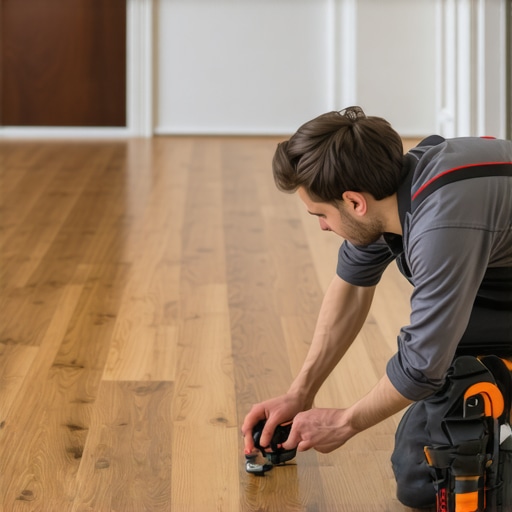
- Check the perimeter expansion gaps by removing a piece of baseboard to ensure the floor is not touching the wall.
- Measure the indoor relative humidity with a hygrometer to ensure it stays between 35 and 55 percent.
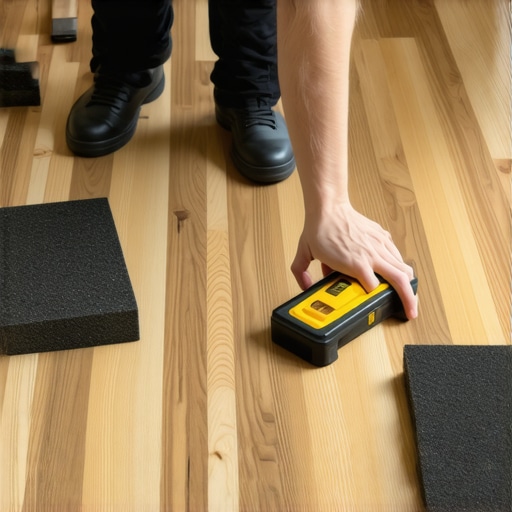
- Use a straightedge to check for dips in the floor near the clicking sounds.
- Inspect for heavy furniture or cabinetry that might be pinning the floor in place.
- Verify that T moldings were used in doorways and in rooms longer than 30 feet.
Most people ignore the T molding requirement because they want a continuous look. This is a mistake. A floating floor has a maximum run length. If you exceed that length, the cumulative expansion and contraction become too much for the material to handle. The clicking in the center of the room is often the result of the floor being too long and having nowhere to expand at the ends. When the AC turns on, that massive sheet of laminate starts to move, and the friction at the joints becomes a symphony of clicks. If you want a silent floor, you have to follow the physics, not the aesthetics.
“Deflection is the silent killer of the modern floating floor system.” – NWFA Technical Guidelines
The relationship between moisture and noise
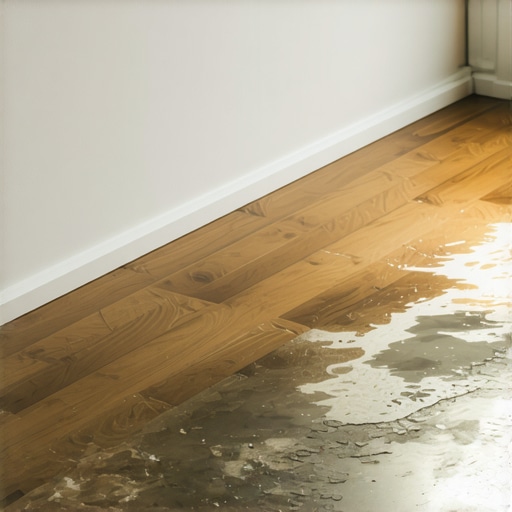
Laminate is essentially a stabilized wood product, but it still behaves like wood. When we talk about showers and bathrooms, we are talking about high humidity zones. If your laminate floor is adjacent to a bathroom where the shower is used frequently, that floor is absorbing steam. Then the AC kicks on and tries to dry it out. This constant cycle of swelling and shrinking fatigues the wood fibers in the locking mechanism. Eventually, the tongue becomes slightly smaller than the groove it was designed to fit into perfectly. Once that gap is created, the clicking becomes permanent. This is why I always recommend a transition strip between a bathroom and a hallway laminate. It isolates the moisture expansion to a single room and prevents it from telegraphing through the rest of the house.
The mechanics of the click lock system rely on a precise geometric fit. We are talking about tolerances measured in the thousandths of an inch. When you introduce a subfloor that is out of level by even a quarter of an inch, you are asking those tiny pieces of fiberboard to hold up the weight of a human being while being bent at an angle. They were never designed for that. The clicking is the sound of the tongue sliding inside the groove because the floor is not supported from beneath. It is a structural cry for help. If you ignore it, the tongue will eventually snap off, and you will be left with gapping planks that cannot be repaired without replacing the entire floor. Leveling the floor is not an optional step. It is the foundation of the entire system.