How to Stop Your Laminate Floors from Clicking Like a Typewriter
I spent three days grinding concrete on a job last month just so the floor wouldn’t click like a castanet. Most guys skip the leveling compound. They think the underlayment will hide the dip. It won’t. I have spent 25 years on my knees with a moisture meter and a level. My hands are stained with the residue of polymer-modified thin-set and my lungs have tasted more oak dust than I care to admit. I smell like WD-40 and the gritty reality of a job site. When a homeowner calls me because their brand new laminate floor sounds like a 1950s newsroom every time they walk to the kitchen, I already know what I am going to find. They bought a pretty surface and ignored the structural engineering required to support it. A floor is a performance surface. It is not a rug. It is a system of interlocking parts that rely on the physics of a flat plane. If that plane is not there, the system fails. There are no shortcuts in flooring. You either do the prep or you listen to the click.
The physics of the hollow sound
The clicking sound in laminate floors is caused by vertical movement where the floorboards flex into a void in the subfloor. When the locking mechanism is forced to bend under the weight of a footstep, the tongue and groove rub against each other or the board hits the subfloor. This is a structural failure of the installation. Laminate is a floating floor. It is a large, heavy sheet of wood-based material that sits on top of your house. It is not attached to anything. Because it is not glued or nailed down, it relies entirely on its own weight and the flatness of the surface beneath it to stay quiet. If there is a dip of even one eighth of an inch over a ten foot span, that board will bridge the gap. When you step on it, the board deflects. That deflection creates air movement and mechanical friction. That is the click. It is the sound of your floor dying a slow death because the locking tabs are being stressed beyond their engineered limits.
“A floor is only as good as the subfloor beneath it; deflection is the enemy of every joint.” – Master Flooring Axiom
Why your subfloor is lying to you
Subfloors are rarely flat enough for modern click-lock laminate because builders prioritize speed over precision during the construction process. Wood subfloors often have peaked seams or joist settlement while concrete slabs have pits and ridges from the pouring process that require mechanical remediation. You cannot trust your eyes. You have to use a straightedge. I have seen guys throw down expensive laminate over a slab that looked like the surface of the moon and then act surprised when the floor felt like a trampoline. The subfloor is the foundation. If the foundation is wavy, the floor will be wavy. On wood subfloors, you have to sand down the high spots at the seams where the plywood has swelled from moisture. On concrete, you have to grind down the humps. I once walked into a job where the installer tried to fix a half inch dip with extra layers of foam underlayment. Within six months, the locking systems had snapped like dry twigs. The foam compressed, the gap remained, and the floor became a trip hazard.
The 1/8 inch that ruins everything
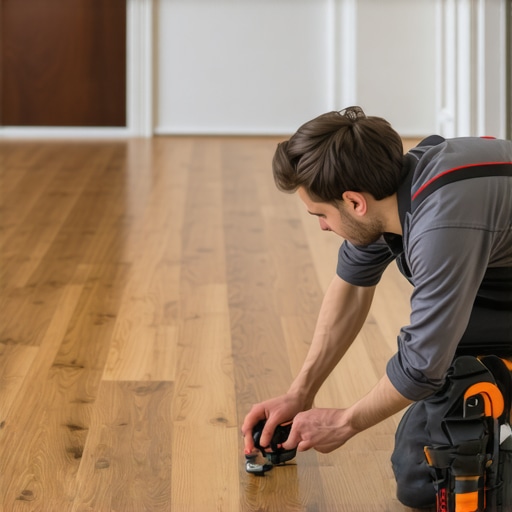
The industry standard for subfloor flatness is a maximum deviation of one eighth of an inch over a ten foot radius to ensure the integrity of the locking system. Any gap larger than this allows the HDF core to bend too far, eventually causing the tongue to shear off inside the groove. This is about the chemistry of High-Density Fiberboard. HDF is made of wood fibers compressed with resin. It is incredibly strong in compression but weak in shear. When the board flexes over a void, the pressure is focused entirely on the thin piece of wood that holds the boards together. This is where the typewriter sound begins. It is the sound of wood fibers rubbing together under extreme stress. If you ignore this, the click will eventually turn into a crack. Once the locking mechanism snaps, there is no way to fix it without replacing the boards. You have to be a stickler for the numbers. If my level shows a gap bigger than a nickel, I am not laying a single board until the leveler comes out.
Underlayment choices that cause more harm than good
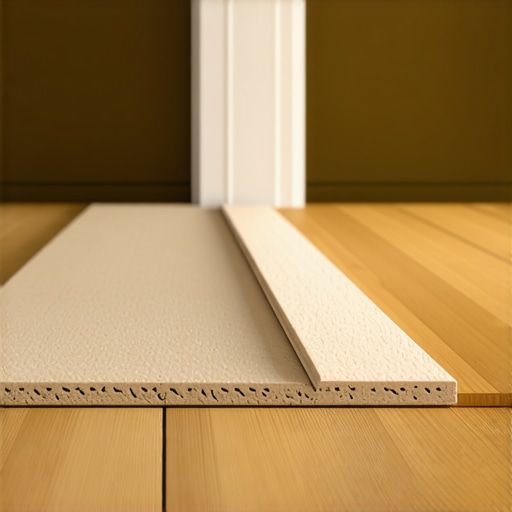
While many homeowners believe a thicker underlayment will provide more comfort and silence, too much cushion actually causes the locking mechanisms on laminate to snap under pressure. A high-quality underlayment must have a high compression strength to prevent the floor from bouncing while providing a moisture barrier. This is the contrarian truth of the flooring world. Soft, thick foam is the enemy. It feels good for a week, and then it ruins the floor. You want a dense, thin material. Think about the physics. If the floor is sitting on a sponge, the joints will move every time you walk. You want the floor to sit on a firm, stable base. In high-humidity areas like the Pacific Northwest or the swampy South, your underlayment also acts as a chemical shield. It prevents moisture vapor from the slab from reaching the HDF core. If that vapor gets in, the boards swell, the pressure in the locking system increases, and the clicking gets louder.
| Subfloor Material | Max Deviation Allowed | Recommended Leveling Method | Required Moisture Barrier |
|---|---|---|---|
| Concrete Slab | 1/8 inch per 10 ft | Self-leveling compound or grinding | 6-mil Polyethylene film |
| Plywood / OSB | 3/16 inch per 10 ft | Sanding high seams or patching compound | Breathable underlayment paper |
| Existing Tile | 1/8 inch per 10 ft | Flash patching grout lines | Not required if tile is on slab |
The ghost in the expansion gap
Laminate floors expand and contract with changes in humidity and temperature, requiring a minimum of one quarter inch of space at every vertical obstruction like walls and cabinets. If the floor is pinched against a wall, it will arch up and create hollow spots that click. This is where most DIY installers fail. They want a tight fit. They think a gap looks messy. But that gap is what lets the floor breathe. If the floor hits a wall, the energy has nowhere to go but up. This creates a bubble in the middle of the room. When you step on that bubble, it hits the subfloor and clicks. It is a ghost because you can’t see the pressure until the floor starts making noise. You must also avoid locking the floor down with heavy objects. Do not install a kitchen island on top of floating laminate. You are essentially nailing the floor to the ground, which prevents expansion and leads to buckling and noise.
Solving the movement problem without a total teardown
If your floor is already installed and clicking, you can sometimes mitigate the noise by injecting specialized floor repair adhesives through small holes or by checking the perimeter for pinch points. Removing baseboards to ensure the expansion gap is clear is the first step in diagnosing a noisy floating floor. Sometimes the fix is as simple as trimming a piece of flooring that is touching a door frame. If the floor has room to lay flat, the clicking might subside. If the issue is a void underneath, you can use a fine-drill bit and a syringe to inject a low-viscosity adhesive that fills the gap and supports the board. This is a surgical strike. It doesn’t always work, but it beats pulling up 500 square feet of flooring. You have to be careful with the chemistry here. Use an adhesive that remains slightly flexible so it doesn’t crack when the house settles.
Master Installer Checklist for a Silent Floor
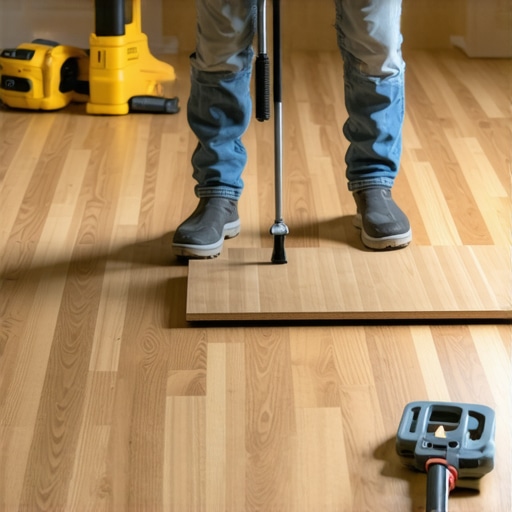
- Verify subfloor flatness using a 10-foot straightedge or laser level.
- Check concrete moisture levels using an ASTM F2170 in-situ RH probe.
- Grind down all high spots and fill low spots with a high-compression patching compound.
- Ensure the underlayment has a high Density (lb/ft3) rating and low compression set.
- Maintain a consistent 1/4 inch expansion gap around the entire perimeter.
- Acclimate the laminate planks in the room for at least 48 hours prior to installation.
- Vacuum the subfloor three times to ensure no grit is trapped under the boards.
The chemistry of the bond and the physics of the plane are the only things that matter. If you treat your floor like a structural project, it will be silent. If you treat it like a weekend craft project, it will sound like a typewriter. My knees have paid the price for this knowledge. Don’t waste the effort by ignoring the prep work. The sawdust under my nails is a reminder that the best floors are the ones you never hear. Respect the standards of the NWFA and the TCNA. They exist for a reason. Build it flat, leave the gaps, and choose the right density. That is how you stop the click.