Why You Should Never Use a Steam Mop on Your Laminate Floors
The hidden trap of high temperature vapor
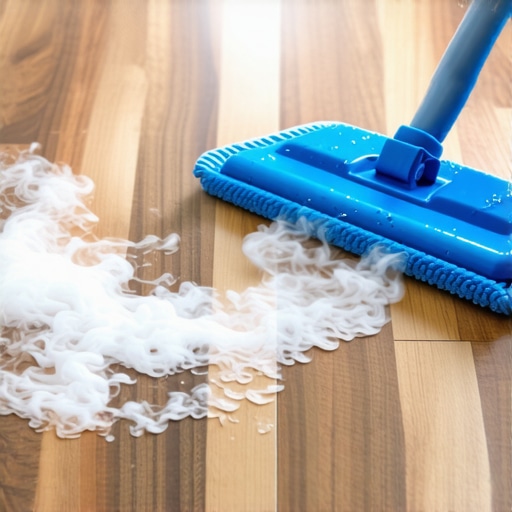
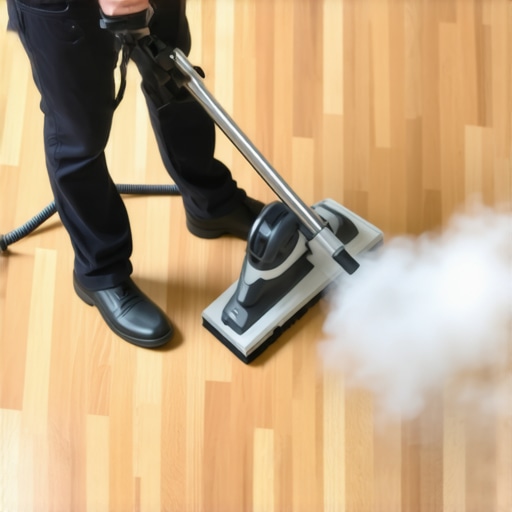
Steam mops destroy laminate floors by forcing pressurized water vapor into the vulnerable HDF core, causing irreversible swelling and edge peaking. While these machines are marketed as a sanitary solution, the 212 degree Fahrenheit vapor bypasses the protective aluminum oxide wear layer through the microscopic gaps in the tongue and groove joints. This process triggers a structural failure that no drying cycle can fix. The heat softens the resins holding the wood fibers together, leading to a floor that looks like a series of raised ridges rather than a flat surface.
I once walked into a house where a beautiful grey washed laminate was bubbling at every single seam. The homeowner was proud of her deep cleaning routine and used a steam mop twice a week. She thought the heat was sanitizing. It was actually murdering the core of her floor. Within six months, the 1200 square foot installation was a total loss. I had to tell her that her warranty was void because every major manufacturer explicitly forbids the use of steam. It was a fifteen thousand dollar mistake that could have been avoided with a simple dry mop and a pH neutral spray.
The physics of thermal expansion and core failure
Laminate flooring consists of a high density fiberboard core that reacts violently to sudden changes in temperature and moisture content. When you blast a floor with steam, you are not just cleaning the surface, you are injecting energy into the material. This heat causes the melamine resins to expand at a different rate than the cellulose fibers. This thermal shock often results in delamination, where the decorative paper layer starts to peel away from the structural board underneath. It is a slow death that starts at the edges where the protective coating is thinnest.
“A floor is only as good as the subfloor beneath it; deflection is the enemy of every joint.” – Master Flooring Axiom
Laminate is essentially a composite of wood dust and glue. Wood is hygroscopic, meaning it wants to reach an equilibrium with its environment. When a steam mop introduces localized, high pressure humidity, the fiberboard absorbs that moisture instantly. Because the top and bottom of the plank are sealed with moisture resistant layers, the water has nowhere to go. It sits inside the core, rotting the fibers and creating a permanent squishiness. Unlike real hardwood, which might cup and then flatten out once the humidity stabilizes, laminate core material is like a sponge that has been glued. Once it expands, it never goes back to its original shape.
Why your manufacturer warranty is likely already void
Most laminate warranties contain a specific clause that prohibits the use of steam cleaners or excessive liquid moisture. If you file a claim for peaking or buckling, the first thing an inspector will look for is evidence of thermal damage. They can tell if a floor has been steamed by the specific way the edges of the planks curl upward. This curling is a telltale sign of moisture ingress from the top down. Even if the product is marketed as waterproof, that waterproof rating usually only applies to standing liquid on the surface for a set period, not pressurized vapor.
| Cleaning Method | Surface Impact | Core Moisture Risk | Longevity Impact |
|---|---|---|---|
| Steam Mop | High Heat Pressure | Extreme | Very Negative |
| Microfiber Damp Mop | Low Moisture | Minimal | Positive |
| Dry Swivel Mop | Zero Moisture | None | Highest |
| Vacuum Hard Floor Mode | Zero Moisture | None | Neutral |
Waterproof laminate is often just water resistant laminate with a better locking system. These systems, like the Uniclic or Valinge designs, are engineered to keep spills from reaching the subfloor. However, steam is a gas, not a liquid. It can penetrate areas where a spill would simply bead up. This is why the industry standards set by the National Wood Flooring Association are so strict about maintenance. They know that heat and moisture are the two fastest ways to ruin any wood based product.
The 1/8 inch rule and subfloor prep
A successful laminate installation depends on floor leveling that ensures the subfloor is flat within one eighth of an inch over a ten foot radius. If your subfloor has dips or humps, the planks will flex when you walk on them. This flexing stresses the locking mechanisms and creates larger gaps at the seams. When you combine these structural gaps with a steam mop, you are providing an open highway for vapor to enter the core. Proper floor leveling is not an optional step, it is the foundation of the floors longevity. Without a flat base, the floor will eventually click like a castanet and fail at the joints.
Many installers try to hide an uneven subfloor by using a thicker underlayment. This is a massive mistake. While most people want the thickest underlayment, too much cushion actually causes the locking mechanisms on laminate to snap under pressure. You want a high density underlayment that provides support, not a sponge. The same logic applies to moisture barriers. In areas with high humidity, like a basement or near showers, a six mil poly film is required to stop moisture from coming up from the slab. But even the best moisture barrier won’t save you if you are attacking the floor from the top with steam.
Comparing maintenance strategies for long term durability
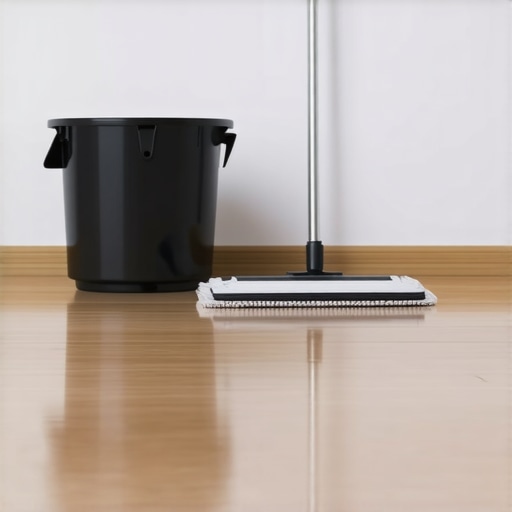
The best way to clean laminate is to use a dedicated microfiber mop and a spray cleaner specifically formulated for the task. You should never wet mop a laminate floor with a bucket and string mop. The goal is to use the least amount of moisture possible. If you can see streaks of water behind your mop, you are using too much. A quick mist on the microfiber pad is enough to pick up dust and grime without saturating the seams. This approach preserves the integrity of the HDF core and keeps the floor looking new for decades.
- Check for subfloor levelness within 1/8 inch over 10 feet before install.
- Ensure an expansion gap of at least 1/4 inch around the perimeter.
- Use a PH neutral cleaner designed for laminate.
- Avoid wax, oil, or polish which can create a dull film.
- Never use a vacuum with a rotating beater bar.
If you are transition from a carpet install to laminate, you must realize that the maintenance requirements are completely different. Carpet can hide a lot of dirt and moisture, but laminate is a precision engineered surface. It requires a different mindset. While a carpet pad might forgive a slightly uneven floor, laminate will not. Every imperfection in the subfloor will eventually telegraph through to the surface. This is why I spend more time on the floor leveling process than I do on the actual installation. It is the only way to guarantee a result that won’t fail when the seasons change.
The ghost in the expansion gap
Laminate floors are floating floors, which means they must be allowed to expand and contract with changes in humidity. If you pin the floor down with heavy kitchen islands or fail to leave a gap at the walls, the floor will buckle. Steam mops accelerate this problem by introducing a sudden burst of humidity that causes the floor to expand rapidly. If the floor has nowhere to go, the planks will lift off the subfloor. This is often called tenting. Once the floor reaches this state, the locking joints are usually damaged beyond repair. You cannot simply push it back down.
“A floor is only as good as the subfloor beneath it; deflection is the enemy of every joint.” – Master Flooring Axiom
In regions with high humidity, this issue is even more pronounced. If you live in a coastal area, your floor is already under stress from the ambient air. Adding steam to that equation is like pouring gasoline on a fire. You are asking the wood fibers to absorb more moisture than they were ever designed to hold. I have seen floors in high humidity climates fail in weeks due to improper cleaning. The chemistry of the glue just gives up. The melamine starts to cloud, the edges turn white, and the structural integrity of the plank vanishes. Keep the steam for your tile showers and keep it far away from your living room floor.