Stop Your Carpet Seams from Fraying in High Traffic Hallways
I spent three days grinding concrete on a job last month just so the floor wouldn’t click like a castanet. That job was supposed to be a simple stretch-in carpet install, but the homeowner had a hallway that looked like a crime scene. The carpet seams were unraveling like a cheap sweater. I’ve spent twenty five years on my knees with a moisture meter and a hot iron. I smell like industrial adhesive and sawdust most days. I have seen every shortcut taken by builders who want to save five cents a square foot. When a hallway seam frays, it is not a mystery. It is a failure of mechanical bonding and a total lack of respect for subfloor prep. Most guys skip the leveling compound and think the pad will hide the dip. It never does. A floor is a performance surface, not a decoration. If you do not treat the seam with the same respect an engineer treats a bridge joint, it will fail.
The anatomy of a failing hallway joint
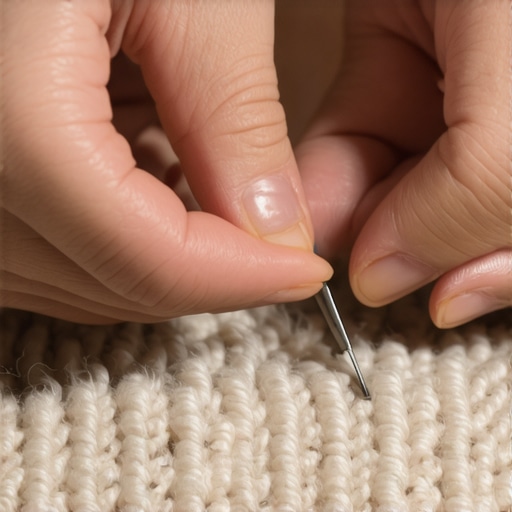
Fraying carpet seams in hallways occur when lateral shear forces overcome the thermoplastic bond of the seam tape. High traffic zones require edge sealing with specialized latex or acrylic liquids. Without a proper chemical seal on the cut edges, the primary and secondary backings delaminate under the weight of foot traffic. A hallway is basically a wind tunnel for human weight. Every time someone walks, they apply a downward force followed by a horizontal push. This push, or shear, tries to pull the two pieces of carpet apart. If the installer just heat-seamed the middle and forgot to seal the edges, those individual tufts of yarn are going to vibrate loose. Once one tuft pops, the whole row is gone. You are looking at a structural failure of the latex matrix that holds the nylon fibers in place. We call this peak stress. It happens at the molecular level where the adhesive meets the polypropylene backing. If that bond is brittle, it snaps. If it is too soft, it crawls.
“A floor is only as good as the subfloor beneath it; deflection is the enemy of every joint.” – Master Flooring Axiom
Why chemical bonding matters more than carpet price
The chemical integrity of the seam sealer prevents the unraveling of nylon 6,6 fibers by encapsulating the cut ends of the yarn. Professional installers use a bead of specialized glue along the trimmed edge before bringing the two pieces together. This creates a monolithic structure that resists foot traffic. I have seen fifteen thousand dollar walnut floors ruined by moisture, and I have seen three thousand dollar carpets ruined by a three dollar tube of glue that stayed in the van. You need to understand the melt rate of your seam tape. If the iron is too hot, you scorch the backing and create a brittle point. If it is too cool, the thermoplastic resin does not penetrate the secondary backing. We are talking about a thermal window of about thirty degrees. I use a pro grade iron with a heat shield because I do not want to cook the pile. You also have to worry about the subfloor underneath. If the floor leveling was not done correctly, the seam sits over a void. Every time someone steps on that void, the carpet flexes. That flexing is what breaks the glue bond.
| Component | Purpose | Critical Spec |
|---|---|---|
| Seam Tape | Mechanical Connection | Triple-ribbed adhesive |
| Seam Sealer | Edge Encapsulation | High-solids latex |
| Tack Strip | Tension Maintenance | J-type architectural |
| Underlayment | Compression Support | 8-lb density minimum |
The subfloor connection to surface stability
Floor leveling is the hidden requirement for preventing carpet seam failure because a flat substrate eliminates the vertical deflection that snaps adhesive bonds. When a subfloor has dips or humps, the carpet bridges these gaps. Foot traffic then forces the seam to bend excessively during every single step. I tell my apprentices that they are not carpet guys, they are floor prep specialists who happen to carry a kicker. If you are going over a wood subfloor, you better make sure those sheets are screwed down tight. A squeak is just a sign of movement, and movement is the death of a seam. If you are on concrete, you need to check the moisture. High vapor emission will rot the latex in the carpet backing from the bottom up. I have seen seams that looked perfect on day one but turned into a gooey mess by month six because the concrete was breathing too much moisture. You need a calcium chloride test or a probe. Do not guess. If the slab is wet, you need a moisture barrier before you even think about rolling out the pad.
Moving from carpet to laminate at the door frame
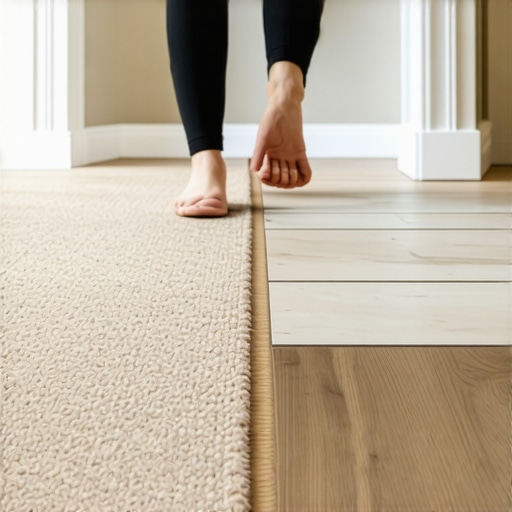
Transitions between carpet and laminate flooring require a rigid T-molding or a Z-bar to prevent the carpet edge from fraying at the junction point. These transition strips protect the exposed edges of both materials from direct impact. A floating laminate floor must have room to expand independently of the carpet. Laminate is a different beast entirely. It is essentially a photograph glued to sawdust and resin. It moves. If you tuck your carpet too tight against a laminate transition without a proper shim, the carpet is going to pull away the first time the humidity drops. I hate bulky T-moldings as much as the next guy, but they serve a purpose. They hide the expansion gap that the laminate needs to survive. If you lock that laminate down with a heavy transition, the boards will buckle. I once saw a whole floor rise up two inches because the installer didn’t leave a gap at the hallway transition. It looked like a speed bump in the middle of the house.
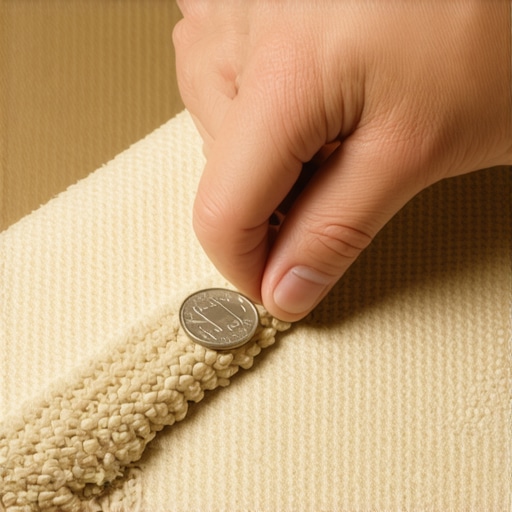
- Trim the carpet edges with a sharp row cutter to ensure a clean factory edge.
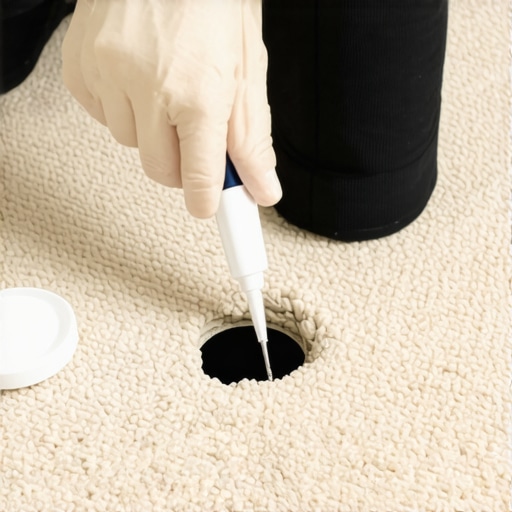
- Apply a consistent bead of seam sealer to both cut edges before heat seaming.
- Use a seam roller to press the yarn together and ensure adhesive transfer.
- Weight the seam down with a professional seam weight to allow the glue to cool flat.
- Check the subfloor for flatness within 3/16 of an inch over 10 feet.
Managing the humidity from nearby showers
Moisture from showers can migrate into hallway carpet through the air or the subfloor, weakening the water-based adhesives used in many modern carpets. High humidity environments require high-moisture resistant seam tapes and sealers to prevent delamination. Proper ventilation in bathrooms is a flooring requirement, not just a comfort feature. People think that because the carpet is in the hallway, it is safe from the bathroom moisture. They are wrong. Steam travels. If that hallway carpet is right outside a master bathroom where the fan doesn’t work, that carpet is living in a swamp. The latex binders in builder grade carpet are often water soluble to a degree. Over time, that steam softens the glue. Then the kids run down the hall, and the seam just slides apart. If I am installing near showers, I use a premium synthetic latex or a hot-melt sealer that is rated for high humidity. You have to think about the environment. You wouldn’t put solid oak in a basement, so don’t put cheap carpet seams next to a steam room.
“Deflection in the subfloor leads to premature delamination of carpet backings regardless of face fiber quality.” – Master Flooring Axiom
The precision of the seaming iron
The temperature of the seaming iron must be calibrated to the specific melting point of the thermoplastic adhesive on the seam tape to ensure a deep structural bond. Excessive heat scorches the fibers, while insufficient heat creates a cold joint that will fail under traffic. Consistent speed and pressure are the hallmarks of a master install. You can’t just crank the iron to five and hope for the best. I’ve seen guys melt the face fibers because they weren’t paying attention. You want the adhesive to be in a molten state, almost like lava, so it can flow into the nooks and crannies of the carpet backing. Once it cools, it should be a plastic-like weld. If you pull a seam apart and the glue is smooth, you didn’t get penetration. You want to see the texture of the carpet backing embedded in that glue. That is how you know it will hold. I use a wide four inch tape in hallways because I want that extra surface area for the bond. It is about physics. More surface area means more friction resistance.