Why Your Carpet Pad Choice Matters More Than the Carpet Itself
The Hidden Foundation of Comfort Why Carpet Pad Quality Outweighs the Carpet Choice
I spent three days grinding concrete on a job last month just so the floor wouldn’t click like a castanet. Most guys skip the leveling compound. They think the underlayment or a thick carpet will hide the dip. It won’t. I walked into a house where the owner spent eight thousand dollars on a plush saxony carpet, but they went cheap on the pad. Six months later, the high traffic areas felt like walking on a sidewalk. The carpet was fine, but the cellular structure of the cheap foam underneath had collapsed. My hands still smell like the WD-40 I used to clean my floor scraper that afternoon, and my knees remember every inch of that uneven slab. When you ignore the physics of the subfloor and the chemistry of the cushion, you are just throwing money into a dumpster. Flooring is a structural engineering challenge. If the base fails, the surface is irrelevant.
The invisible failure of high end textiles
Carpet pads act as the primary shock absorber for the floor system. High-quality cushions protect the carpet backing from the abrasive friction of the subfloor. Without a dense pad, the carpet fibers crush underfoot, leading to permanent matting and structural degradation of the textile face. The reality of flooring is that the carpet is merely the aesthetic skin of a much larger mechanism. When a human walks across a room, the force of their weight travels through the fiber, through the primary and secondary backing, and into the pad. If that pad is a low-density 4-pound rebond, it bottoms out instantly. This forces the carpet backing to absorb 100 percent of the impact against the hard subfloor. This friction acts like sandpaper, slowly grinding away at the latex adhesive that holds the carpet tufts in place. This is why you see bald spots in hallways. It isn’t that the carpet was bad. It is that the pad was a failure of engineering. It lacked the molecular resilience to push back against the footfall.
Physics of the rebound rate and density
Density is the measurement of foam mass per cubic foot, usually ranging from 6 to 10 pounds in residential settings. Rebound rate refers to how quickly the material returns to its original thickness after compression. Higher density pads provide better support and prevent the carpet from stretching over time. When we talk about density, we are looking at the molecular architecture of the cushion. A 6-pound pad might feel soft under your thumb, but it lacks the structural integrity to support heavy furniture or consistent traffic. I always push for an 8-pound or 10-pound rebond pad because the scrap foam used in its construction is compressed at higher pressures with more sophisticated chemical binders. This creates a denser lattice that can withstand thousands of compression cycles without losing its loft. In the world of carpet install, the cushion is the only thing standing between your investment and the raw concrete or plywood below. If you choose a pad that is too thick but not dense enough, like a half-inch 4-pound foam, the floor will feel bouncy and unstable. This is called the ‘trampoline effect,’ and it actually puts more strain on the carpet seams, leading to premature splitting.
“A floor is only as good as the subfloor beneath it; deflection is the enemy of every joint.” – Master Flooring Axiom
Why your subfloor is lying to you
Subfloor levelness is a requirement for all flooring types, including carpet and laminate. A floor that deviates more than 3/16 of an inch over a 10-foot radius needs floor leveling compound. Carpet might hide visual dips, but the pad will wear unevenly in those low spots. Homeowners think carpet is the great concealer. They believe they can skip the floor leveling process because the carpet is thick. This is a lie. If you have a dip in your concrete slab, the carpet pad will bridge that gap like a tiny suspension bridge. Every time you step on that spot, the pad flexes further than it was designed to. This repeated over-extension breaks down the chemical bonds in the foam. Within a year, you will feel that dip right through the carpet. I have seen laminate floors fail for the same reason, the locking mechanisms snap because the subfloor wasn’t flat. With carpet, the failure is quieter but just as expensive. You end up with a ‘hollow’ feeling underfoot and a carpet that looks wavy because it has lost its tension.
The moisture trap under your feet
Concrete slabs are porous and constantly emit water vapor through capillary action. A carpet pad without a moisture barrier allows this vapor to reach the carpet backing, leading to mold growth and adhesive failure. Moisture levels must be tested with a calcium chloride test before installation. Many modern pads come with a ‘spill guard’ or a moisture barrier on the top surface. This is great for pet accidents or spilled drinks, but it does nothing for the moisture coming up from the ground. If you are installing over a slab, especially in a basement or a region with high humidity, you need to understand the vapor drive. When the air in the room is drier than the concrete, moisture moves upward. If it gets trapped between the pad and the slab, it creates a petri dish for microbes. This is why some old carpets have that ‘basement smell.’ It isn’t the carpet. It is the decaying organic matter in a cheap pad that has been damp for five years. Even in showers, we worry about waterproofing membranes, yet people forget that their entire living room floor is sitting on a damp sponge if they don’t use a pad with the right vapor permeance rating.
| Pad Type | Typical Density (PCF) | Best Use Case | Durability Rating |
|---|---|---|---|
| Rebond | 6 – 10 | Standard Residential | High |
| Prime Foam | 3 – 5 | Low Traffic Guest Rooms | Low |
| Memory Foam | 8 – 10 | Luxury Bedrooms | Moderate |
| Fiber Pad | 12 – 20 | Commercial/Berber | Extreme |
| Rubber Pad | 18 – 24 | High-End Living Areas | Elite |
The 1/8 inch that ruins everything
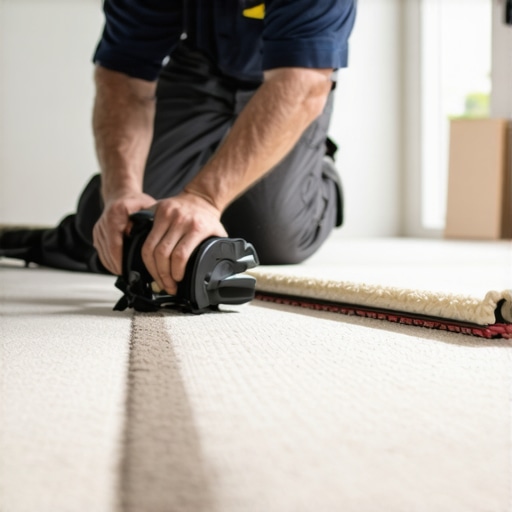
Tack strip placement and pad trimming require precise tolerances to ensure the carpet stays anchored. The pad must be trimmed exactly to the inside edge of the tack strip, not overlapping it. A gap of 1/8 inch is standard to allow the carpet to tuck properly. If an installer is lazy, they might overlap the pad on the tack strip. This creates a hump at the perimeter of the room. Not only does it look terrible, but it prevents the pins on the tack strip from biting into the carpet backing. Over time, as people walk and furniture is moved, the carpet will pull away from the wall. You will see ripples forming in the middle of the room. This isn’t a carpet defect. It is an installation failure. The mechanics of a carpet install require that the tension is held by the tack strip, while the pad provides the vertical support. When those two elements fight each other, the floor loses. I have seen guys try to use double-sided tape to fix this, but tape is a temporary solution for a structural problem.
Comparing the chemistry of polyurethane and rubber
Polyurethane foam is the most common material for carpet cushions, created through a chemical reaction between polyols and isocyanates. Rubber pads, made from either synthetic or natural rubber, offer superior density and a longer lifespan but at a much higher cost. Rebond pad is actually a recycled product. It is made from scraps of high-density foam that are shredded and then bonded back together with a polyurethane binder. This is why it looks like a multicolored quilt. The quality of a rebond pad depends entirely on the quality of the scraps and the amount of binder used. If the manufacturer uses too much filler, the pad becomes brittle. Rubber pads, on the other hand, are engineered for high-traffic environments. They don’t ‘bottom out’ because the molecular structure of rubber is much more resistant to compression set than polyurethane. If you are putting carpet on stairs, which is the highest-stress area in any home, you should never use a cheap foam. You need a dense rubber or a high-ounce fiber pad to handle the sheer force of a human heel striking the edge of the tread.
“Deflection is the silent killer of floor warranties; always measure twice and level once.” – Master Flooring Axiom
Checklist for a bulletproof installation
- Verify subfloor moisture content is below 4 percent for concrete slabs.
- Check for floor levelness and apply self-leveling compound to any dips greater than 3/16 inch.
- Select a pad density of at least 8 pounds for main living areas and stairs.
- Ensure the pad thickness does not exceed 7/16 inch for standard carpets to prevent seam stress.
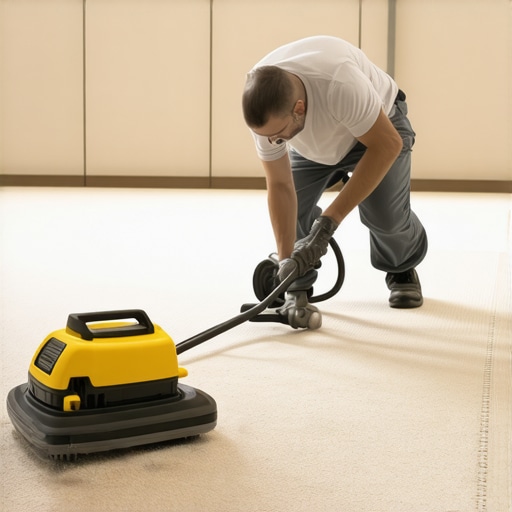
- Confirm the installer uses a power stretcher rather than just a knee kicker for final tensioning.
- Inspect the perimeter to ensure the pad is not overlapping the tack strips.
The ghost in the expansion gap
While carpet does not expand like hardwood or laminate, the perimeter of the room still requires a functional gap for the carpet to be tucked into the gullies. This gap allows for a clean finish and prevents the carpet from curling at the baseboards. People often ask me why their baseboards look like they are floating. It is usually because the pad was too thick for the baseboard height. If you have low-profile baseboards, you cannot use a thick luxury pad without creating an awkward transition. You have to think about the vertical stack-up of your floor. This includes the subfloor, the leveling compound, the pad, and the carpet itself. If that stack-up is taller than the notch in your baseboard, you are in trouble. This is the kind of detail that separate a master installer from a guy with a van and a kick-tool. You have to visualize the cross-section of the floor before you ever crack a bucket of glue or roll out a yard of textile. The carpet install is the final act of a long architectural process, and the pad is the unsung hero that makes it all work.