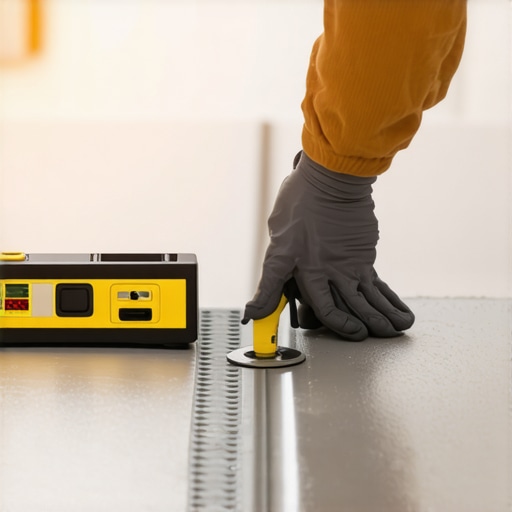
The ‘Quarter Trick’ for Checking Proper Slope on a Shower Curb
The math of a dry bathroom floor
I spent three days grinding concrete on a job last month just so the floor wouldn’t click like a castanet. Most guys skip the leveling compound. They think the underlayment will hide the dip. It won’t. You can smell the oak dust and the WD-40 on my hands when I tell you that a subfloor is the only thing that matters in a high-end installation. If the slab is off by a fraction of an inch, your laminate will bounce and your tile will crack. This reality becomes even more aggressive when we talk about showers. Water does not care about your aesthetic choices. It only cares about gravity. A shower curb that lacks the proper pitch is a liability that will rot your wall studs and ruin your carpet install in the adjacent room. We use the quarter trick because it is a tactile, fool-proof method to verify that gravity is on our side.
The quarter trick simplifies gravity
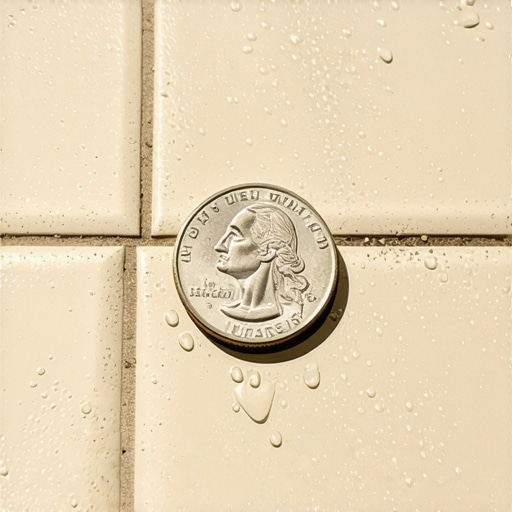
Shower curb slope must facilitate water drainage toward the drain at a pitch of one-quarter inch per foot. You place a standard US quarter on the flat surface of the curb. If the coin slides toward the shower floor, the pitch is sufficient. If it sits still or slides outward, you have a structural failure that requires immediate correction before thin-set application.
The physics of water surface tension means that moisture will cling to a flat surface rather than moving toward the drain. When we discuss the capillary action of water between tile joints, we are looking at the molecular level of failure. A curb that is perfectly level is actually a trap. Over time, water sits on the grout lines. It finds the path of least resistance. Usually, that path leads into the wooden framing behind your moisture barrier. I have seen fifteen thousand dollar bathrooms destroyed because an installer forgot to check the pitch on a six inch piece of marble. The quarter trick is the mechanic’s shortcut to ensuring the 1/4 inch per foot rule is met without over-complicating the measurement with a digital level that might be out of calibration.
“A floor is only as good as the subfloor beneath it; deflection is the enemy of every joint.” – Master Flooring Axiom
The 1/8 inch that ruins everything
Structural tolerances in flooring are measured in thirty-seconds of an inch for a reason. When you ignore a small dip in the subfloor, you are creating a void. This void becomes a bellows system every time someone walks across the floor. This movement stresses the tongue and groove of laminate or the click-lock mechanism of LVP. Eventually, the plastic snaps. You end up with a floor that gaps and peaks. I hate seeing homeowners buy expensive laminate just to have it fail because the installer was too lazy to mix a bag of self-leveling underlayment. You need a floor that is flat to within 3/16 of an inch over a 10-foot radius. Anything less is a gamble with the homeowner’s money. I have spent decades watching people ignore these numbers only to call me back six months later to fix a buckling mess. Leveling is not an option. It is a requirement.
| Surface Type | Required Slope | Drainage Speed |
|---|---|---|
| Shower Curb | 1/4 inch per foot | Optimal |
| Shower Floor | 1/4 to 1/2 inch per foot | High |
| Main Bathroom Floor | Zero (Level) | Static |
| Exterior Decking | 1/8 inch per foot | Moderate |
The hidden physics of the shower curb
Waterproofing membranes like Schluter-Kerdi or liquid-applied barriers must follow the contour of the curb perfectly. If your curb is built from stacked two-by-fours, you are already in trouble. Wood shrinks. It expands. It twists. I prefer using high-density foam curbs or solid concrete because they do not move. When you apply your thin-set, you are creating a chemical bond between the substrate and the tile. This bond is rigid. If the wood underneath moves even 1/64 of an inch, the bond breaks. This is why floor leveling and proper curb construction are the twin pillars of a bathroom that lasts fifty years. You can buy the prettiest tile in the world, but if the chemistry of your modified thin-set is fighting against the movement of a wet subfloor, the tile will lose every single time.
- Verify subfloor moisture content is below 12 percent before starting.
- Ensure the curb is fastened with non-corrosive screws.
- Check the pitch using the quarter trick at three points along the curb.
- Apply waterproofing at least six inches up the wall.
- Let the thin-set cure for a minimum of 24 hours before grouting.
Why your subfloor is lying to you
Most subfloors appear flat to the naked eye but contain significant undulations that ruin a laminate install. You need to take a straight edge, at least six feet long, and sweep the room. Every time the straight edge light passes through a gap, you have a low spot. Every time it rocks, you have a high spot. I take a grinder to the high spots first. The dust is incredible. It gets in your hair and your lungs. But that is the price of a perfect floor. Once the high spots are gone, you use a primer and a high-flow self-leveling compound. The chemistry of these compounds is fascinating. They use polymers to maintain flexibility while achieving a high compressive strength, often over 4,000 PSI. This creates a glass-like surface that is the perfect foundation for any floor covering.
“Tile is a rigid surfacing units; it cannot accommodate the movement of an unstable substrate without cracking.” – TCNA Handbook
The relationship between the subfloor and the finished material is symbiotic. If you are putting down carpet, you might think you can get away with a sloppy subfloor. You are wrong. A dip in the subfloor will cause the carpet pad to wear unevenly. Within two years, you will see a dark spot where the carpet is being ground into the concrete by foot traffic. In a shower, this neglect is even more dangerous. A flat curb allows water to sit. This water eventually finds its way to the carpet install in the bedroom. The tack strip rots. The carpet gets moldy. It all starts with the slope of that curb. The quarter trick is the first line of defense against a total home insurance claim. Don’t be the guy who thinks he knows better than gravity. Gravity has a perfect record.