Why Your Kitchen Floor Is Squeaking Under the Pantry
I spent three days grinding concrete on a job last month just so the floor wouldn’t click like a castanet. Most guys skip the leveling compound. They think the underlayment will hide the dip. It won’t. I have seen it a thousand times in suburban kitchens where the homeowner went for the cheapest bid. You walk toward the pantry, reaching for the coffee, and a sharp chirp rings out from beneath your feet. It is not a mouse. It is the sound of friction, physics, and a failure of structural foresight. A floor is a performance surface, not a rug. If the subfloor is not dead flat, the floor will talk back to you.
The ghost in the expansion gap
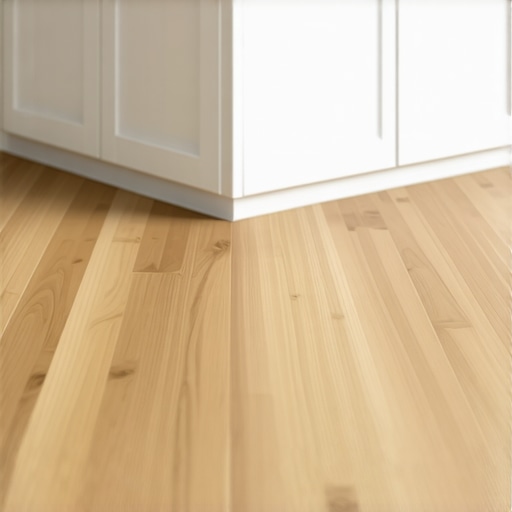
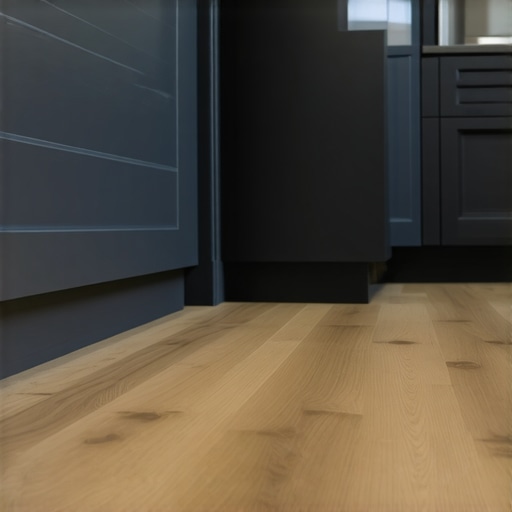
Kitchen floor squeaks near heavy cabinetry usually indicate a lack of perimeter expansion gaps or a structural pinch point caused by dead weight. When you install a floating floor, whether it is laminate or luxury vinyl, the material requires space to breathe. It moves as temperature and humidity fluctuate. If you trap that floor under a pantry filled with two hundred pounds of canned goods and dry flour, you have effectively anchored a floor that was designed to float. This creates a ghost in the machine where the planks cannot shift, causing the locking mechanisms to grind against one another under the weight of your footsteps.
Why your subfloor is lying to you
Subfloors often appear flat to the naked eye but possess microscopic dips and peaks that exceed the standard tolerance of 1/8 inch over a 10 foot radius. I have spent twenty five years on my knees with a straightedge. I know that a subfloor is never your friend. Wood subfloors made of 3/4 inch OSB or plywood can develop a memory of the joists beneath them. If those joists have any crown or if they have settled unevenly, the subfloor follows suit. When we talk about floor leveling, we are not just talking about making it look good. We are talking about the chemistry of the bond and the physics of the load. If there is a 1/16 inch void under that pantry, every step you take pushes the flooring into that void. The squeak is the sound of the material hitting the wood or the concrete below. It is a mechanical failure of support.
“A floor is only as good as the subfloor beneath it; deflection is the enemy of every joint.” – Master Flooring Axiom
The chemistry of modern adhesives and the engineering of click-lock systems are marvels, but they are not magic. Let us talk about the MDI (Methylene Diphenyl Diisocyanate) used in high-end subfloor adhesives. This stuff is designed to create a bridge between the joist and the subfloor. If the original builder used cheap construction adhesive or, worse, just nails, the bond will eventually break. When that bond breaks, the subfloor moves up and down on the shank of the nail. That is your squeak. It is the sound of metal rubbing against wood fibers at high speed.
The 1/8 inch that ruins everything
Precision in floor leveling is the difference between a silent kitchen and a structural headache that requires a full tear-out. When I walk onto a job site and see a contractor about to start a carpet install in a room adjacent to a kitchen, I check the transitions. Carpet is forgiving. It hides a multitude of sins. But when you transition from that carpet to a hard surface like laminate or engineered hardwood, the sins of the subfloor are magnified. Most people think a thick underlayment will solve the problem. This is a myth. While most people want the thickest underlayment, too much cushion actually causes the locking mechanisms on LVP or laminate to snap under pressure. You need a high-density, low-compression underlayment that provides a flat plane for the floor to rest upon. If you have a dip under your pantry, the only real solution is a self-leveling underlayment (SLU) or a cementitious patch. You cannot bridge a canyon with a piece of foam.
| Subfloor Type | Recommended Tolerance | Expansion Requirement | Max Moisture Content |
|---|---|---|---|
| Plywood (3/4″) | 1/8″ per 10′ | 1/4″ – 1/2″ | 10% MC |
| OSB (Sturd-I-Floor) | 1/8″ per 10′ | 3/8″ | 12% MC |
| Concrete Slab | 3/16″ per 10′ | 1/2″ | 3.0 lbs (Calcium Chloride) |
Molecular moisture and the silent killer
Moisture migration from nearby showers or poorly ventilated crawlspaces can cause the subfloor to swell, leading to localized squeaks under heavy appliances. Even if your kitchen feels dry, the crawlspace below might be a swamp. Wood is a hygroscopic material. It absorbs water from the air like a sponge. If the humidity in your home jumps from 30% in the winter to 60% in the summer, your floor planks will expand. Under a heavy pantry, this expansion has nowhere to go. The planks buckle upward, creating a hollow spot. When you step there, you are compressing the air and the material. The friction between the tongue and the groove produces that high-pitched squeak. I have seen wide-plank walnut floors cupping so bad they looked like potato chips because the installer did not check the crawlspace humidity. You must maintain a consistent interior environment or your floor will eventually fail.
“Wood floors will perform as long as the moisture levels remain within a 4 percent range of the acclimation target.” – NWFA Technical Guidelines
Structural remedies for a noisy kitchen
Fixing a squeak under a pantry requires either relieving the perimeter tension or reinforcing the subfloor from below. If you have access to the joists from a basement or crawlspace, you can use subfloor screws to pull the material tight to the joists. Do not use nails. Nails are for people who want to do the job twice. You want a 2-inch or 2.5-inch wood screw with a smooth shank at the top to ensure it pulls the board down tight. If you do not have access from below, you might have to use a specialized kit that allows you to drive screws through the carpet or the flooring and snap the heads off. However, with laminate or LVP, your options are limited. You might have to pull the baseboards and check if the floor is touching the wall. If it is, use a oscillating multi-tool to cut a 1/4 inch gap. This often releases the tension and stops the squeak instantly.
- Check the perimeter expansion gap behind the baseboards.
- Measure the humidity levels in the kitchen and the crawlspace.
- Ensure the pantry is not bolted through the floating floor into the subfloor.
- Inspect the joists for signs of deflection or loose hangers.
- Use a moisture meter to verify the subfloor is within acceptable limits.
The physics of the kitchen are unique. You have high traffic, heavy static loads like the pantry and refrigerator, and frequent moisture fluctuations from cooking and showers in nearby bathrooms. It is a recipe for movement. If you want a silent floor, you must treat it like a structural engineering project. The sawdust under my nails is proof that there are no shortcuts. You level the floor, you respect the expansion gaps, and you never, ever trust a subfloor that you have not checked with a straightedge. That is the only way to keep the ghosts out of your kitchen. If you ignore the 1/8 inch rule, you are just waiting for the clicking to start.