Why Your Kitchen Subfloor Is Rotting Near the Dishwasher
Why Your Kitchen Subfloor Is Rotting Near the Dishwasher
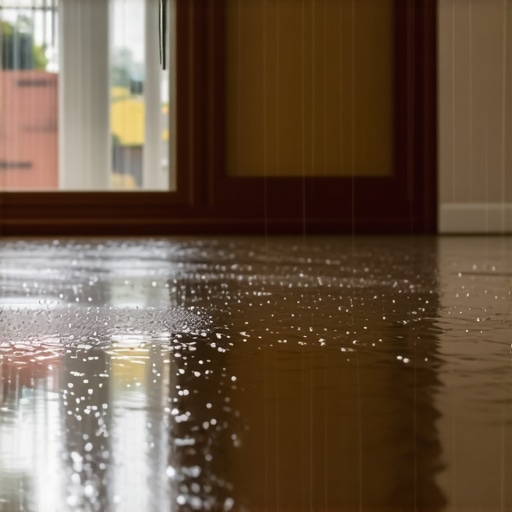
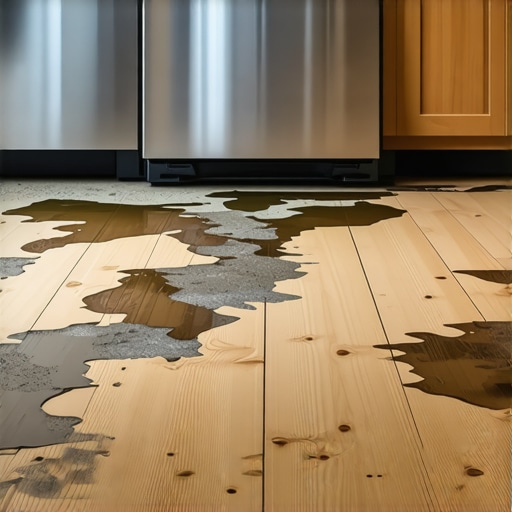
I spent three days grinding concrete on a job last month just so the floor wouldn’t click like a castanet. Most guys skip the leveling compound. They think the underlayment will hide the dip. It won’t. I walked into this kitchen in the suburbs where the owner complained about a squishy spot right in front of the sink. I pulled back a piece of the trim and the smell hit me. It was the scent of damp earth and failing adhesive. The dishwasher had a slow drip for three years. Not a flood. Just a weep. That weep had turned the subfloor into a botanical garden of black mold and mushy cellulose. People focus on the cabinets or the stone counters. They forget that everything rests on a structural plane that can be erased by a single loose copper fitting. If you ignore the subfloor, you are building a house on a sponge.
The hidden physics of moisture migration under the kickplate
Moisture migration under a kitchen kickplate occurs when slow leaks saturate the subfloor through capillary action, often remaining undetected until structural rot sets in. This process is driven by the physics of surface tension where water moves through the tight gaps between the flooring material and the subfloor. Once the moisture reaches the plywood or oriented strand board, it begins to break down the resins holding the wood fibers together. In a kitchen environment, the dishwasher is the primary culprit for this slow motion disaster. It is tucked away behind a toe kick where airflow is nonexistent. Without evaporation, the humidity remains at one hundred percent. This creates a perfect incubator for fungal growth. The wood fibers swell. The structural integrity of the panel drops to zero. You cannot fix this with a fan. You have to cut it out. Most homeowners think their waterproof laminate will protect them. It does the opposite. It traps the water against the wood. It accelerates the decay.
Why your dishwasher is a structural hazard
The modern dishwasher is a miracle of convenience but a nightmare for floor leveling. These machines vibrate during the wash cycle. Over time, that vibration can loosen the compression fittings on the water supply line. Even a leak of one drop per minute can dump a gallon of water into your subfloor every few weeks. Because the machine is pushed back into a dark cavity, you never see the puddle. The water follows the path of least resistance. Usually, it finds the gap where the plumbing comes through the floor. It runs down the pipe and into the joist bay. I have seen joists that were two inches thick reduced to the consistency of wet cardboard because of a dishwasher leak. It is not just about the surface. It is about the bones of the house. If you are planning a carpet install in an adjacent room, that moisture can travel through the subfloor and ruin the tack strips and the pad before you even realize there is a problem. You have to look at the floor as a connected system.
“A floor is only as good as the subfloor beneath it; deflection is the enemy of every joint.” – Master Flooring Axiom
The capillary action that destroys plywood cores
Plywood and OSB are susceptible to capillary action where water is pulled into the internal layers of the wood through the edges. Once the water enters the core, the glues begin to delaminate. You will notice the floor starts to peak at the seams. This is a sign that the wood is expanding faster than the fasteners can hold it down. In many cases, the subfloor will actually start to grow in thickness by up to thirty percent. This creates a hump that makes floor leveling nearly impossible without a full tear out. When I see this, I don’t reach for the leveler. I reach for the circular saw. You have to remove every inch of the affected material. If you leave even a small section of rotted wood, the rot will spread like a virus. The mold spores are already there. They just need the moisture to activate. In areas like showers or kitchens, the risk is amplified by the presence of organic debris like food particles which act as fuel for the mold.
| Material | Moisture Tolerance | Recovery Potential |
|---|---|---|
| Plywood | Moderate | Low after delamination |
| OSB | Low | Near zero once swollen |
| Concrete Slab | High | Requires moisture barrier |
| Cement Board | Excellent | Will not rot |
Why a level floor is more than just a visual preference
Floor leveling is a critical structural requirement that prevents mechanical stress on the locking systems of modern flooring materials. If your subfloor has a dip of more than three sixteenths of an inch over a ten foot span, your floor will fail. When you walk across a floor with a void underneath it, the planks flex. This puts immense pressure on the tongue and groove. Eventually, the plastic or wood locking mechanism will snap. This is especially true with laminate or LVP. People think the underlayment acts as a bridge. It does not. It acts as a pivot point. If the subfloor is rotting near the dishwasher, the levelness of the entire kitchen is compromised. You might see the transition molding start to pop up. You might hear a clicking sound. These are the screams of a floor that is being pushed past its engineering limits. I always tell clients that the prep work is eighty percent of the job. The actual installation is just the victory lap.
The failure of builder grade moisture barriers
Many installers rely on thin plastic sheets that are technically moisture barriers but practically useless in the face of a real leak. A true moisture management system requires an understanding of permeability ratings. In a kitchen, you need something that can handle a hydrostatic event. Most laminate products come with a pre-attached pad. This pad is often too soft. While people want the thickest underlayment for comfort, too much cushion actually causes the locking mechanisms on LVP to snap under pressure. You need a high density underlayment that provides support while also allowing the subfloor to breathe or effectively sealing it off from the top down. If you are doing a carpet install nearby, you must ensure that the transition between the hard surface and the soft surface is sealed. Otherwise, the carpet pad will act like a giant wick, pulling moisture out from under the kitchen cabinets and into the living room. It is a domino effect of structural failure.
How to save the joists before the floor collapses
Saving the joists requires immediate identification of the leak and the removal of all saturated subfloor panels to allow the structural timber to dry. Once the plywood is gone, you can inspect the joists for dry rot. If the wood is dark and crumbles when you poke it with a screwdriver, you have a problem. You might need to sister the joists. This involves bolting a new piece of lumber to the side of the damaged one to restore the structural capacity. Do not just slap a new piece of plywood over a wet joist. You will trap the moisture and the rot will continue. You need to use a moisture meter to ensure the joist is below twelve percent moisture content before you seal it back up. This might take a week of running a dehumidifier. Patience is the difference between a professional repair and a hack job. I have seen guys try to spray bleach on wet wood and call it a day. Bleach does not kill the roots of the mold inside the wood. It just changes the color. You need an EPA registered fungicide and a lot of airflow.
The 1/8 inch that ruins everything
In the world of flooring, one eighth of an inch is a mile. If your dishwasher is not leveled correctly, it will tilt forward or backward. If it tilts forward, the water from the door seal will drip onto your floor. If it tilts backward, the water will pool in the back of the cabinet. This is why floor leveling is the first step of any appliance installation. You cannot trust the feet of the dishwasher to compensate for a subfloor that is sloped toward the wall. I always use a long level across the entire opening. If the floor is out of whack, I use a self leveling underlayment before the finished floor goes down. This creates a flat plane for the machine to sit on. It ensures that any minor spill stays on the surface where you can see it and wipe it up. A floor that slopes toward the wall is a trap. It funnels every spill into the dark corners where rot thrives.
- Check the dishwasher supply line every six months for dampness.
- Install a leak tray under the appliance to catch drips.
- Ensure the subfloor is level within 3/16 inch over 10 feet.
- Use a moisture meter before installing any new wood or laminate.
- Avoid overly thick underlayment that compromises joint integrity.
“The National Wood Flooring Association (NWFA) states that subfloors must be clean, dry, and flat to within industry tolerances to prevent premature floor failure.” – NWFA Technical Guidelines
The chemistry of adhesive failure in wet environments
When water meets floor glue, the chemistry changes. Most modern adhesives are water based for environmental reasons. This is great for the lungs but bad for a flood. When the subfloor near the dishwasher gets wet, the adhesive re-emulsifies. It turns back into a liquid state. This is why you see vinyl tiles shifting or wood planks sliding. The bond is gone. In some cases, the moisture reacts with the minerals in a concrete slab to create a high pH environment. This alkalinity eats the glue. It turns it into a soapy substance that will never dry. If you are dealing with a slab, you must test for moisture vapor emission rates. If it is too high, you are essentially trying to glue a floor to a fountain. You need a specialized epoxy moisture mitigation system. This is not the cheap stuff you find at the big box store. This is industrial chemistry designed to hold back the pressure of the earth’s moisture. It is the only way to guarantee the floor stays put in a wet zone like a kitchen or near showers.