The ‘Wet Sponge’ Test for Porous Concrete
The Wet Sponge Test for Porous Concrete and Subfloor Integrity
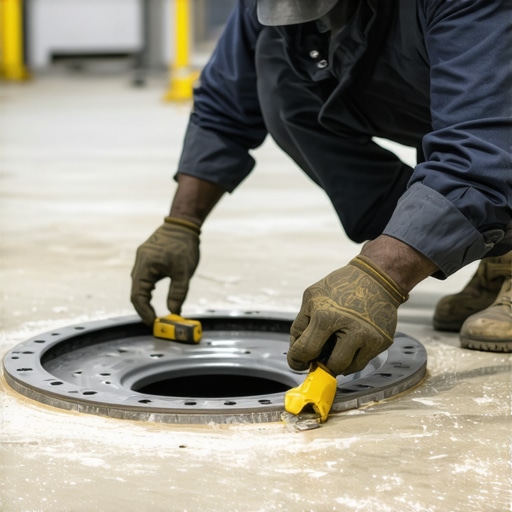
I spent three days grinding concrete on a job last month just so the floor would not click like a castanet. Most guys skip the leveling compound. They think the underlayment will hide the dip. It will not. I walked onto that slab and the light hitting the surface showed every ridge and valley. The builder claimed it was ready for laminate. I told him his floor would be a pile of broken locking tabs in six months. We spent seventy two hours with a diamond cup wheel and a dust shroud. This is the reality of professional flooring. If you do not respect the physics of the slab, the slab will destroy your finish materials.
Why your subfloor is lying to you
Concrete slabs look solid but they are actually dense sponges with millions of microscopic capillaries that transport water vapor via hydrostatic pressure. This moisture movement determines if your floor leveling compound sticks or if your carpet install fails due to mold growth. Understanding porosity is the only way to ensure a structural bond that lasts for decades. When you look at a slab, you see a gray mass. I see a chemical matrix of calcium silicate hydrate. This matrix is either open to receiving an adhesive or closed off by trowel cream or chemical sealers. If you do not know which one you are dealing with, you are just guessing with the homeowner’s money.
The three minute test for slab integrity
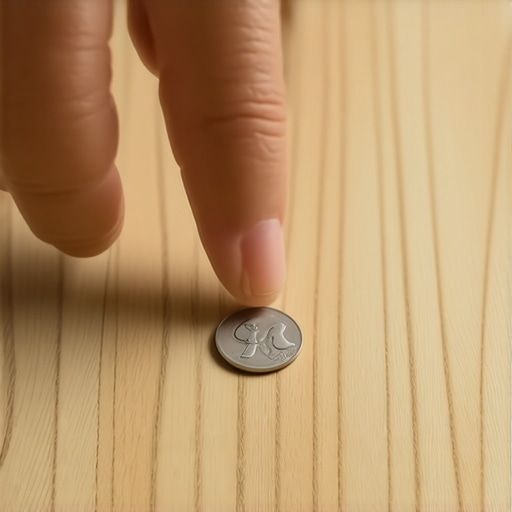
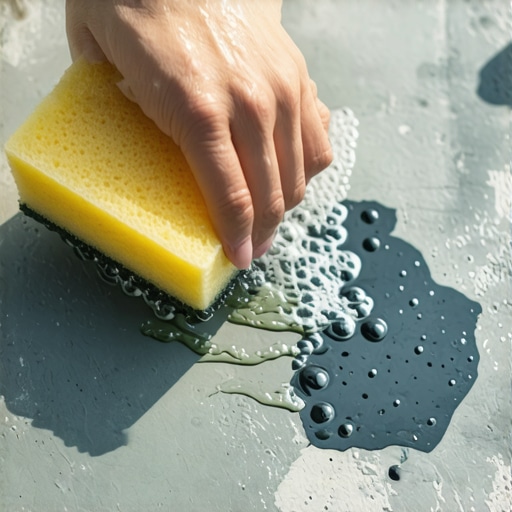
The wet sponge test or the water droplet method is the fastest way to determine if concrete is porous enough to accept floor leveling or thin set. You take a small amount of clean water and drop it onto the surface in various spots. If the water beads up like it is on a freshly waxed car, you have a major problem. That bead tells you the surface tension is too high for a mechanical bond. You likely have a power-troweled finish that is too dense or a chemical curing compound that acts as a bond breaker. If the water soaks in quickly, the concrete is thirsty. This means it will suck the water out of your leveling compound too fast, causing it to crack and curl. You want a moderate absorption rate to ensure the primer can penetrate the pores without being dehydrated.
“A floor is only as good as the subfloor beneath it; deflection is the enemy of every joint.” – Master Flooring Axiom
The ghost in the expansion gap
Every floating floor including laminate and LVP requires a perimeter expansion gap to accommodate the natural movement of the building and the material. When people skip the leveling phase, they create vertical movement. This movement is the sound of a floor failing. If the floor can bounce, the air in the subfloor cavity is pushed out. This creates a clicking noise. No underlayment on the market can fix a subfloor that is out of spec. You need the slab to be flat within three sixteenths of an inch over a ten foot radius. If you ignore this, the expansion gap becomes irrelevant because the floor is already tearing itself apart at the joints. The physics of leverage will snap a plastic locking mechanism every single time.
How porosity affects your carpet install
Carpet padding acts as a filter for dust and moisture rising from a porous concrete slab. If your concrete is highly porous and you have high hydrostatic pressure, moisture will move through the slab and get trapped under the pad. This leads to the smell of old gym socks. When we do a carpet install in a basement, the wet sponge test tells me if I need a moisture barrier primer before the tack strips go down. You cannot just nail into concrete and hope for the best. If the concrete is too hard and non-porous, your masonry nails will snap. If it is too soft and porous, the nails will pull right out when you stretch the carpet. You need to know the density of the surface you are attacking.
| Concrete State | Water Absorption Time | Required Action |
|---|---|---|
| Non-Porous | More than 15 Minutes | Mechanical grinding or shot blasting required | Semi-Porous | 3 to 10 Minutes | Standard acrylic primer application | Highly Porous | Less than 1 Minute | Two coats of diluted primer to prevent dehydration |
The physics of floor leveling compounds
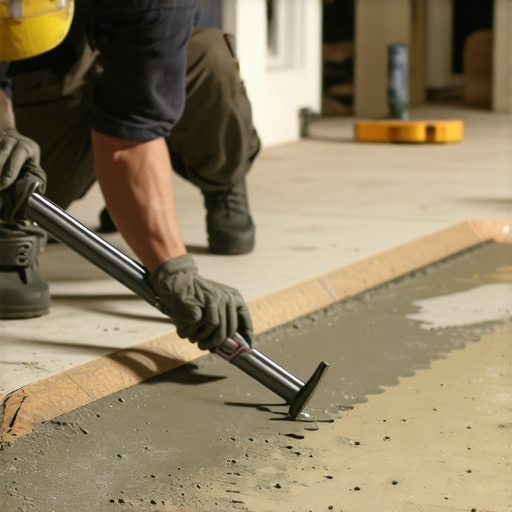
Self leveling underlayment is not actually self leveling; it is a high flow hydraulic cement that requires precise water ratios and surface preparation. If you pour leveler on a porous slab without priming, the concrete will drink the water from the mix. This stops the chemical hydration process. The leveler will then turn into a chalky mess that peels off in sheets. I have seen guys lose ten thousand dollars in a single afternoon because they did not use the wet sponge test. They poured five hundred bags of leveler onto a dry slab and it all bubbled. Those bubbles are pinholes where air escaped the concrete because the pores were not sealed by a primer. It looked like the surface of the moon.
Waterproofing showers and the porosity trap
Tile failure in showers is almost always a result of improper bond to the substrate due to surface contaminants or lack of porosity. When you are prepping a shower floor, the concrete or mud bed must be able to receive the waterproofing membrane. If you used a concrete mix with a high concentration of fly ash, the surface might be too slick. I always perform a splash test on a new shower pan. If the water does not darken the concrete, the thin set will not bite. You have to use a diamond rubbing stone to open the pores. It is tedious work. It is backbreaking work. But it is the difference between a shower that lasts fifty years and one that leaks into the kitchen below in two.
“Substrate preparation is the most significant factor in the success of any flooring installation.” – TCNA Handbook Principles
Subfloor preparation checklist
- Perform the wet sponge test in at least five areas per one thousand square feet.
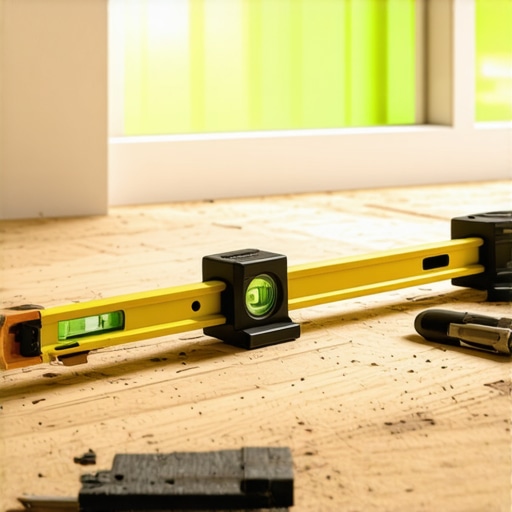
- Identify any high spots using a ten foot straight edge.
- Grind down ridges using a dust controlled diamond grinder.
- Vacuum the entire surface with a HEPA rated vacuum to remove fine dust.
- Apply the appropriate primer based on the porosity results.
- Ensure the ambient temperature is between sixty and eighty degrees Fahrenheit.
- Verify that no curing compounds or waxes remain on the surface.
The chemistry of laminate and moisture
Laminate flooring is essentially high density fiberboard which acts like a sponge when exposed to subfloor moisture. Even if the top is waterproof, the bottom is vulnerable. A porous concrete slab constantly breathes. If you do not have a six mil poly film or a high quality underlayment with a vapor barrier, that moisture will hit the laminate. The edges will swell. This is called peaking. Once the edges peak, the floor is ruined. You can see it when the light hits the floor at an angle. It looks like a series of small rooftops. This is why the wet sponge test is the first thing I do before I even unload the planks from my truck.