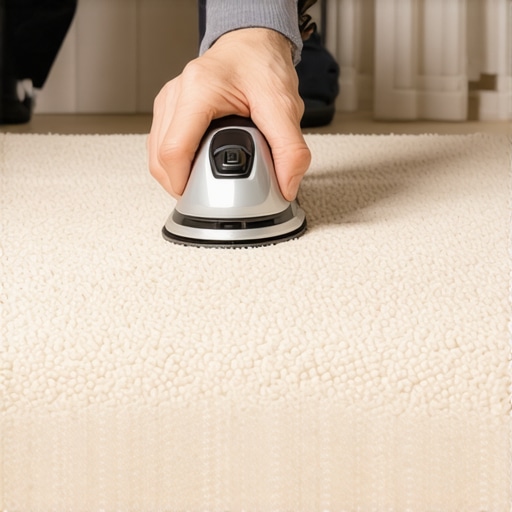
The ‘Iron’ Trick for Fixing Dented Carpet Fibers
Most guys skip the leveling compound. They think the underlayment will hide the dip. It won’t. I spent three days grinding concrete on a job last month just so the floor wouldn’t click like a castanet. That experience taught me that the surface you see is only as resilient as the structure you ignore. When a homeowner looks at a deep, ugly pit in their carpet where a grand piano once sat, they see a cosmetic failure. I see a mechanical compression of the polymer chain. These dents are not just flat spots. They are structural deformations of the yarn. Fixing them requires more than a quick brush. It requires an understanding of how heat and moisture interact with synthetic and natural fibers to reset their physical memory.
The physics of polymer memory in crushed carpet yarn
Carpet dents occur when furniture weight exceeds the elastic limit of the yarn, forcing the fibers into a permanent state of collapse through mechanical pressure. To fix this, you must introduce thermal energy and moisture, which work together to break and reform the hydrogen bonds within the carpet fibers. This process is essentially a molecular reset for the pile. When you have a heavy dresser sitting in one spot for five years, the air is squeezed out of the yarn bundles. The fibers are not just bent. They are often chemically locked into that position. Nylon and polyester, the two most common synthetic carpet materials, are thermoplastics. This means they respond to heat. If you hit them with the right amount of steam, the fibers reach their glass transition temperature. At this point, the plastic becomes pliable enough to return to its manufactured shape. If the subfloor leveling was done poorly, the furniture might have sat at an angle, concentrated all that force on a single leg, making the dent even deeper into the backing material. You are not just fixing the fiber. You are coaxing the entire assembly back to its original loft.
“A floor is only as good as the subfloor beneath it; deflection is the enemy of every joint.” – Master Flooring Axiom
The iron trick for deep fiber recovery
The iron trick uses a damp towel and a steam iron to transfer heat safely into the carpet pile without melting the synthetic materials. By creating a localized steam chamber, you penetrate the yarn twist and allow the compressed fibers to expand back to their original vertical orientation. You need a standard clothing iron and a clean, white cotton towel. Do not use a colored towel because the heat can cause dye transfer, which is a permanent nightmare. Saturate the towel with water and wring it out until it is just damp. Place it over the dent. Set your iron to the medium steam setting. You must never let the iron touch the carpet directly. Direct contact will result in a localized meltdown that turns your carpet into a hard, plastic scab. Move the iron over the towel in circular motions for about thirty to sixty seconds. The steam travels through the towel and deep into the carpet backing. This is where the chemistry happens. The moisture swells the fiber, and the heat provides the energy for the polymer chains to untangle from their crushed state.
Heat sensitivity of different carpet polymers
Different carpet materials have varying melting points and moisture absorption rates that determine how long you can apply heat during the dent removal process. Nylon is more resilient and requires more heat than polyester or olefin, while wool requires a very delicate balance of moisture to avoid scorching. Understanding what you are standing on is vital. If you are dealing with a cheap builder-grade polyester, the melting point is lower than high-quality Type 6,6 Nylon. If you get too aggressive with the iron, you will fuse the fibers together. I have seen guys try this on a polypropylene rug and end up with a shiny, flat spot that looks worse than the dent. You have to be a technician. Check the carpet label or do a burn test on a scrap piece if you have one. The goal is to reach the glass transition temperature without hitting the melting point. It is a narrow window of professional success. The chemistry of the backing also matters. Most modern carpets have a secondary backing made of woven polypropylene. If you overheat the area, you can actually cause the backing to delaminate, which leads to bubbling and ripples later on. This is especially true if the carpet install was done with a low-quality adhesive or if the floor leveling underneath is uneven, causing the carpet to bridge over small gaps.
| Fiber Type | Heat Resistance | Moisture Absorption | Recovery Potential |
|---|---|---|---|
| Nylon 6,6 | High | Moderate | Excellent |
| Polyester (PET) | Medium | Low | Good |
| Olefin (Polypropylene) | Low | None | Poor |
| Wool | High | High | Excellent |
The danger of the melting point during repair
Applying too much heat to synthetic carpet fibers will lead to permanent fiber fusion where the yarn bundles melt into a solid mass. This damage is irreversible and will require a structural patch or a full replacement of the affected carpet section. You have to stay focused. You cannot walk away to answer the phone while the iron is on the towel. The steam is your buffer. As long as the towel is damp, the temperature is capped by the boiling point of water. Once that towel goes dry, the temperature spikes instantly. I once saw an apprentice burn a hole through a premium frieze carpet because he thought more heat would work faster. It does not. It just ruins the job. You should lift the towel every thirty seconds to check your progress. Use a carpet rake or a simple kitchen fork to gently tease the fibers back up while they are still warm and damp. This mechanical agitation helps the fibers lock back into their upright position while they cool. It is the cooling phase that sets the memory. If you don’t brush the fibers up while they are cooling, they might just settle back into a semi-crushed state.
“Every installation failure is a failure of preparation or a misunderstanding of material limits.” – Master Flooring Axiom
Structural integrity starts at the slab
The severity of carpet dents is often exacerbated by subfloor irregularities such as dips, ridges, or unlevel concrete slabs that concentrate furniture weight on small surface areas. Proper floor leveling before carpet installation ensures that weight is distributed more evenly across the secondary backing. If your subfloor is like a roller coaster, your furniture is never sitting flat. This creates localized high-pressure zones. A heavy mahogany desk might have four legs, but if the floor is unlevel, sixty percent of that weight might be resting on just one leg. That leg is going to drive right through the pile and compress the pad until it is paper thin. When I do a carpet install, I am looking at the slab with a ten-foot straight edge. If I see more than an eighth of an inch of daylight, the self-leveling compound is coming out. Most installers think they can hide a bad floor under a thick pad. They are wrong. A soft pad on an unlevel floor just allows for more vertical movement, which leads to faster fiber fatigue and deeper permanent dents. If you are fixing a dent in a room that also has laminate or showers nearby, you have to consider how the transition strips and the subfloor moisture affect the overall tension of the carpet. Moisture from a poorly sealed shower can migrate under the carpet, softening the latex in the backing and making it even more susceptible to crushing.
Step by step recovery checklist for deep divots
- Identify the fiber type to determine the appropriate heat setting on the iron.
- Vacuum the area thoroughly to remove any dry soil that could be baked into the fiber.
- Use a clean, white cotton towel to prevent any dye transfer or scorching.
- Dampen the towel with distilled water to avoid mineral buildup in the carpet.
- Set the iron to medium steam and never leave it stationary for more than twenty seconds.
- Agitate the fibers with a carpet rake or fork immediately after removing the heat.
- Allow the area to dry completely before placing any weight back on the spot.
Beyond the iron for permanent pile crush
Some dents are so severe that the latex backing has been permanently crushed or the pad has lost its structural rebound capacity, requiring more than just steam for a full repair. In these cases, you may need to inject small amounts of water directly into the backing or replace the underlying padding. I have seen instances where the furniture was so heavy it actually crushed the cells in the foam padding. No amount of ironing the carpet will fix a dead pad. You can tell if the pad is gone by feeling the spot after you have steamed the fibers. If there is still a physical dip in the floor, your pad has failed. This is why I always tell people not to buy the cheap rebond padding. Spend the extra money on a high-density frothed polyurethane or a rubber pad. These materials have a much better compression set resistance. They bounce back. If the carpet backing itself is the problem, you might have to use a specialized steamer that can drive heat deeper than a household iron. But for ninety percent of the furniture marks I see in the field, a damp towel and a bit of patience will do the trick. You just have to respect the materials. Don’t rush the process and don’t ignore the science of the fiber. A floor is a system. Every part of that system, from the concrete to the tip of the yarn, has to work together.