How to Get Rid of the New Carpet Smell Without Using Toxic Sprays
The molecular reality of carpet off gassing
To get rid of new carpet smell without toxic sprays, you must prioritize mechanical air exchange and thermal acceleration to flush out 4-phenylcyclohexene and other volatile organic compounds. These chemicals, often found in the styrene butadiene rubber latex backing, naturally dissipate over time, but the process can be sped up through targeted ventilation, humidity control, and the use of natural adsorbents like zeolite or activated charcoal. I spent three days grinding concrete on a job last month just so the floor wouldn’t click like a castanet, and during that time, I saw how a simple lack of airflow turned a high end installation into a chemical nightmare. The smell is not just an annoyance. It is the physical manifestation of chemicals leaving the solid state and entering your lungs. Most installers will tell you it is normal, but as someone who has spent twenty five years with sawdust under my nails, I know that normal does not mean healthy. You are dealing with a structural engineering challenge that happens to involve the air you breathe. The synthetic latex used to bind the secondary backing to the primary tuft is the primary culprit. When this rubber cures, it releases 4-phenylcyclohexene. This is a byproduct, not an intended ingredient. Its detection threshold is remarkably low, often in the parts per billion range.
“A floor is only as good as the subfloor beneath it; deflection is the enemy of every joint.” – Master Flooring Axiom
The failure of commercial odor masks
Commercial sprays and scented powders fail because they merely layer heavy synthetic fragrances over the existing volatile organic compounds without removing the source of the odor. These products often contain phthalates and other respiratory irritants that can exacerbate the very air quality issues you are trying to solve. In my shop, I see people buying cheap laminate and builder grade carpet, then complaining about the chemical stench. They want a quick fix in a bottle. There is no such thing. If you spray a liquid onto a fresh carpet, you are introducing moisture into a material that is currently trying to dry and stabilize. This can lead to localized humidity spikes within the pile, which actually traps the VOCs longer. The physics of evaporation dictate that a dry, moving air mass is the only effective transport mechanism for these molecules. When you use a mask, you are just losing the battle against chemistry. You need to understand the mil thickness of your carpet’s wear layer and how the density of the fibers affects air movement. A high density plush carpet will hold onto odors much longer than a low profile commercial loop because the air cannot penetrate the base of the tufts.
Heat as a catalyst for chemical release
Baking a room by raising the temperature to eighty five degrees Fahrenheit for several hours forces the carpet fibers and backing to release VOCs at an accelerated rate. This technique, known as a flush out, works because the kinetic energy of the heat breaks the weak molecular bonds holding the gases within the synthetic materials. You must follow this heating period with immediate, aggressive ventilation to push the saturated air outside. If you do not vent the room, the molecules will simply settle back into the soft surfaces of your home, including your curtains and upholstery. I have seen homeowners try this in the middle of a carpet install, and it works if you are methodical. You must ensure that your HVAC filters are rated for high MERV values to catch any particulate matter stirred up during the process. While most people want the thickest underlayment, too much cushion actually causes the locking mechanisms on LVP to snap under pressure, and in the case of carpet, overly thick pads can trap pockets of stagnant air that keep the smell alive for months. You want a pad that provides support without creating an airtight seal against the subfloor.
| Material Type | Typical VOC Level | Acclimation Time | Odor Intensity |
|---|---|---|---|
| Nylon Carpet | Moderate | 48-72 Hours | High |
| Wool Carpet | Low | 24 Hours | Very Low |
| Polyester (PET) | High | 72+ Hours | Moderate |
| SBR Latex Backing | Very High | 96+ Hours | Extreme |
Passive adsorption using mineral traps
Natural minerals like zeolite and activated charcoal act as molecular sponges that pull VOCs out of the air through the process of adsorption rather than absorption. Unlike a sponge that soaks up water, these minerals have a massive internal surface area that attracts and traps gas molecules on a microscopic level. Placing large bowls of these minerals around the perimeter of the room provides a continuous, non toxic way to scrub the air. This is especially vital in areas where you cannot maintain constant cross ventilation, such as basements or rooms without multiple windows. Do not confuse this with baking soda. While baking soda is good for pH based odors like pet urine, it is relatively ineffective against the complex hydrocarbons found in new carpet. You need the industrial grade stuff. I keep bags of charcoal in my warehouse to keep the smell of floor wax and adhesive from overwhelming the customers. It is a simple tool for a complex problem. You should also consider the moisture levels in your subfloor. If you are installing over a concrete slab that hasn’t fully cured or has a high moisture vapor emission rate, that moisture can react with the carpet adhesives to create an entirely new, even more pungent odor.
“Proper acclimation is not a suggestion; it is a structural requirement for the stability of the installation.” – Master Flooring Axiom
The subfloor legacy and hidden odors
The smell you attribute to new carpet may actually be the result of old contaminants in the subfloor reacting with the new adhesives and moisture. When I spent three days grinding concrete on a job last month, it was because the previous installer had left a layer of old, yellowed multipurpose adhesive that was off gassing a sour smell. If you don’t clean the deck, the new carpet acts as a lid, trapping those old smells and forcing them through the new pile. You must inspect the subfloor for mold, pet stains, or chemical spills before the new pad goes down. If you are working in a damp environment like a bathroom or near showers, the risk of microbial VOCs (mVOCs) is even higher. Carpet near a shower is a recipe for disaster. The steam penetrates the fibers and hits the backing, creating a greenhouse effect for bacteria. This creates a musty, earthy smell that people often mistake for the factory scent. Always use a moisture meter. If the subfloor is over twelve percent moisture content, you are going to have a smell problem regardless of how many windows you open. The integrity of the floor depends on what you cannot see.
- Open all windows and use box fans to create a high pressure exhaust system.
- Increase the home temperature to 80 degrees for four hours, then vent for two.
- Place three pounds of activated charcoal per 100 square feet of flooring.
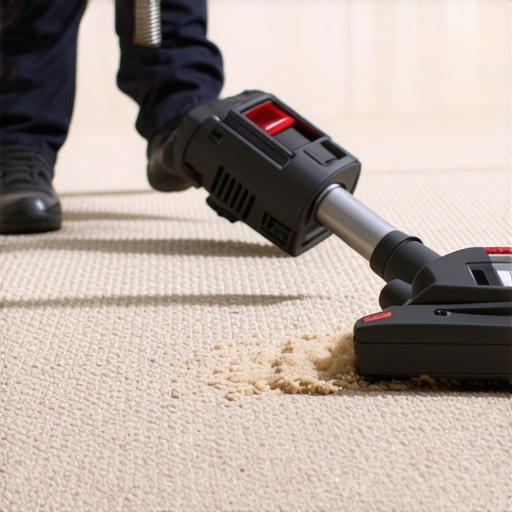
- Vacuum the new carpet three times daily with a HEPA filtered machine.
- Ensure the subfloor is dry and free of old adhesives before the install.
High performance ventilation strategies
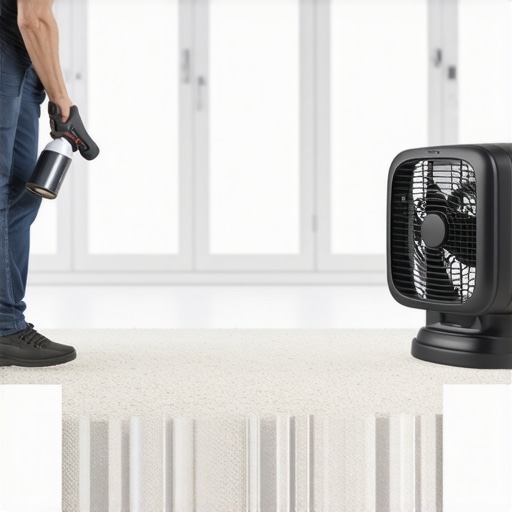
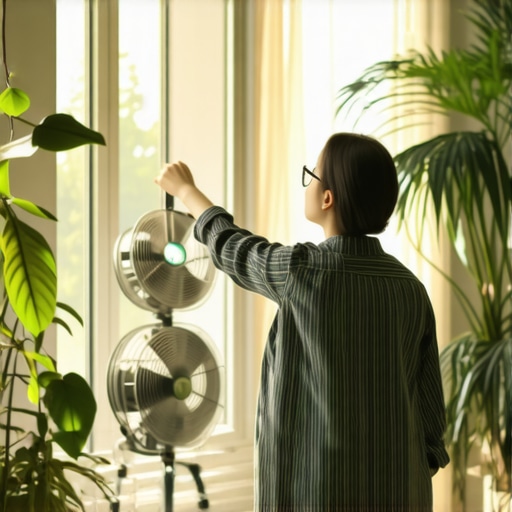
True ventilation requires a calculated approach to air pressure where you create a path for fresh air to enter and contaminated air to be forced out. Simply cracking a window is insufficient. You should place a fan in one window blowing inward and another fan in a window on the opposite side of the house blowing outward. This creates a laminar flow that carries the chemical molecules away from the surface of the carpet. Think of it as a low speed wind tunnel for your living room. This is the same logic we use when floor leveling to ensure that self leveling compounds dry evenly without cracking. If the air is stagnant, the humidity stays high, and the chemicals stay put. You also need to check your baseboards. If there isn’t a sufficient expansion gap at the perimeter, the carpet can bunch, which creates dead zones in the airflow. I always leave a gap that allows the floor to breathe. It might seem like a small detail, but the 1/8 inch that ruins everything is usually found at the edge of the room. This is where the ghost in the expansion gap lives, trapping dust and odors where the vacuum cannot reach.
Long term air quality maintenance
Maintaining a VOC free environment after the initial off gassing period requires a high quality HEPA vacuum and consistent humidity control. Once the initial 4-PCH has dissipated, you still have the ongoing issue of dust and fine particulates that settle into the fibers. A standard vacuum often lacks the filtration necessary to trap these molecules, instead blowing them back out into the room. A HEPA filter is essential. You also need to keep the indoor humidity between thirty and fifty percent. If it gets too dry, the synthetic fibers can become brittle and shed. If it gets too humid, the SBR latex backing can begin to degrade, restarting the off gassing process. This is the structural engineering of home comfort. I have seen beautiful site finished oak floors ruined by humidity, and I have seen carpets that still smelled like a factory two years later because the homeowner kept the room like a swamp. Treat your floor like the performance surface it is. Respect the chemistry, manage the physics, and the smell will be a thing of the past. Forget the sprays. Use your head and some fresh air.