The Toothbrush Trick for Scrubbing Deep Grout Stains Without Chemicals
I spent three days grinding concrete on a job last month just so the floor wouldn’t click like a castanet, and that is the reality of this business. Most guys skip the floor leveling compound because they think the underlayment will hide the dip. It won’t. I have seen thousand dollar tile jobs ruined because the installer was too lazy to ensure the substrate was flat. When the subfloor is uneven, the tile flexes, and the grout begins to microscopicly crack. These cracks are magnets for dirt and organic matter. You see a stain, but I see a structural failure. Most homeowners reach for the most aggressive acids they can find at the big box store, but they are just eating away the binder that holds their floor together. There is a better way that involves physics and patience rather than toxic fumes.
The myth of the permanent seal
Grout is naturally porous and requires mechanical agitation to remove embedded particulates without damaging the structural integrity of the cementitious bond. Many believe that once a floor is sealed, it remains impervious to liquid forever. This is a dangerous misconception. Sealers are breathable membranes that eventually wear down under foot traffic and improper cleaning. When you use harsh chemicals, you strip the sealer and accelerate the rate at which the grout absorbs grime.
“A floor is only as good as the subfloor beneath it; deflection is the enemy of every joint.” – Master Flooring Axiom
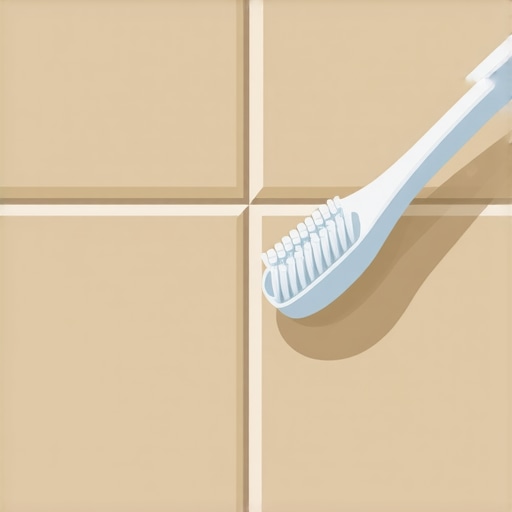
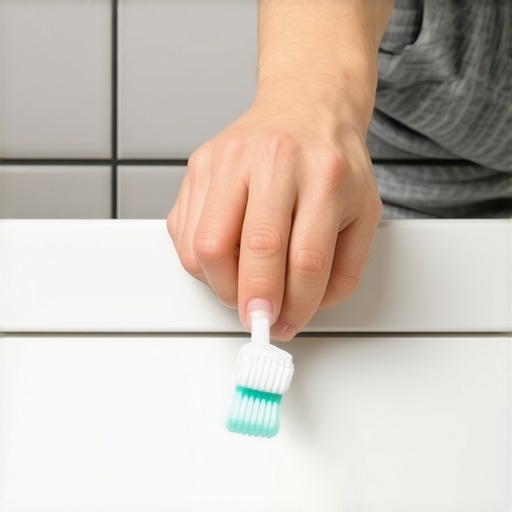
The toothbrush trick relies on the precise mechanical action of high density bristles to dislodge dirt from the peaks and valleys of the grout texture. Unlike a large mop which simply pushes dirty water into the pores, a toothbrush focuses kinetic energy on a singular point. This is why it works for deep stains where standard tools fail. You are not just washing the surface. You are excavating the debris from the molecular lattice of the Portland cement.
Why your subfloor is lying to you
Floor leveling is the prerequisite for any long term grout health because a shifting substrate creates the very voids that harbor deep seated stains. If your house has settled, your subfloor is likely out of plumb. When I am doing a carpet install, I can hide a lot of sins with a thick pad, but tile is honest. It tells you exactly where the house is moving. If your grout is constantly getting dirty in the same spot, check the levelness. A dip in the floor allows water to pool, and where water pools, minerals and dirt settle. Before you start scrubbing, understand that you are fighting the geometry of your home.
The mechanical reality of grout pores
Using a toothbrush provides the necessary scrub velocity to penetrate the capillary pores of the grout without the risk of etching the tile surface. Grout is essentially a mixture of sand and cement. Under a microscope, it looks like a mountain range. The valleys in that range are where the stains live. A standard floor brush is too wide to reach the bottom of these valleys. A toothbrush, specifically one with a tapered bristle head, can reach deep into the texture. You do not need bleach. You need a mild abrasive like baking soda and the mechanical advantage of the brush.
| Surface Type | Cleaning Tool | Structural Risk |
|---|---|---|
| Sanded Grout | Nylon Toothbrush | High Porosity |
| Epoxy Grout | Stiff Brush | Chemical Inertness |
| Laminate | Microfiber | Edge Swelling |
| Carpet | Steam Vac | Fiber Delamination |
The toothbrush as a structural tool
The precision of a toothbrush allows the user to apply localized pressure to stained areas without spreading contaminants to adjacent tile surfaces or delicate laminate edges. When people scrub floors, they usually make a mess. They use too much water. If you are working near a transition to laminate, that water is your enemy. Laminate will soak up that moisture and swell like a sponge. The toothbrush trick is a dry or low moisture method. You apply a paste, you scrub the specific line, and you wipe it away. It is surgical.
- Inspect the grout for hairline cracks before cleaning.
- Apply a thick paste of baking soda and distilled water.
- Let the mixture sit for ten minutes to emulsify the oils.
- Scrub in small circular motions with a medium bristle toothbrush.
- Wipe away the residue with a damp microfiber cloth immediately.
Shower floors and the capillary effect
Showers represent the most hostile environment for grout because constant moisture exposure leads to a phenomenon known as capillary suction where stains are pulled deep into the substrate. In showers, you are not just dealing with dirt. You are dealing with skin cells, soap scum, and hard water minerals. This mixture creates a biological film that chemicals often cannot penetrate. The toothbrush allows you to break the surface tension of this film.
“The tile industry standard for floor flatness is 1/8 inch in 10 feet for large format tile.” – TCNA Handbook
The 1/8 inch that ruins everything
Precision in cleaning is useless if the initial installation ignored the tight tolerances required for modern flooring systems. I see it every day. A guy installs a beautiful floor but leaves a 1/8 inch lip on a tile. That lip catches the mop. It catches the dirt. It becomes a permanent stain. If you are doing the toothbrush trick on a floor with lippage, you will have to scrub twice as hard on the high side. This is why I stress the importance of floor leveling during the build phase. You can clean a floor for a lifetime, but you can only level it once.
Laminate versus tile maintenance cycles
Laminate flooring requires a completely different moisture management strategy than tile because the HDF core is susceptible to permanent structural damage from liquid exposure. While you can get tile grout as wet as you want, you cannot do that with laminate. If your grout line is adjacent to a laminate transition, you must use the toothbrush trick to keep the cleaning controlled. If water seeps under the T-molding, the laminate will peak. The edges will curl. The floor is ruined. The toothbrush trick is the only safe way to clean grout lines that border moisture sensitive materials. It is about control. It is about protecting the investment. It will buckle if you are careless. It will last if you are precise.