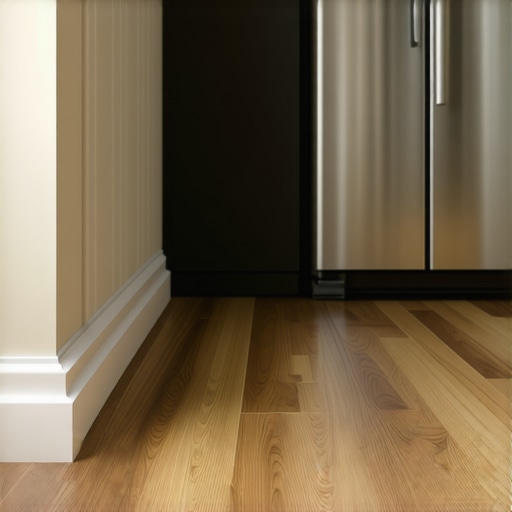
Why Your New Kitchen Tiles Are Cracking Along the Cabinet Line
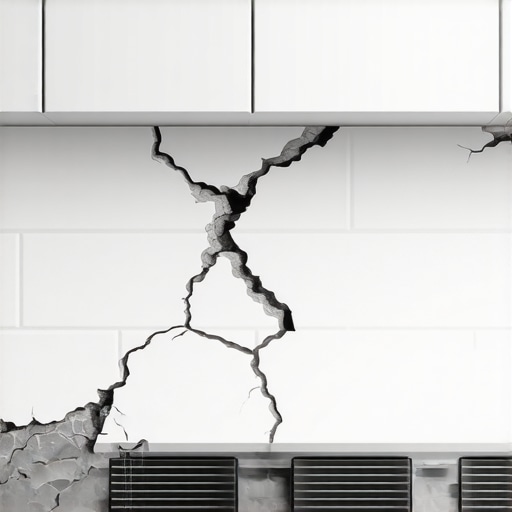
Most guys skip the leveling compound. They think the underlayment will hide the dip. It won’t. I spent three days grinding concrete on a job last month just so the floor wouldn’t click like a castanet, and that is the difference between a floor that lasts forty years and one that fails in forty days. When a homeowner calls me to complain about a hairline fracture running perfectly parallel to their base cabinets, I already know what happened before I even step out of my truck. They didn’t account for the physics of the load. A kitchen floor is not just a surface for walking. It is a structural component that must support thousands of pounds of cabinetry, appliances, and stone countertops while resisting the natural movement of the house frame. If you ignore the subfloor prep, you are just throwing money into a dumpster. Flooring is an engineering challenge disguised as a finish trade. If the foundation moves even a fraction of a millimeter, the rigid ceramic or porcelain on top will snap because it has no flexibility. This is not a matter of if it will happen, but when the stress exceeds the tensile strength of the material.
The weight of cabinetry as a structural load
Kitchen cabinets and stone countertops exert massive point loads on a floor system. When these heavy elements sit on a tile floor without a properly reinforced subfloor, the resulting deflection causes the rigid tile to crack at the weakest point, which is usually the transition line of the cabinet base. Think about the math involved here. A standard kitchen island with a double-thick quartz slab can weigh upwards of eight hundred pounds. When you concentrate that weight on a small footprint, the subfloor joists underneath will flex. If those joists were only designed for a standard live load of forty pounds per square foot, you are pushing the limits of the wood. This flex is called deflection. Tile is a mineral product. It is incredibly strong under compression but has almost zero capacity for tension or bending. When the wood subfloor bows under the weight of the cabinets, the tile is forced to bend with it. Since the tile cannot bend, it cracks. This usually happens right at the edge of the cabinet because that is the fulcrum point where the floor transitions from a heavily loaded zone to a lighter walking zone.
“A floor is only as good as the subfloor beneath it; deflection is the enemy of every joint.” – Master Flooring Axiom
The physics of subfloor deflection and L360 standards
The industry standard for tile installation requires a subfloor that does not deflect more than 1/360th of the span under a full load. For natural stone, that requirement doubles to 1/720th because stone is even more brittle than ceramic or porcelain. To calculate this, you take the length of the floor joist in inches and divide it by 360. If your joist spans ten feet, or 120 inches, the maximum allowable movement is only 0.33 inches. If your joist is bouncing more than a third of an inch when you walk across the room, your grout will crumble and your tiles will pop. Most older homes were built with 2×8 joists spaced 16 inches on center, which was fine for carpet or laminate, but it is a disaster for modern large-format tiles. When we see cracks along the cabinet line, it is often because the weight of the cabinets has pushed the joists to their maximum deflection limit, leaving zero room for the daily movement of the house. You have to stiffen the floor. This often involves sistering the joists or adding a second layer of 5/8 inch exterior grade plywood, glued and screwed to the original subfloor, to create a rigid sandwich that resists bending.
The chemistry of the bond and thinset failure
The bond between the tile and the substrate relies on the chemical and mechanical properties of the mortar. If the installer used a cheap, non-modified thinset on a plywood subfloor, the bond will eventually shear due to the different rates of expansion between the wood and the tile. Wood is hygroscopic. It absorbs moisture from the air and expands. It loses moisture and shrinks. Tile is stable and does not react to humidity in the same way. When the wood moves and the tile stays still, a shear force is created at the bond line. Modern ANSI A118.15 improved modified thinsets contain high levels of polymer resins. these resins act like microscopic shock absorbers, allowing for a tiny amount of movement without breaking the bond. However, even the best thinset cannot overcome a subfloor that is structurally unsound. If the thinset was mixed with too much water, the resulting crystalline structure will be weak and porous. When the cabinet weight pushes down, the air pockets in the thinset collapse, causing the tile to sink slightly and crack along the stress line of the cabinet kickplate.
The ghost in the expansion gap
Every hard surface floor requires a perimeter expansion gap to allow for the natural movement of the building envelope. When installers run tile tight against the kitchen cabinets without leaving a gap, they create a pinch point that forces the tile to buckle or crack. Houses are living things. They breathe. In the summer, the humidity rises and the wooden framing swells. In the winter, the heater turns on, the air dries out, and the wood shrinks. If the tile is locked between two fixed points, like a wall and a heavy kitchen island, there is nowhere for that energy to go. The pressure builds up until the weakest link in the chain breaks. Usually, that is the grout joint or the tile itself right at the edge of the cabinets. You need a minimum of 1/4 inch gap around the entire perimeter. This gap is then covered by the baseboard or the toe kick of the cabinet. If you fill that gap with hard grout instead of a 100 percent silicone caulk, you have effectively turned the entire floor into a single rigid sheet that will crack the moment the house settles. Silicone is flexible. Grout is not. This is a basic rule that gets ignored on almost every