Why Your Floor Leveler Is Peeling Like an Orange in the Corners
Why Your Floor Leveler Is Peeling Like an Orange in the Corners
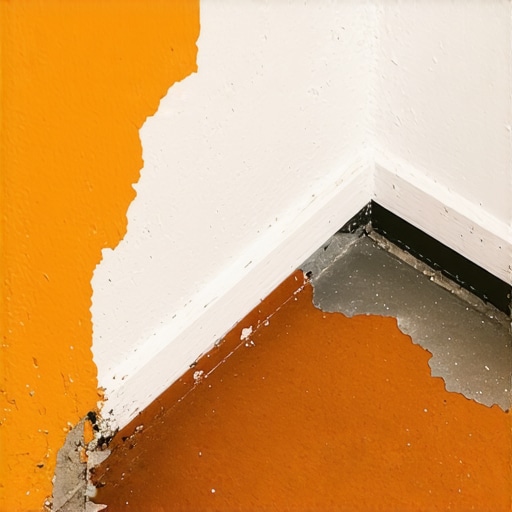
Most guys skip the leveling compound. They think the underlayment will hide the dip. It won’t. I spent three days grinding concrete on a job last month just so the floor wouldn’t click like a castanet. I have seen thousand-dollar wood floors ruined because someone thought they could just pour a bag of self-leveling underlayment over a dusty slab and walk away. When you walk into a room and see that leveler curling up at the edges like a dried orange peel, you are looking at a fundamental failure of physics and chemistry. This is not just a cosmetic fluke. It is a structural rejection. The bond has failed, the tension has won, and your new floor is effectively floating on a bed of potato chips.
The physics of the bond failure
Floor leveling failure occurs when the tensile strength of the drying compound exceeds the bond strength of the subfloor interface. This usually results from surface laitance, improper priming, or excessive water in the mix, leading to delamination and edge curling. When the leveler loses its grip, it pulls away from the substrate during the hydration process. I have seen this happen on high-end laminate jobs where the installer ignored the slab condition. If the concrete is not open enough to accept the primer, the leveler sits on top like water on a waxed car. As the compound cures, it shrinks. That shrinkage creates massive internal tension. Without a mechanical or chemical bond to hold it down, the corners are the first place to let go. They lift. They crack. They turn your expensive carpet install into a lumpy mess.
“A floor is only as good as the subfloor beneath it; deflection is the enemy of every joint.” – Master Flooring Axiom
The invisible killer known as laitance
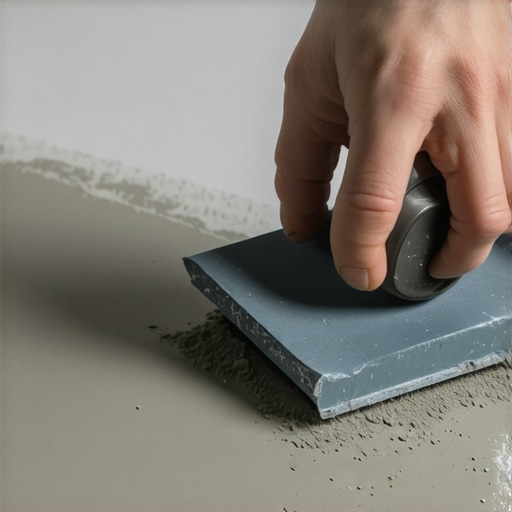
Laitance is a weak, milky layer of cement dust and fine particles that rises to the surface of concrete slabs during the pouring process. This layer lacks structural integrity and must be removed through mechanical grinding or shot blasting before any floor leveling compound is applied. If you try to pour leveler over laitance, you are essentially gluing your new floor to a layer of flour. It will look fine for forty-eight hours. Then, as the polymers in the leveler begin to tighten, they will simply pull that dust right off the solid concrete. I always tell my apprentices that if they can scratch the surface of the concrete with a screwdriver and leave a white mark, it is not ready for a pour. You need to get down to the aggregate. You need a Concrete Surface Profile of at least two or three for a heavy pour. Anything less is a gamble with the homeowner’s money.
The chemical reality of primer saturation
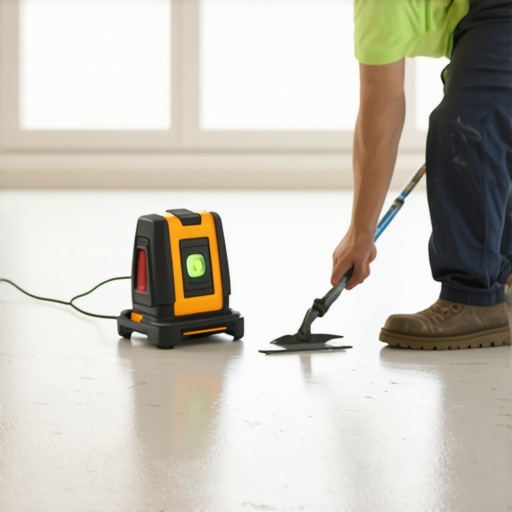
Subfloor primer acts as the bridge between the porous concrete and the cementitious leveler, sealing the slab to prevent pinholing and flash drying. A properly primed surface ensures that the leveling compound retains its hydration water, allowing for a complete chemical cure and maximum adhesion. Most people treat primer like a suggestion. They splash a little on and call it a day. In reality, you need to scrub that primer into the pores with a stiff-bristled broom. If the slab is thirsty, it will suck the water out of the leveler before the chemical reaction can finish. This leads to a chalky, weak product that peels. I once saw a guy try to level a floor for a laminate installation without any primer at all. Within a week, the floor sounded like he was walking on dried leaves. The leveler had snapped into a thousand tiny islands because it couldn’t grip the dry, dusty substrate.
| Leveler Property | Standard Cement Mix | High-Polymer SLU | Gypsum-Based Compound |
|---|---|---|---|
| Tensile Strength | Low | Very High | Moderate |
| Shrinkage Rate | High | Low | Minimal |
| Drying Time | 24-48 Hours | 4-12 Hours | 12-24 Hours |
| Bond Requirement | Mechanical | Chemical/Mechanical | Chemical |
The danger of over watering the mix
Water-to-powder ratios are the most critical variables in the hydration chemistry of self-leveling underlayments. Adding even a few extra ounces of water to a bag of floor leveling compound destroys the polymer matrix, leading to sedimentation, surface chalking, and a total loss of compressive strength. You see it in the corners first because that is where the excess water often pools. The water rises to the top, carrying the lightest particles with it, leaving a brittle, shell-like surface that has no structural value. It looks smooth, sure. But once you put a heavy piece of furniture or a showers base on it, the shell crushes. I use a graduated measuring bucket for every single bag. If the bag calls for 5.2 quarts, it gets 5.2 quarts. Not five and a half. Not a ‘splash more’ to make it flow better. The chemists who designed these powders know more than you do. Trust the bag.
“Proper surface preparation is not a suggestion; it is the fundamental requirement for all cementitious underlayments.” – NWFA Technical Guidelines
The ghost in the expansion gap
Expansion gaps are necessary perimeters around the vertical surfaces of a room that allow for the natural movement of the subfloor and the finished flooring. Failing to use foam expansion strips during a floor leveling pour creates a rigid bridge that will inevitably crack and peel as the building settles and shifts. Concrete is not static. It breathes. It moves with the seasons. If you pour your leveler tight against the drywall, it has nowhere to go when it expands. It will push against the wall, and since the wall won’t move, the leveler will buckle upwards at the edges. This is why you see that orange peel effect. Use the foam. It takes five minutes to staple it to the bottom of the plate, and it saves you from a five-thousand-dollar callback. This is especially true in areas like showers where moisture and temperature swings are extreme.
- Vacuum the subfloor three times to ensure no dust remains.
- Check the moisture content of the slab using a calcium chloride test.
- Apply primer with a brush or broom to break the surface tension.
- Measure water with surgical precision to avoid polymer wash-out.
- Use a spiked roller to release trapped air bubbles during the pour.
- Maintain a consistent ambient temperature to prevent flash drying.
The regional impact of humidity and climate
In the swampy humidity of Houston or the coastal regions, the moisture in the air can significantly slow down the evaporation rate of the leveler. This sounds like a good thing, but it often leads to installers rushing the laminate or carpet install before the compound has reached its full crystalline maturity. Conversely, in the dry heat of Phoenix, the slab will attempt to rob the leveler of every drop of moisture it has. In these dry climates, you must use a high-solids primer to create a literal plastic bag over the concrete. If you don’t, the leveler will dry from the bottom up and the top down at different rates. That differential drying is exactly what causes the curling. The top shrinks faster than the bottom, pulling the edges off the floor like a scroll. I have worked in both climates, and the rules of chemistry do not change, only the speed at which you have to work.
The structural cost of lazy prep
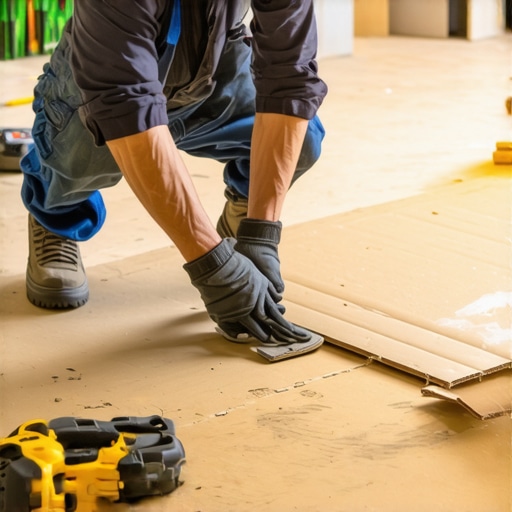
People think they are saving money by skipping the grinding phase. They think a shop vac is enough. It is not. If you want a floor that lasts thirty years, you have to treat the subfloor like the foundation of a skyscraper. Every bit of old adhesive, every drop of drywall mud, and every speck of paint must be gone. If the leveler is peeling, it is because you tried to build on a foundation of trash. I have seen guys try to level over old carpet install adhesive. The chemicals in the leveler reacted with the old glue, turned it into a slime, and the whole floor floated away. It was a disaster. You have to be a mechanic about this. You have to get your hands dirty. Grind the floor. Prime it twice. Measure your water. If you do those things, the leveler will stay flat until the house falls down. If you don’t, you’ll be back in six months with a chipping hammer and a very angry customer.