Why Your Floor Leveler Is Peeling Off the Concrete
Why Your Floor Leveler Is Peeling Off the Concrete
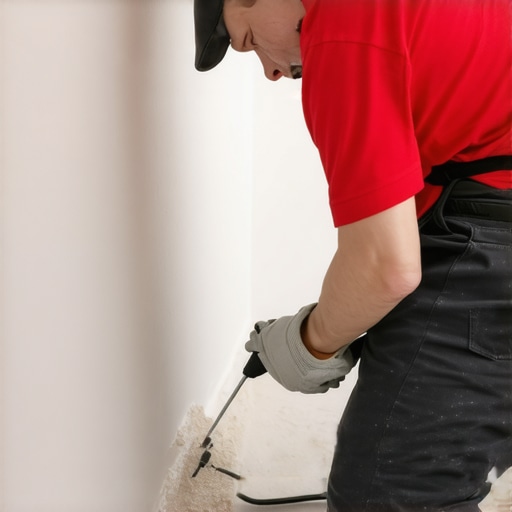
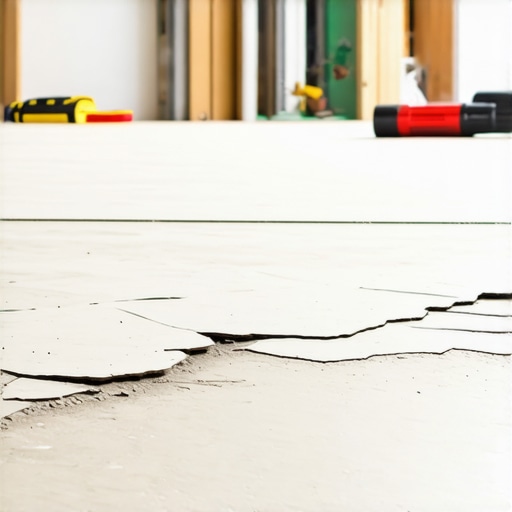
Most guys skip the leveling compound. They think the underlayment will hide the dip. It won’t. I spent three days grinding concrete on a job last month just so the floor wouldn’t click like a castanet. I walked into a luxury condo in Miami where the owner had spent forty thousand dollars on wide-plank engineered flooring. Within six months, every step sounded like someone was crushing potato chips under the boards. When we pulled up a section, the self-leveling underlayment came up in giant, brittle sheets like dried mud. The installer didn’t prep the slab. He just poured and prayed. Now he is out of business and I am the one with the diamond grinder and the vacuum system, breathing in the dust of his failure. It smells like burnt limestone and regret.
The mechanics of a failed chemical bond
Floor leveler peels off concrete because of poor surface preparation, specifically the presence of bond breakers like sealers, dust, or oil, and the failure to achieve the correct Concrete Surface Profile (CSP). Without mechanical abrasion and a dedicated primer, the cementitious leveler cannot integrate into the concrete pores. This failure is not a mystery of the universe. It is a predictable result of physics. When you pour a liquid cement product over a smooth, non-porous slab, you are relying on a chemical bond that has nothing to grab onto. Concrete is a porous substrate, but over time, it develops a layer of laitance, which is a weak, milky layer of cement dust and sand that rises to the surface during the original pour. If you do not grind that laitance away, your leveler is bonding to dust, not the slab. Once the leveler dries and undergoes its natural shrinkage, the tension pulls that weak bond apart. You are left with a floating sheet of brittle rock that will crack the moment a heavy refrigerator or a grand piano rolls over it.
“A floor is only as good as the subfloor beneath it; deflection is the enemy of every joint.” – Master Flooring Axiom
The 1/8 inch that ruins everything
Subfloor flatness is measured by a standard of 1/8 inch deviation over 10 feet for glue-down floors or 3/16 inch for floating systems. When leveler fails, these tolerances are exceeded, causing the locking mechanisms on laminate or LVP to snap under the weight of foot traffic. I see this in every kitchen remodel where the installer was too lazy to check the slab with a straightedge. They think the foam underlayment is a magical cushion. It is not. If there is a dip, the floor will flex. If there is a hump, the floor will teeter. When you apply a leveler to fix these issues but fail to prime the surface, you create a new problem. The dry concrete slab acts like a sponge. It sucks the moisture out of the wet leveler before the polymers can properly cross-link. This results in a flash-cure. The leveler looks hard, but it is