The Flashlight Angle for Spotting Poorly Sealed Shower Corners
Most guys skip the leveling compound. They think the underlayment will hide the dip. It won’t. I spent three days grinding concrete on a job last month just so the floor wouldn’t click like a castanet. That’s the reality of professional flooring. It’s not about the pretty boards you see on a Saturday morning home renovation show. It’s about the grit, the dust, and the absolute physics of a flat surface. When you walk across a floor and hear that hollow ticking sound, you’re hearing the sound of a failed subfloor preparation. I smell like WD-40 and oak dust most days because I care about what happens under the surface. A floor is a structural engineering project that happens to have a finish. If the concrete slab has a hump or a valley, the locking mechanisms on your expensive laminate will eventually snap. It’s a matter of when, not if.
The ghost in the expansion gap
Expansion gaps are non-negotiable voids left around the perimeter of a room to allow flooring materials to expand and contract with temperature changes. These gaps prevent the floor from buckling or peaking when humidity rises. I have seen entire living rooms lift off the ground because an installer forgot to leave a quarter inch at the baseboards.
“A floor is only as good as the subfloor beneath it; deflection is the enemy of every joint.” – Master Flooring Axiom
The science of wood expansion is relentless. A single oak plank can grow by a significant fraction of an inch when the summer humidity hits. Multiply that across twenty feet of flooring and you have a massive amount of physical force pushing against your drywall. If that force has nowhere to go, the floor will crown. You’ll see the joints start to rise like a mountain range in the middle of your hallway. This is why we use spacers. This is why we never, ever pin the floor down with heavy cabinetry or trim nails through the planks.
Why your subfloor is lying to you
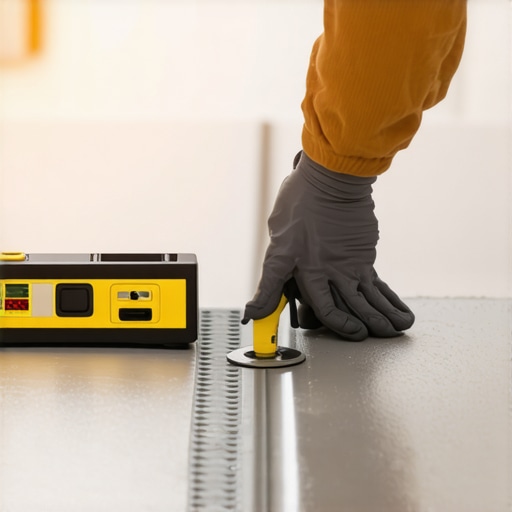
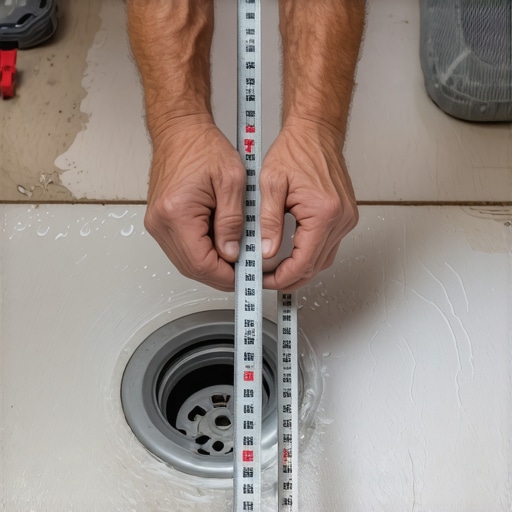
Subfloor flatness is measured by checking for deviations greater than one eighth of an inch over a ten foot radius. Most plywood or concrete surfaces look flat to the naked eye, but the eye is easily deceived by lighting and shadows. I use a ten foot magnesium straightedge to find the lies. If I can slide a nickel under that straightedge, we have work to do. Self leveling underlayment is a specialized cementitious product that flows like water to find the low spots. It’s not a suggestion. It’s a requirement for a floor that lasts thirty years. When we talk about floor leveling, we are talking about gravity. We are talking about creating a perfectly planar surface so the locking click systems of your laminate or LVP can rest without stress.
The flashlight angle for spotting poorly sealed shower corners
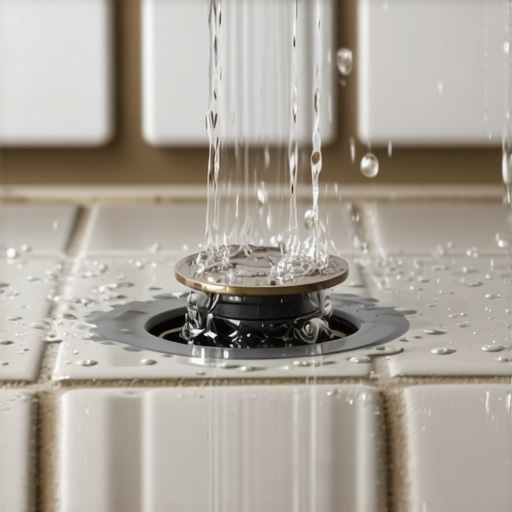
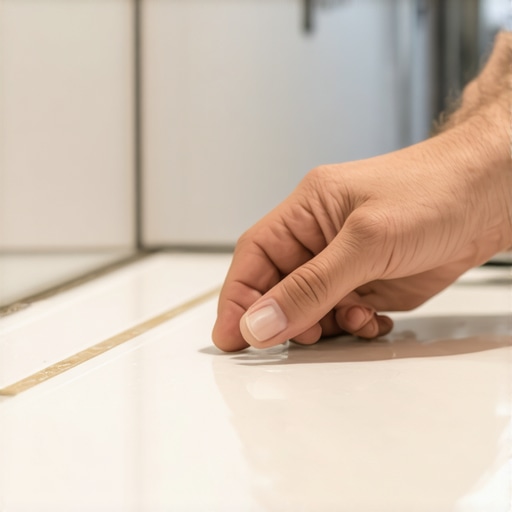
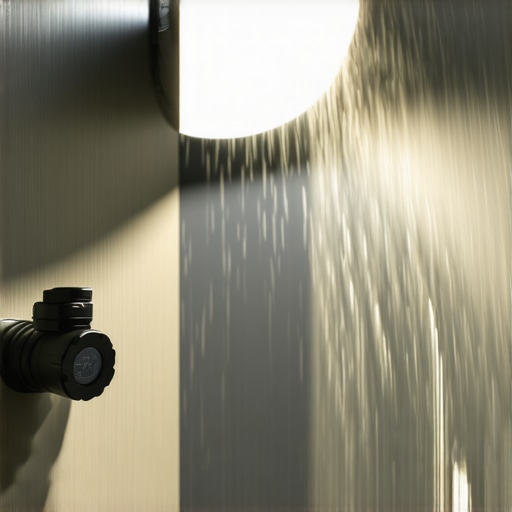
The flashlight angle is a diagnostic technique where a high lumen light source is placed parallel to the corner surface to reveal pinholes. By casting light at a five degree angle, any void, crack, or thinning of the silicone sealant will cast a long, distinct shadow. This is the only way to be certain that a shower corner is truly watertight. I have seen showers that looked beautiful from three feet away but were actually weeping water into the wall studs because of a single tiny hole in the grout or caulk. You hold the light right against the tile. Move it slowly. If you see a break in the light, you have a path for water. Water is a molecular invader. It will find a gap the size of a human hair and use capillary action to pull itself behind the waterproof membrane.
Why thick underlayment kills your laminate floor
Too much cushion in a laminate underlayment creates excessive vertical deflection which leads to joint failure. While homeowners often want the softest feel underfoot, an underlayment that is too thick or too soft will allow the floor to bounce. This constant movement puts immense pressure on the thin plastic tongues and grooves. Eventually, they will fatigue and snap. | Material | Janka Rating | Acclimation Time | Expansion Gap | |— |— |— |— | | Solid White Oak | 1360 | 7-14 Days | 3/4 Inch | | Engineered Hickory | 1820 | 3-5 Days | 1/2 Inch | | Bamboo Strand | 3000 | 10-14 Days | 1/2 Inch | | Laminate | N/A | 48 Hours | 1/4 Inch | The structural zoom into the chemistry of adhesives reveals that moisture is the primary enemy of any bond. When we glue down a hardwood floor, we are managing the moisture vapor emission rate of the concrete.
The 1/8 inch that ruins everything
Precision in flooring is measured in sixteenths of an inch because even the smallest gap allows for microbial growth and structural movement. If a transition strip is not perfectly flush, it becomes a trip hazard and a collection point for debris. I hate bulky T-molding. It looks like a cheap afterthought. A real installer knows how to undercut door jambs so the floor slides underneath the wood, creating a clean look without the need for ugly plastic strips. This requires a specialized oscillating saw and a steady hand. You aren’t just cutting wood. You are creating a pocket for movement.
- Use a pinless moisture meter to check the slab before every install.
- Ensure the room is acclimated to its normal living temperature for at least seventy two hours.
- Grind down all high spots in the concrete using a diamond cup wheel.
- Always use a vapor barrier of at least six mil thickness over concrete.
“Moisture vapor emission rate must not exceed three pounds per one thousand square feet over twenty four hours.” – NWFA Technical Manual
Carpet install mistakes that ruin baseboards
Poorly handled power stretchers can gouge wood trim and lead to loose carpet ripples within six months of installation. Most discount installers use a knee kicker which is fine for small closets but inadequate for large rooms. A power stretcher uses mechanical leverage to pull the carpet tight across the entire span of the room. This prevents the wrinkles that show up when the humidity changes. When you see a carpet that looks like a calm ocean with small waves, it wasn’t stretched properly. It was just tucked. That’s builder grade work. It’s the kind of work that makes me want to retire. I want a floor that stays tight until the day it’s torn out.
The physics of floor leveling and gravity
Gravity is the ultimate judge of floor preparation because any liquid leveling compound will settle at the lowest point of the room. This means you have to be careful with dams and barriers. If you don’t seal the perimeter of the room, your expensive leveling compound will leak into the walls or down into the basement like a grey waterfall. I’ve seen guys ruin entire finished basements because they didn’t check for holes in the subfloor before pouring. You use a specialized foam tape to create a bathtub effect. Only then do you pour. The chemistry of the primer is also vital. Without the right primer, the new cement won’t bond to the old concrete. It will just sit there like a wafer, waiting to crack. [image_placeholder_1]
The final word on structural integrity
Protecting a home from water and structural failure starts at the ground level. Whether you are using the flashlight angle to check a shower or a straightedge to check a subfloor, the goal is the same. You are looking for the small errors that lead to big disasters. Don’t trust the labels that say waterproof. Nothing is waterproof if the installation is shoddy. Trust the physics. Trust the measurements. And for the sake of your home, get a professional who knows the smell of sawdust and the weight of a level.