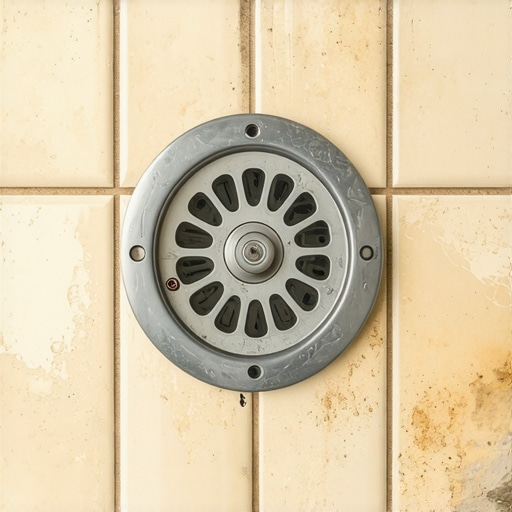
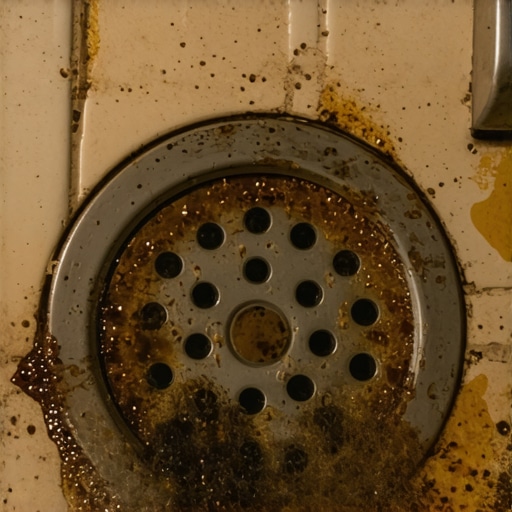
Why your shower drain grate is rusting so quickly
I spent three days grinding concrete on a job last month just so the floor wouldn’t click like a castanet, and that is where the truth about flooring always hides. People think the floor is what they see, but the floor is actually the invisible physics happening underneath. I once walked into a luxury bathroom where a high-end designer had installed a custom brass grate over a standard steel housing. Within six months, the grate was fused to the assembly by a crust of orange oxidation. The homeowner blamed the cleaning lady. I blamed the chemistry of galvanic corrosion. A floor is a structural engineering challenge, and a shower drain is its most volatile point. When you see rust on your shower drain, you are not just looking at a cosmetic blemish. You are looking at a failure of the material science, the metallurgy, or the subfloor geometry. Most guys skip the leveling compound. They think the underlayment will hide the dip. It won’t. In a shower, that dip becomes a stagnant pond that eats metal for breakfast.
The hidden chemistry of metal oxidation in wet environments
Shower drain rust occurs because of a chemical reaction between iron, oxygen, and moisture, often accelerated by chlorides in household water and cleaning agents. Low-grade stainless steel like 304 lacks the molybdenum necessary to resist pitting in high-moisture environments where soap scum and minerals accumulate. When we talk about rust, we are talking about the breakdown of the passive layer. Stainless steel is not a solid block of invincibility. It is an alloy that relies on a microscopic layer of chromium oxide to protect the iron underneath. If that layer is scratched or chemically attacked by bleach, the iron reacts with the oxygen in the water. This starts a localized cell of corrosion. In the flooring world, we call this the death of the finish. If you used a carpet install mindset in a bathroom, you would be fired in a week. You cannot just cover up the problem. You have to understand the atomic level of the grate you bought at the big-box store. Most of those cheap grates are 304 stainless steel. In a world of hard water and heavy chemicals, 304 is barely better than raw iron. You need 316 grade, which contains molybdenum. This addition changes the crystalline structure of the metal, making it far more resistant to the salt and chlorine found in municipal water supplies.
“A floor is only as good as the subfloor beneath it; deflection is the enemy of every joint.” – Master Flooring Axiom
The physics of standing water and poor drainage pitch
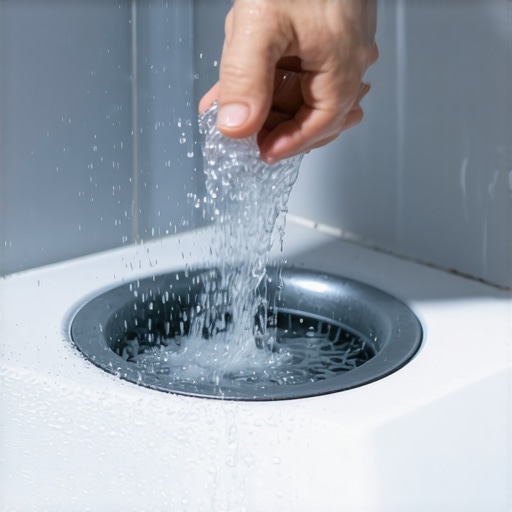
Rusting grates are frequently caused by improper floor leveling that prevents the shower pan from draining completely, leaving the metal submerged in a mineral-rich solution. A minimum slope of one quarter inch per foot is required to ensure that water moves toward the drain via gravity. Water has surface tension. If the pitch of your tile is too shallow, water clings to the grate. It sits there for hours after you finish your shower. As the water evaporates, it concentrates the chemicals left behind. This is where the floor leveling comes into play. If your installer didn’t use a self-leveling underlayment or a properly screeded mud bed before laying the tile, the drain might be the high point. I see this all the time. A guy gets lazy with the trowel and creates a birdbath around the drain. That standing water is a direct catalyst for oxidation. The metal never gets a chance to dry, and the chromium oxide layer cannot regenerate without oxygen. You are essentially drowning the metal. In a professional carpet install, you worry about tack strips. In a shower, you worry about the micron-level smoothness of the transition from tile to grate. Any lip or ledge will catch water. That water then wicks into the thin-set, where it can stay damp for days, attacking the underside of the grate housing. This is why site-finished wood installers are so obsessed with acclimation. They know that moisture is a living, breathing enemy.
Galvanic corrosion and the mistake of mixing metals
Galvanic corrosion happens when two dissimilar metals make contact in the presence of an electrolyte like shower water, causing the less noble metal to rust rapidly. Using a stainless steel grate with brass screws or a zinc housing creates a battery effect that accelerates metallic decay. I have seen people buy a beautiful matte black grate that is actually just painted zinc. The moment you drop your shampoo bottle and chip that paint, the clock starts ticking. The water acts as a bridge. Electrons flow from the zinc to the more noble metal parts of the plumbing. This is basic chemistry, but most floor guys ignore it because they just want to get to the next job. If you are installing laminate, you worry about expansion gaps. If you are installing a shower drain, you must worry about the Anodic Index. You cannot mix metals. If your drain housing is cast iron and your grate is stainless, you need a plastic isolator. Without it, you are inviting a chemical war. This is the same reason we don’t use regular staples in a carpet install in a basement with high humidity. We use galvanized or stainless because we know the air will eventually rot the steel.
| Material Type | Rust Resistance | Pitting Resistance (PREN) | Best Use Case |
|---|---|---|---|
| Zinc Alloy (Plated) | Very Low | < 5 | Temporary or decorative only |
| 304 Stainless Steel | Moderate | 18-20 | Standard residential baths |
| 316 Stainless Steel | High | 24-26 | Luxury baths and coastal areas |
| Solid Brass | Very High | N/A | High-end custom builds |
Why laminate and carpet installation methods fail near bathrooms
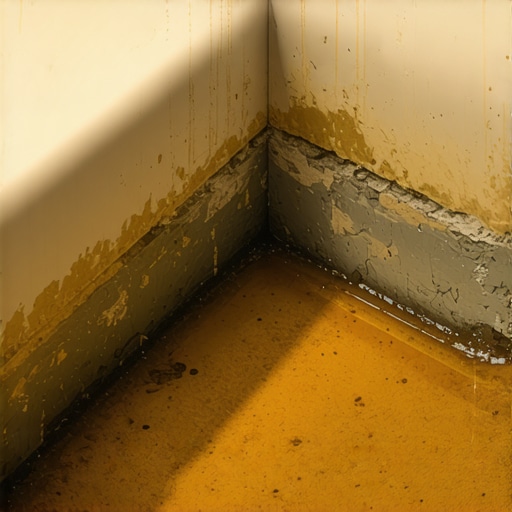
Laminate and carpet are incompatible with wet area drainage zones because they lack the structural density to handle moisture vapor and liquid spills. These materials wick water toward the subfloor, which then traps humidity around the metal drain components, leading to premature rusting. I have walked into homes where someone thought it was a good idea to run laminate right up to the edge of a walk-in shower. It is a disaster. The core of that laminate is basically compressed sawdust. It sucks up moisture like a sponge. Once that moisture is trapped under the transition strip, it has nowhere to go. It sits against the metal drain flange. The rust starts under the floor where you cannot see it. By the time you see the orange stains on the grate, the subfloor is probably rotting. Carpet install in a bathroom is even worse. The padding acts as a reservoir. It holds the humidity against the floor, creating a tropical microclimate. This humidity attacks the metal grate from the bottom up. Real flooring architects know that a bathroom is a wet room, and every material must be hydrophobic. Even the choice of grout matters. A porous grout will hold water against the drain frame, keeping the metal in a constant state of saturated stress. We use epoxy grout for a reason. It is liquid-proof. It protects the structural integrity of the assembly.
“Saturation is the death of the installation; every material has a saturation point that must never be reached.” – TCNA Technical Manual
The critical steps for a rust-proof shower installation
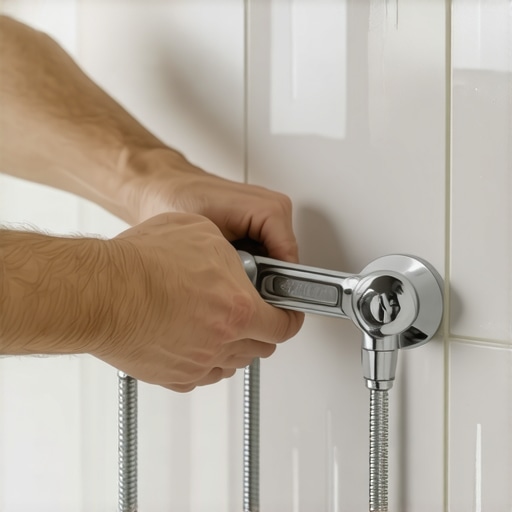
Achieving a rust-free shower requires a combination of high-grade 316 stainless steel, proper subfloor leveling, and the use of pH-neutral cleaning products. Every component from the screws to the grate must be metallurgically compatible to prevent the electrochemical reactions that lead to decay. You have to be a stickler for the details. You cannot trust the guy at the counter who tells you it is all the same. It is not all the same. A 316 steel grate costs more because it has more nickel and molybdenum. That investment saves you from tearing out a tile floor in three years because the drain housing failed. You also need to look at your water. If you have a high salt content or a water softener that uses a lot of salt, you are living in a corrosive environment. You need to rinse your drain with fresh water after you clean it. Most people spray down the shower with a harsh cleaner and leave it. That cleaner is full of chlorides. It sits on the grate and eats the chromium. You are effectively acid-etching your own drain every Tuesday morning.
- Select 316 grade stainless steel for all metal components.
- Verify the subfloor slope with a digital level before tiling.
- Use a waterproof membrane that bonds directly to the drain flange.
- Avoid mixing brass, steel, and zinc in the same assembly.
- Clean only with pH-neutral solutions to preserve the chromium layer.
- Ensure the weep holes in the drain assembly are not clogged with mortar.
The final word on drainage is simple. If you treat your shower like a carpet install or a quick laminate project, you will fail. You have to think like an engineer. You have to respect the water. The rust on your grate is just a symptom of a deeper problem. It is a sign that the physics of your floor are out of balance. Whether it is a lack of floor leveling or a poor choice of alloy, the solution is always found in the structural details. Stop looking at the surface and start looking at the chemistry. Your floor is a performance surface. Treat it like one.